
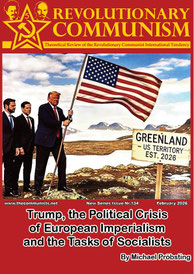
Trump and the Political Crisis of European Imperialism
Trump y la crisis política del imperialismo europeo
Trump et la crise politique de l’impérialisme européen
Трамп і політична криза європейського імперіалізму
Trump und die politische Krise des europäischen Imperialismus
On the inner contradictions and challenges of Europe's ruling class in face of Trump’s new foreign policy doctrine, the opportunist position of left reformism and the tasks of socialists
An Essay (with 6 Tables and 1 Figure) by Michael Pröbsting, Revolutionary Communist International Tendency (RCIT), 28 January 2026, www.thecommunists.net

Contents
Introduction
On the weaknesses of imperialist Europe
Unite or become vassals
The coming bourgeois attacks: warfare instead of welfare
Left reformism in face of accelerating inter-imperialist rivalry between the U.S. and Europe
“Left-wing” advisers for European imperialism
The policy of revolutionary defeatism in Europe
For the United Socialist States of Europe!
Euro-centrism and pacifism versus internationalist anti-imperialism
A program of struggle
* * * * *
Introduction
There is no doubt that European imperialism experiences in its most existential crisis in 80 years. While the first half of the 20th century was marked by two devastating wars on the continent, the period since 1945 has been characterised by peaceful relations between Europe’s imperialist powers and a process of political and economic integration. This was, of course, only possible in the context of the Cold War against the Stalinist states and the consolidation of absolute hegemony of U.S. imperialism in the camp of capitalist states after the end of World War II. As a result, European powers have played a junior role within the U.S.-led imperialist system. [1]
However, historic events have undermined the objective basis for this relationship. First, the collapse of the USSR in 1991 ended the Cold War and, secondly, the Great Recession in 2008 opened a historic period of decline of global capitalism. [2] Against this background, the U.S. as well as European powers declined while new imperialist powers – most importantly China but also Russia – rose as rivals. [3]
These developments are the context for the profound events in the last few weeks which have decisively shattered the transatlantic alliance between North America and Western Europe. As we elaborated in several documents, the process of decline has forced U.S. imperialism to adopt new foreign policy doctrine setting new and more realistic goals.
According to this “Donroe Doctrine”, Washington will no longer attempt to act as global hegemon but will rather look for a kind of détente with Russian and Chinese imperialism. Instead, the U.S. wants to focus on fully dominating the Western hemisphere. [4] It has therefore opened a reactionary offensive with the goal of recolonising Latin America [5] – starting with the kidnapping of Venezuela’s President and aiming for regime change in other countries (e.g. Cuba). [6]
The Donroe Doctrine also aim for a rupture of the transatlantic alliance with Europe. As the U.S. is forced to cut its global military presence and wants to establish a détente with Russia, it has no interest in keeping alive an expensive alliance structure like NATO. Furthermore, it wants to expand its territory and annex Greenland – the world’s largest island, which is owned by Denmark (a member of the EU) since several centuries. And, at a later stage, Trump might want to occupy also Iceland.
Likewise, Washington wants to decisively weaken European imperialism. As we did show in our above-mentioned analysis of the new National Security Strategy, the U.S. aim for a roll back of Europe’s integration and the division of the continent along national lines. This shall allow America to transform some of these into loyal vassals and to weaken the rest. [7]
Unsurprisingly, Trump’s undisguised contempt for Europe and the transatlantic relations and his determination to conquer Greenland has provoked massive outrage and protests amongst European state leaders (as well as in Canada). The speeches and statements at the World Economic Forum in Davos last week demonstrated the “rupture in the world order” (Canadian Prime Minister Mark Carney) and Europe’s fear to become “a miserable slave” of the U.S. (Belgian Prime Minister Bart De Wever). The escalating exchange of threats has caused a significant sector of Europe’s ruling class to start thinking how to strike back against the U.S. (e.g. the so-called "Anti-Coercion Instrument" which would restrict American companies' access to the European single market.) and how to establish the continent’s “strategic autonomy”, i.e. to act as a Great Power independent of the U.S.
On the weaknesses of imperialist Europe
However, Europe’s attempts to resist Trump’s efforts to destroy the EU faces huge obstacles. Economically, European capitalism has dramatically weakened in the past three decades. Its share in global industrial production among the Top 20 countries has declined from 23.8% (1995) to 13.4% (2023). (See Table 1)
Table 1. Top 20 Countries in Global Manufacturing, 1995 and 2023 [8]
1995 2023
1 United States 23.6% 1 China 31.8%
2 Japan 12.6% 2 United States 15.0%
3 Germany 8.4% 3 Japan 6.6%
4 China 4.9% 4 Germany 4.6%
5 Italy 4.7% 5 India 3.2%
6 France 3.2% 6 South Korea 3.0%
7 United Kingdom 3.1% 7 United Kingdom 1.9%
8 Brazil 2.8% 8 Italy 1.8%
9 Mexico 2.5% 9 Mexico 1.8%
10 Canada 2.2% 10 France 1.7%
11 South Korea 2.1% 11 Indonesia 1.5%
12 Spain 2.0% 12 Taiwan 1.4%
13 Russia 1.6% 13 Türkiye 1.4%
14 India 1.5% 14 Russia 1.3%
15 Switzerland 1.4% 15 Ireland 1.3%
16 Indonesia 1.4% 16 Brazil 1.2%
17 Australia 1.2% 17 Switzerland 1.1%
18 Argentina 1.0% 18 Canada 1.0%
19 Netherlands 1.0% 19 Spain 1.0%
20 Thailand 0.9% 20 Thailand 0.8%
Combined share of
above-mentioned
of European states: 23.8% 13.4%
Likewise, Europe’s share among the world’s leading corporations – according to the Fortune Global 500 list – has declined from 27.2% (2005) to 17.8% (2023). (See Table 2)
Table 2. Top 10 Countries with the Ranking of Fortune Global 500 Companies, 2005, 2012 and 2023 [9]
Rank Country Companies (Share in%)
2005 2012 2023
1 United States 175 (35.0%) 132 (26.4%) 136 (27.2%)
2 China (excl. Taiwan) 16 (3.2%) 73 (14.6%) 135 (27.0%)
3 Japan 81 (16.2%) 68 (13.6%) 41 (8.2%)
4 Germany 37 (7.4%) 32 (6.4%) 30 (6.0%)
5 France 39 (7.8%) 32 (6.4%) 23 (4.6%)
6 South Korea 11 (2.2%) 13 (2.6%) 18 (3.6%)
7 United Kingdom 35 (7.0%) 26 (5.2%) 15 (3.0%)
8 Canada 13 (2.6%) 11 (2.2%) 14 (2.8%)
9 Switzerland 11 (2.2%) 15 (3.0%) 11 (2.2%)
10 Netherlands 14 (2.8%) 12 (2.4%) 10 (2.0%)
Combined share of
above-mentioned European states: 136 (27.2%) 117 (23.4%) 89 (17.8%)
The same process takes place in the financial sector. To take an example, we refer to Europe’s weight among the top 1000 world banks, calculated by profit shares, which has substantially declined from 43% (2006) to 21% (2019). (See Table 3)
Table 3. Top 1000 World Banks, Proft Shares by Region (2006 and 2019) [10]
2006 2019
North America 27% 27%
Asia 20% 42%
Europe 43% 21%
A similar, albeit less drastic, development can be observed in world trade. The European Union’s share (excluding intra-EU trade) declined from 13.5% in 2000 to 11.4% in 2023 and that of the U.S. from 15.6% to 10.8%. In contrast, China’s share dramatically rose from 3.6% to 12.3% in the same period. (See Figure 1)
Figure 1. The Share of China, EU and the U.S. in World Trade, 2000-2023 [11]

If one includes intra-European trade, the region’s share in world merchandise exports declined from 46.2% in 2003 to 35.8% in 2022. [12]
When it comes to the military realm, European imperialism is also behind its rivals. True, its combined military spending, in relation to its imperialist rivals, has declined only slightly in the past 15 years – from 19.4% (2010) to 17.4% (2024). (See Table 4)
Table 4. Western Europe’s Share in Global Military Spending, 2010 and 2024 (in Billion US-Dollar) [13]
2010 2024
Total 1,630 2,718
Western & Central Europe 316 (19.4%) 472 (17.4%)
However, when it comes to most the potent weapons – nuclear warheads – Europe is far behind its rivals. France is the only EU state with nuclear weapons and the only other nuclear armed power in Europe is Britain. Their combined number of warheads is less than China’s and only one tenth of Russia’s or America’s inventory. (See Table 5)
Table 5. World Nuclear Forces, 2025 [14]
Country Deployed & Total Inventory
Stored Warheads (incl. Retired Warheads)
Russia 4,309 5,459
USA 3,700 5,177
China 600 600
UK 225 225
France 290 290
Another example is the decline of Europe’s share among the world’s leading arms corporations. While in 2002, 8 of the top 25 corporations were based in Europe, this figure had dropped to only 5 by 2023. In contrast, China had 6 and Russia one corporation among the top 25 in 2023 – countries which did not have a single entry in this list in 2002. [15]
If we look at the military spending of states in relation to their annual output, we can also see that the three most important European powers lag behind the U.S. or Russia. (See Table 6)
Table 6. Military Spending in 2023 (in US Dollar and as a Share of national GDP) [16]
In Billion US Dollar Share of GDP
United States 880.1 3.4%
China 309.5 1.7%
Russia 126.5 5.9%
UK 69.2 2.3%
Germany 61.2 1.5%
France 57.1 2.1%
Of course, this does not mean that Europe’s monopoly bourgeoisie has become impotent. It still controls a sizeable of capitalist value production – its combined share of global manufacturing nearly equals that of the U.S. However, this brings us a fundamental strategic weakness of European imperialism – its division along national lines. The European Union (to which Britain does not belong anymore since 2016) does not constitute a unified state with a single army, bureaucracy, etc. It is rather a close alliance of nation states which share some interests but also have diverging positions on other issues.
In order to gain “strategic autonomy”, Europe’s ruling class would need to overcome their narrow national interests and move forward to create a supra-national European army, domestic market, energy policy, capital market, etc. However, they face enormous obstacles for such a project. Despite decades of reforms to create a liberalised European Common Market, numerous intra-EU barriers remain in place in different areas. According to a recently published study by the IMF, these barriers – “fragmented regulation, inefficient and fragmented financial intermediation, limited labor mobility, and a fragmented energy system“ – are equivalent on average to a 44% tariff on goods and 110% on services. [17] However, removing these barriers would result not only in massive attacks on the working class by driving down wage levels and labour rights but would also accelerate the process of monopolisation, i.e. large corporations would eat smaller capitalists who get some protection from the existence of different national standards.
Likewise, Europe’s capital market still faces various limitations. As a result, Europe’s corporations often turn to U.S. financial institutes to get loans and consumer often use credit cards from American companies.
In addition, in order to strengthen European monopoly capital, the EU would have to drop its policy of neoliberalism and turn towards state-capitalist intervention and regulation. According to the famous Draghi report – a document published in 2024 which advocates a perspective for building a stronger and more integrated union – the EU would have to mobilise a massive program of public spending. The report calculates that “a minimum annual additional investment of EUR 750 to 800 billion … corresponding to 4.4-4.7% of EU GDP in 2023” would be necessary. “For comparison, investment under the Marshall Plan between 1948-51 was equivalent to 1-2% of EU GDP. Delivering this increase would require the EU’s investment share to jump from around 22% of GDP today to around 27%.” [18]
The same problems exist in the military realm. There are very few strategic projects to produce joint army system. Only three years ago Germany pushed – against the resistance of France, Italy and Spain – the European Sky Shield Initiative, an integrated European air defence system, which depends on U.S. support. Likewise, initiatives to create joint European forces remain mostly on paper only.
On the political level, the EU faces various obstacles by giving each national state a veto right on foreign and security policy. Hence, it is often paralysed when making important decisions or it arrives at some decisions only after considerable delay (see e.g. Hungary’s veto on sanctions against Russia).
Unite or become vassals
Despite all these weaknesses one must not forget that the European Union is dominated by several imperialist powers (Germany, France, Italy, and Spain) and includes also smaller imperialist states like the Benelux countries, Sweden or Austria. Britain, which left the EU some years ago, is also an imperialist power (albeit not as big as some nostalgic English chauvinists imagine!). This means that the ruling class of these countries have strong material interests and the necessary economic and political instruments to resist such pressure of the Trump Administration.
However, it is not possible for these states to play a relevant role in the global concert of Great Powers if they act only as individual states. The U.S., China and Russia are much more powerful. To become a player on equal footing, the European powers would need to qualitatively deepen the political, economic and military integration process so that the EU creates a centralised pan-European state apparatus. [19]
As we explained already somewhere else, such a transformation of the EU is possible, but requires drastic changes. It would need a kind of European Bismarck who advances the integration process by mobilising support for such a project by significant sectors of the ruling class of the major European powers. Naturally, such a project would meet stiff resistance by sectors of the bourgeoisie of various countries which defend their “egoistic” national-state interests. The rabid right-wing populists would also try to stop such a process. Likewise, Washington (as well as Moscow) would do whatever they can to obstruct the unification of European imperialism. [20]
Such demand of bourgeois forces to advance the integration process of the EU exists already since many years. However, until now they have failed to succeed in overcoming resistance of national powers. Last week, a group of bourgeois politicians, mostly with a liberal and social democratic background, launched another initiative. This group includes Josep Borrell (former “foreign minister” of the EU until last year), Guy Verhofstadt, (former Prime Minister of Belgium), Javi López (Vice-President of the European Parliament), as well as a number of former Presidents and Ministers of EU member states, former and actual members of the European Parliament and several intellectuals (including the “left-wing” philosopher Slavoj Žižek!).
The joint appeal of this group states: “It is clear that the security model based on external dependence on the US has run its course and that the appeasement strategy pursued until now has ended in resounding failure.” It calls for a strong response against Trump’s threats by protectionist measures. “The European Union must not implement the July 2025 agreement on non-reciprocal US tariffs of 15% on EU products. On the contrary, the €93 billion countermeasures prepared in response to the escalation of April 2025 must be implemented, and the Anti-Coercion Instrument must be activated immediately to counter these discriminatory measures and protect our freedom of political decision-making from external pressure.” [21]
Consequently, the authors advocate the creation of a pan-European state which can act as a Great Power in world politics. “Only a federal union with an empowered Parliament controlling a strong Executive can guarantee our sovereignty and our way of life. Trump should be, above all, an opportunity for Europe to achieve political unity. When it comes to security, Europe can no longer remain a fragmented protectorate; it must become a sovereign power.”
At the same time, there still exists a sizeable sector of the ruling class which hopes to keep the transatlantic alliance with the U.S. alive, and which is prepared to make all kind of compromises. Its most prominent representative is probably Mark Rutte, NATO’s General Secretary and an aging boy who calls Trump his “daddy”. However, in the end, the decision will be the leaders of Europe’s powers – most importantly Germany and France.
The past years have shown that only deep shocks could force Europe’s leader to overcome their national divisions and to advance in the creation of the pan-European state apparatus. It remains to be seen if Trump’s attacks – like the annexation of Greenland – could provoke such a shock. In the end, European imperialism faces the choice either to unite or to split in national states which become vassals or near-vassals of other imperialist powers.
Of course, scenarios in between are also possible. For example, the European Union could split, and a smaller union (or two unions) might emerge led by Germany or by France.
Naturally, such a development will not happen from one day to the other. But it is clear that Europe can not remain in the current state. In a few years’ time, the continent will look very different to now.
The coming bourgeois attacks: warfare instead of welfare
The different sectors of Europe’s bourgeoisie have different goals. One sector wants to create a pan-European imperialist power. Others want to reclaim the sovereignty of their imperialist national state. Naturally, there will be also sectors looking for a smaller federation or a compromise between these scenarios. However, hardly any of these sectors wants to keep the political physiognomy of the EU as it is today – all of them strive for a fundamental change.
The more the EU becomes a supra-national federation, the more the common market integrates all economies, the more political decision-making and public spending becomes centralized, the more the monopolization will advance. This means that the big corporations will increase their domination and either swallow small and middle capitalists or push them into bankruptcy. Likewise, such a process would intensify the political domination of the imperialist powers over the smaller imperialist and even more over Europe’s semi-colonial countries (like Ireland, Greece, the Eastern European states, etc.)
However, if there is a rollback of the EU and national states regain more of their sovereignty, their economies will also inevitably be more squeezed on the world market and other Great Powers will push them around. While national states might be able to protect their capitalists for a while, eventually the international monopolies will inevitably dominate them. As long as the capitalist system exists, nobody can escape the law of value.
Whatever the exact scenario is, the popular masses will face massive attacks on their living standards, labour rights as well as democratic rights. In each scenario the ruling class will be forced to dramatically increase their military spending in order to survive in a world dominated by the “law of the jungle”. [22] Such a program of armament will cost hundreds of billions. Likewise, as mentioned above, the Draghi report recommends an annual public investment program of up to €800 billion. As we are living in a period of capitalist decline characterised by crises and economic stagnation, the only way for the ruling class to mobilise the necessary amount of money is via massive cuts of welfare and attacks on labour rights.
Some naïve “left-wing” adherents of Keynesianism might object that such an investment program could be financed by increasing debts. However, debts result in interest payment and the return of loans and the bourgeoise will make sure – as it has always done – that it is the popular masses which are forced to provide the money!
Naturally, such attacks on the working class and the popular masses and the process of political and economic monopolization will inevitably provoke resistance from all quarters. As the working class in Europe is threatened to lose many of its historic rights won in the past 80 years, we can expect mass resistance against such attacks.
We can also expect outrage by right-wing nationalist forces against any attempts to centralise the EU and to build a pan-European federation. This is even more the case the more small and middle capitalists – among which right-wing populism and fascism have repeatedly found strong support – go to the dogs.
In any case, there will be an intensification of chauvinist hatred. If the EU centralises, it will advocate an ideology of pan-European chauvinism against other Great Powers as well as against migrants and refugees. This is a process which is already going on since a number of years. Likewise, a process of roll back of the EU in which national states regain their sovereignty will be accompanied with the rise of national chauvinism. In each case, the ruling class will need scapegoats for the inevitable intensification of misery for the masses and for justification of militarism and armament.
Such policy of fearmongering and chauvinist hatred (against foreign and/or domestic enemies) is not only a necessary instrument for right-wing populist parties but also for the ruling elite which has become highly discredited, and which can hardly gain popular support for its policy of “warfare instead of welfare”.
Given the dramatic changes in official politics, a ruling class in crisis which must look for a new orientation, the inevitable attacks on the popular masses – all this makes political instability and revolutionary explosions in Europe very likely in the coming years.
For these reasons, we also think that it is inevitable that the ruling class in Europe will systematically attack democratic rights. Whatever will be coming scenarios – the creation of a pan-European state, smaller imperialist unions or the recreation of national state – popular unrest, deep divisions within the ruling class, sharp polarisation of political life, unforeseeable shocks in world politics, new pandemics or climate catastrophes will force the ruling class to dismantle bourgeois democracy and to advance the creation of Bonapartist regimes. Such a process has already begun since a few years and has been advocated not only by right-wing forces but also by so-called liberal parties – just remember the COVID Counterrevolution 2020-22 or the repression of pro-Palestine protest since the beginning of the Gaza War on 7 October 2023. Another actual example for the increasing tendencies of Bonapartism is the public campaign for more state control of social media because of “foreign manipulation” by adversary powers (e.g. Russia, China, Elon Musk) or to “protect the youth” (ban of use of social media for young people).
Left reformism in face of accelerating inter-imperialist rivalry between the U.S. and Europe
The political crisis of European imperialism puts left reformism to trial. As we have entered a period of armament and imperialist mobilisation against foreign threats (Trump, China, Russia), will these forces be able to within the pressure of chauvinism and the militarist politics of “defence of the fatherland”?
The most important forces of left reformism are, on one hand, the Party of the European Left (PEL) of which the most important parties are the LINKE (Germany), Syriza (Greece), the French Communist Party (PCF) and the Spanish IU and PCE. The other main force is the European Left Alliance for the People and the Planet (ELA) which had split from PEL in 2024. ELA’s most important party is La France Insoumise led by Jean-Luc Mélenchon but it also includes sizeable forces like the Danish Enhedslisten / Red–Green Alliance, the Finnish Left Alliance or Podemos (Spain).
Basically, there exist no fundamental political differences between the two siblings who have fallen out. [23] Parties in both alliances participate in bourgeois governments which are part of NATO (e.g. the Spanish IU and PCE [24] respectively the Finnish Left Alliance (until 2023) [25] and Podemos). The German LINKE has repeatedly been part of regional coalition governments with pro-NATO parties. Other member parties have done so in the past – e.g. Syriza imposed the EU-dictated austerity programs in 2015-19 [26] and the PCF was part of the Jospin government when France participated in the wars against Serbia (1999) and against Afghanistan (2001). Furthermore, the German LINKE has a long record of supporting the Zionist settler state and of persecuting pro-Palestinian activists in its ranks. [27]
It can therefore be expected that these left-reformist forces will join the chauvinist bandwagon of “defending Europe against Trump”. The first reactions in recent weeks are already clear indicators for such. The Danish Enhedslisten call Europe to stand up against Trump. Two of their parliamentarians and spokespersons, Trine Pertou Mach and Pelle Dragsted, state in an article:
“It is paramount for European and Nordic countries to stand firm and consistently defend international law and condemn violations, regardless of which state is responsible. (…) We need massive pressure on European political leaders to move away from appeasement and acquiescence towards the US and to insist consistently on international law, the UN Charter, and the right to self-determination — in Venezuela, Colombia, Greenland, Ukraine, Palestine, and everywhere.” [28]
Calling the leaders of the imperialist EU respectively of its members states to stand up against the U.S. is nothing but a slightly disguised call to side with the imperialist “fatherland” against the foreign enemy.
Per Clausen, Member of the EU Parliament of Enhedslisten was even more explicit in his demands. A press release of his party quotes him saying:
“As a minimum, I expect both the EU’s foreign representative, Kaja Kallas, and the Commissioner with responsibility for trade and economic security, Maroš Šefčovič, to start acting. They must make it very clear to the US, that if you threaten one EU country with economic pressure due to territorial ambitions, you threaten the entire EU. (…)” [29]
The press release adds that a “lack of EU support will be a major sign of weakness“ and adds another quote from Clausen in which calls the EU to reach out to the Organization of American States in order to coordinate a joint response against the U.S.
“Given that Trump is also threatening both Canada and Panama, I think it would be only natural for the EU to immediately reach out to the Organization of American States. Together they can send a clear message to the USA that threats of annexation and military and economic pressure by this kind is unacceptable. It is important to show Trump’s people that the countries he attacks are not alone.“
In short, Trump’s verbal threats to annex Greenland have been enough for such left reformist leaders to rally behind the imperialist EU and to support all necessary actions to deter the foreign rival. Is it not evident that such people will enthusiastically support “their” army in case of a military conflict with the U.S. or any other Great Power?!
“Left-wing” advisers for European imperialism
The Party of the European Left has a similar approach, calling for support of the EU against its foreign enemies. Already one year ago, it warned expressed “its deepest concern about Trump’s plans” and condemned “the negligence of the European ruling classes”. It stated:
“The lack of reaction from the European ruling classes and the European Commission is shameful. Trump is preparing Europe’s capitulation to US capitalism, with the active support of far-right forces in Europe. Trump’s territorial claims and the pressure on states to increase their military spending to 5% are unacceptable. This will lead to greater subservience to Washington imperialism and NATO. (…) The fight for peace, international law and social justice has never been so topical. It is now essential to initiate a process leading to genuine strategic autonomy, the only way to ensure the collective security of the entire European continent and the sovereign choices and solidarity of its peoples in the industrial, digital, food and health fields.” [30]
Such verbal support for EU’s “strategic autonomy” expresses the PEL’s desire to “Make Europe Great Again”. This becomes even more evident in a new article by Walter Baier, the President of PEL, which reflects how much this party has become a loyal adviser of European imperialism.
“Trump’s grab for Greenland marks the end of any illusion that Europe’s security can rest on NATO and US nuclear weapons. (…) For Ursula von der Leyen, ‘European autonomy’ has become a slogan to justify rearmament and the militarisation of the EU. Yet genuine European autonomy is far more demanding. It requires, among other things, ending the dependence on US liquefied natural gas created by the war in Ukraine, and dismantling the monopolistic dominance of US corporations in the digital sector and in financial services. An independent European industrial and technology policy, however, cannot be realised within the straitjacket of neoliberal austerity. Here too, the obstacle to autonomy is one of Europe’s own making. (…) Security does, of course, have a military dimension, but it is first and foremost a political objective, to which the military must be subordinate. (…)
Instead of seeking allies in the looming trade dispute with the United States, the European Commission decides—at the very moment China and Canada announce a strategic partnership—to exclude Chinese providers from the European telecommunications and infrastructure market, thereby embarking on a trade war of its own. True, in his Cold War against the EU, Trump can rely on his ideological allies in the radical right, who are part of governing coalitions in a third of EU member states. Yet if it so desired, the EU leadership would still find ample options for action and resistance. Instead, it chooses to appease him and collaborate with the radical right. But Europe would not be powerless, provided there were the will to act and the corresponding balance of power within its institutions.” [31]
Of course, such constructive advice how the EU could manoeuvre more effectively against the U.S. is combined with some bourgeois-pacificist phrases. “It should be clear that a secure and autonomous Europe can only be achieved in conditions of peace—peace strengthened by agreements on the non-use of force in relations between states, by confidence-building measures, and by steps towards disarmament. That this is not a utopia was demonstrated by the signing of the Helsinki Final Act. To build on it would be a logical conclusion Europe should draw from Trump’s policies.”
Such pacifist phrases have no real meaning. First, usually, state leaders express their desire for “peace” – including Hitler in the past and Trump today. All too often, “peace” is the cover for justifying armament and preparing the war. Furthermore, bourgeois politicians are used to invent alternative categories so that they can formally deny waging war. Hence, they are sending troops on “peace-enforcing” or “peace-keeping” missions, to fight against “terrorism”, to implement “UN resolutions”, etc. Putin was particularly creative and called his invasion of Ukraine, involving hundreds of thousand soldiers, not a war … but a “special military operation”!
In summary, the past history of forces like the PEL and the ELA as well as their public reactions to the latest events show that their leaders are rallying behind the imperialist EU (or imperialist nation state) and will support all necessary actions to deter the foreign rival. When push comes to shove, they will vote for military budgets and support “boots on the ground” to defend Greenland against the U.S. or other actions which are necessary to deter foreign rivals.
The policy of revolutionary defeatism in Europe
Marxists, in contrast to left reformists, do not consider European imperialism as a “lesser evil” compared to the U.S., Russia or China. In fact, Europe – in particular Britain, France, and Spain – have been the inventors of modern colonialism! In the 1950s and 1960s they were still working hard to defeat national liberation wars of oppressed peoples in Algeria, Vietnam, Kenya, etc. resulting in millions of deaths. More recently, European powers either participated in imperialist wars against people of the Global South (e.g. Iraq in 1991, Afghanistan 2001-22) or sent thousands of troops to keep African countries under their influence (France in the Sahel). And when the oppressed peoples rise up in their own colonies – like the Kanaks in New Caledonia in 2024 – they send troops to crush the rebellion.
The main difference between the U.S. and Western Europe is that the later is military weaker than the former. However, essentially, they are both imperialist powers. As we did show above, European corporations are well represented in the league of monopolies dominating the world market. Western Europe is a rich enclave living from cheap imports from the Global South. Likewise, these imperialist states massively benefit from mass migration from poor countries which offer them cheap labour. [32]
Furthermore, supporting Europe’s “strategic autonomy” and “security” means nothing but aiding Europe to become military stronger so that it can independently confront its rivals – from Russia to China and the U.S. In other words, the left reformists support European militarism and imperialism.
“But the PEL and ELA politicians call for peace”, some of their supporters will object. Sure, but such phrases have no real meaning. These parties have always been for peace … in words. But in their deeds, they supported militarism and imperialism whenever they managed to join a bourgeois government – and joining such governments is their raison d'être! As we mentioned above, when they were in government in France, they supported the imperialist wars against Serbia and Afghanistan. Since years, the left-reformist parties are part of the Spanish government – a member of NATO. Marxists judge political parties not by their words and electoral promises but by their deeds! And in their deeds, the left-reformist parties are social-imperialists – “socialist” supporters of imperialism!
The same is also true for those Stalinist parties which support – openly or disguised – Russian or Chinese imperialism. As we have shown repeatedly, parties like the KPRF (Russia), RKRP (Russia), and smaller ultra-Stalinist parties in Western Europe are ardent defenders of the Eastern Great Powers. [33] Likewise, the German Bündnis Sarah Wagenknecht (a split from the LINKE) sympathises with Russian imperialism and advocates an alliance of Germany with the Eastern Great Power. Jean-Luc Mélenchon is less enthusiastic about the EU but rather prefers the traditional French policy of “non-alignment”. In his view, such an imperialist France could strive for some kind of alliance with Russia and China.
Another case of social-chauvinist defence of “their fatherland” against “foreign states” is the Stalinist KKE – a leading force among “orthodox” Stalinist parties. It calls for the defence of Greece against Türkiye – despite the fact that both countries are capitalist semi-colonies and must not be supported in a conflict between each other. [34] During a period of tensions between Greece and Turkey in 2018, the KKE’s General Secretary, Dimitris Koutsoumbas, even went so far to say a public rally in Thessaloniki: “We communists will, as we have always done in our century-long history, stand in the front row defending our territorial integrity and our sovereign rights. We are doing this so that any foreign intruder who dares to attack Greece will be annihilated.” [35] This was not a one-off but rather a violent expression of the goal which the KKE even advocates in its official program – to fight “for the defence of the borders, the sovereign rights of Greece.” [36]
Likewise, the RCIT sees no qualitative difference between left-reformists who “critically” (or not so critically) support the imperialist EU and those who prefer a sovereign imperialist national state. The imperialist fortress Europe or the smaller imperialist fortresses of national states – both options are equally reactionary for Marxists. This is why we always refused to choose between joining the EU or remaining outside but advocated the policy of internationalist class struggle and the perspectives of the United Socialist State of Europe. [37]
Marxists have always upheld the program of revolutionary defeatism in conflicts between imperialist powers. This policy of revolutionary defeatism has been elaborated by Lenin and the Bolsheviks and takes a position of no support for any Great Powers – neither their “own” nor any other – in inter-imperialist conflicts. It opposes their chauvinist policy, all forms of economic and financial sanctions, as well as protectionism and imperialist armament. It advocates the utilisation of every conflict to advance the class struggle against imperialist governments and to transform it into a civil war – following the principles of Lenin and Liebknecht expressed in the famous slogans “The main enemy is at home”, “defeat is the lesser evil”, and “Transform the imperialist war into a civil war against the ruling class“. This is the program which must guide socialists in conflicts between NATO and Russia, between the U.S. and China or between Europe and the U.S. [38]
For these reasons we said in the RCIT statement on the current Greenland conflict: “In any conflict between the U.S. and European Great Powers (or Denmark), the RCIT will refuse to support either side and advocate a position of revolutionary defeatism (…). We reject both Trump’s annexation plans as well as the colonial occupation of Greenland by Denmark respectively the EU. We call for the expulsion of all imperialist military bases in Greenland and support authentic national self-determination of the native people.” [39]
The task of Marxists is to educate the workers vanguard to identify “their” imperialist state (as well as all others) as the main enemy. This also includes resolute opposition against all chauvinist propaganda which denigrates the culture and religion of oppressed peoples (e.g. Muslim migrants in Europe), forces migrants to “integrate” and assimilate” and refuses to recognise the native language of national minorities and migrants as equal. [40]
For the United Socialist States of Europe!
The RCIT has always advocated the perspective of the United Socialist States of Europe – a program first raised by Leon Trotsky, the organiser of the October Revolution in 1917 and co-founder of the Communist International and later the Fourth International. The slogan of the United Socialist States of Europe was officially adopted by Communist International in 1923. In an article published at that time, Trotsky wrote: “The sooner the popular masses of Europe regain the confidence in their own strength which was sapped by the war, and the more closely they rally around the slogan of “United Workers’ and Peasants’ Republics of Europe”, the more rapidly will the revolution develop on both sides of the Atlantic.” [41]
However, five years later this slogan was dropped by the Stalinist bureaucracy which was hostile to the Leninist program of internationalising the revolution but rather advocated the national-centred program of “socialism in one country”.
We are not for the unification of Europe as a goal in itself. An imperialist unification of the continent, most likely under the leadership of Germany and France, would be utterly reactionary. It would result in unlimited domination of Europe by a small number of monopolies, a downward levelling of living standards, national discrimination and oppression of smaller peoples, and a Great Power policy of militarism and war-mongering in global politics. Only a socialist Europe would benefit the interests of the masses – both in Europe as well as globally. Such wrote Trotsky in 1940:
“The promise of the Allies to create a democratic European federation this time is the crudest of all pacifist lies. The state is not an abstraction but the instrument of monopoly capitalism. So long as trusts and banks are not expropriated for the benefit of the people, the’ struggle between states is just as inevitable as the struggle between the trusts themselves. Voluntary renunciation by the most powerful state of the advantage given by its strength is as ridiculous a utopia as voluntary division of capital funds among the trusts. So long as capitalist property is preserved, a democratic “federation” would be nothing but a worse repetition of the League of Nations, containing all its vices minus only its illusions. In vain do the imperialist masters of destiny attempt to revive a program of salvation which was completely discredited by the experience of the past decades. In vain do their petty bourgeois flunkies warm up pacifist panaceas which long ago changed into their own caricature. The advanced workers will not be duped. Peace will not be concluded by those forces now waging war. The workers and soldiers will dictate their own program of peace!” [42]
But neither do we want to see the Balkanisation of the continent, divided in numerous national states which are hostile or which might even wage wars against each other. We want the unification of the continent but not by the hands of the ruling class but by the workers and oppressed. Refuting the Stalinist opposition against the slogan of the United Socialist States of Europe, Trotsky said:
“But the Communist parties have their hands tied. The living slogan, with a profound historical content, has been expunged from the program of the Comintern solely in the interests of the struggle against the Opposition. All the more decisively must the Opposition raise this slogan. In the person of the Opposition the vanguard of the European proletariat tells its present rulers: In order to unify Europe it is first of all necessary to wrest power out of your hands. We will do it. We will unite Europe. We will unite it against the hostile capitalist world. We will turn it into a mighty drill-ground of militant socialism. We will make it the cornerstone of the World Socialist Federation.” [43]
Euro-centrism and pacifism versus internationalist anti-imperialism
A sector of the Trotskyist left – e.g. those in the economist tradition of Ted Grant (IMT/RCI, CWI, ISA, etc.) – supports the program of the United Socialist States of Europe. However, while they are against imperialist war and Europe’s Great Power policy, they do not support the struggles of the oppressed peoples against the imperialist powers. Hence, they oppose aggression against Argentina (Malvinas War in 1982), Iraq (1991 and 2003), Afghanistan, Gaza, Ukraine, etc. but do not side with the military struggle of the oppressed peoples. They reject national oppression but do not advocate the liberation struggle of the Irish people in Northern Ireland or of the Ukrainian people against Putin’s invasion. They are against racism but do not advocate a program of full equality of migrants. [44]
In other words, they have only a program of Euro-centric and pacifist opposition against militarism but without support for the national liberation struggles of the masses. This is a petty-bourgeois opposition against imperialism and has nothing to do with Marxism. It is like the currents of bourgeois socialism in the 19th century, against which Marx and Engels polemicised in the Communist Manifesto, which opposed capitalism but did not orient to the class struggle of the proletariat. However, opposing capitalism without class struggle, without orientating to the proletariat, is a petty-bourgeois illusion which has no use for the working class.
It is the same with imperialism. Opposing imperialism and militarism without supporting the struggles of the oppressed peoples is also a petty-bourgeois illusion. It is a struggle without a subject! Probably the defenders of such centrist policy will object that they support the struggle of the European workers against militarism and imperialism. This is fine – but the direct, immediate victim of imperialist aggression are the oppressed peoples in semi-colonial countries. First and foremost, Marxists must support their struggle. The resistance of the European workers is important and highly welcome – but there will be no anti-imperialist struggle in Europe without strong and determined resistance of the direct victims in the Global South. And the more the oppressed peoples fight against imperialist aggression, the stronger will be the resistance of the European workers. We have seen this during the Vietnam War in the 1960s and early 1970s. Likewise, the great pro-Palestinian solidarity movement would not have been possible without the incredible heroic liberation war which the Palestinian resistance had waged against the Zionist occupiers.
Hardened economists and sectarians claim that such an anti-imperialist strategy of combining the struggle of the European masses against its rulers with the liberation struggles of the oppressed peoples in the Global South would not be possible. In fact, we have seen examples of such concrete anti-imperialist policy in the past. The Communist Party of France (PCF) organized a massive campaign in support of the struggle of the Riffian Berbers in the early 1920s. This people fought, under the leadership of the petty-bourgeois Islamist Abd el-Krim, against the Spanish and French imperialists and attempted to drive these occupiers out of its country. The PCF waged a militant anti-colonial mass campaign in solidarity with the Riffians which even included a general strike on 12th October 1925. In its propaganda and agitation, the PCF publicly expressed its support for the Riffians struggle until “Moroccan soil was completely liberated” from both Spanish and French imperialists. [45]
Today, such a strong communist party worthy of such a name does not exist. However, recent experience has demonstrated once again that there are spontaneous tendencies amongst the advanced sectors of the workers and youth who push in such a direction. A particularly impressive example is the pro-Palestine solidarity movement since 7 October 2023 with numerous mass mobilisations in many cities of Europe, North America and Australia, boycott actions against arms for Israel of transport workers, the glorious Global Sumud flotilla trying to break the Israeli hunger blockade and three general strikes in Italy in solidarity with Palestine, organised by militant trade unions, and even the reformist CGIL. Another interesting example, albeit on a smaller scale, is the mass movement in the U.S. against the ICE terror which also protests against Trump’s attacks on Venezuela.
A program of struggle
Nearly a century ago, Trotsky made a remarkable observation about the relationship between European and American imperialism and its consequences for the “old continent”.
“We must clearly understand that if the first period of American intervention had the effect of stabilization and pacification on Europe, which to a considerable extent still remains in force today, and may even recur episodically and become stronger (particularly in the event of new defeats of the proletariat), the general line of American policy, particularly in time of its own economic difficulties and crisis, will engender the deepest convulsions in Europe as well as over the entire world. From this we draw the not unimportant conclusion that there will be no more lack of revolutionary situations in the next decade than in the past decade. That is why it is of utmost importance to understand correctly the mainsprings of development so that we may not be caught unawares by their action. If in the past decade the main source of revolutionary situations lay in the direct consequences of the imperialist war, in the second post-war decade the most important source of revolutionary upheavals will be the interrelations of Europe and America. A major crisis in the United States will strike the tocsin for new wars and revolutions. We repeat: there will be no lack of revolutionary situations. The entire question hinges upon the international party of the proletariat, the maturity and fighting ability of the Comintern, and the correctness of its strategical position and tactical methods.“ [46]
Every observer of world politics will recognise that today it is still the case that America’s decline and inner contradictions have massive consequences globally and, in particular, for Europe. Trump’s new foreign policy threatening to rupture the transatlantic alliance has thrown the ruling class of the “old continent” into confusion and accelerated the current crisis of European politics.
In fact, against the background of capitalist decline and accelerating inter-imperialist rivalry, European politics is entering a period of political convulsions, of heightened instability and revolutionary explosions. We will see bonapartist attacks on democratic rights, chauvinist orgies, wars, drastic austerity programs, … but also determined resistance of the masses.
However, in order to fight back successfully, the working class and the popular masses need a program and a party which organises the advanced sectors on such a basis. Such a program would advocate the creation of direct democratic committees of action in enterprises, neighbourhoods and schools/universities so that the resistance is not left in the hand of the bureaucratic leadership of trade unions and left-wing parties. In order to advance our goals, we must not rely on the parliament or diplomatic negotiation skills of bureaucratic leaders but rather on mass strikes and demonstrations.
* Against austerity attacks, wage cuts and job losses!
* No to armament, against all measures to expand the army, against any military intervention abroad! Oppose all military budgets!
* Agitation in workplaces, schools and universities, and inside the army to oppose the imperialist drive to militarisation!
* In any conflict between European powers and imperialist rivals (like Russia, China or the U.S.), socialists oppose both sides and apply the policy of revolutionary defeatism!
* No support for sanctions against imperialist rivals!
* In conflicts between European imperialist powers (or their allies) and oppressed peoples we side with the latter without lending political support to their leaderships (e.g. with the Palestinian resistance against Israel, with the African peoples calling for the expulsion of French and American troops, etc.)!
* For international workers and popular boycott against Israel! Support the Palestinian resistance! EU navy – out of the Red Sea! Defend Iran against Israel/U.S./UK!
* We side with the Ukraine’s war of national defence against Russian imperialism as long as it does not become a subordinated proxy of the EU or NATO!
* We defend Venezuela, Cuba and other Latin American countries against the aggression of U.S. imperialism! However, we refuse to lend any political support to Castro-Chavista leaderships!
* Defend democratic rights against the expanding chauvinist state bonapartism! Down with the police state!
* No to the imperialist Fortress Europe! Open Borders! Equal rights for migrants (equal wages, full citizenship rights, right to use their native language in education and public administration)!
* We neither support the imperialist unification of Europe nor do we support national imperialist states! For international workers unity and joint struggle across the borders!
* For workers governments based on popular councils and militias which nationalise the key sectors of industry, service and finances and which move forward to build the United Socialist States of Europe!
The struggle for such a program requires an equally determined battle against the reformist traitors and the professional muddleheads in the ranks of centrism. As we did show, forces like the PEL and the ELA readily adapt in one form or another to social-chauvinism. And the coming period will confuse even more the already confused centrist left.
The only way forward is the construction of an authentic revolutionary party – in Europe and globally. Such a party has to fight against the reformist and populist leaderships – which chain the working class to the imperialist bourgeoisie – and to work towards splitting the workers and youth from these parties. It is urgent to unite socialists in Europe on the basis of a consistent anti-imperialist program in order to advance the building of revolutionary parties in each country as part of a Revolutionary World Party! Such a party has to be based, primarily, not on the upper and aristocratic layers of the working class but rather on the ordinary proletarian masses, among which migrant workers and youth play an important role. Only with such a party will it be possible for the working class to overthrow the capitalist rulers via a socialist revolution.
[1] See on this e.g. an interview with Michael Pröbsting: Imperialism, Great Power rivalry and revolutionary strategy in the twenty-first century, LINKS - International Journal of Socialist Renewal, 1 September, 2023, https://links.org.au/imperialism-great-power-rivalry-and-revolutionary-strategy-twenty-first-century
[2] See on this two books by Michael Pröbsting: Anti-Imperialism in the Age of Great Power Rivalry. The Factors behind the Accelerating Rivalry between the U.S., China, Russia, EU and Japan. A Critique of the Left’s Analysis and an Outline of the Marxist Perspective, RCIT Books, Vienna 2019, https://www.thecommunists.net/theory/anti-imperialism-in-the-age-of-great-power-rivalry/; The Great Robbery of the South. Continuity and Changes in the Super-Exploitation of the Semi-Colonial World by Monopoly Capital Consequences for the Marxist Theory of Imperialism, RCIT Books, 2013, https://www.thecommunists.net/theory/great-robbery-of-the-south/
[3] We have published a number of works about capitalism in China and its rise to an imperialist power. The most important ones are the following: Michael Pröbsting: Chinese Imperialism and the World Economy, an essay published in the second edition of “The Palgrave Encyclopedia of Imperialism and Anti-Imperialism” (edited by Immanuel Ness and Zak Cope), Palgrave Macmillan, Cham, 2020, https://link.springer.com/referenceworkentry/10.1007%2F978-3-319-91206-6_179-1; by the same author: On the transformation of social property relations under China’s party-state regime, LINKS, 28 September 2024, https://links.org.au/transformation-social-property-relations-under-chinas-party-state-regime; On the specific class character of China’s ruling bureaucracy and its transformation in the past decades, LINKS, 15 September 2024, https://links.org.au/specific-class-character-chinas-ruling-bureaucracy-and-its-transformation-past-decades; China: An Imperialist Power … Or Not Yet? A Theoretical Question with Very Practical Consequences! Continuing the Debate with Esteban Mercatante and the PTS/FT on China’s class character and consequences for the revolutionary strategy, 22 January 2022, https://www.thecommunists.net/theory/china-imperialist-power-or-not-yet/; China‘s transformation into an imperialist power. A study of the economic, political and military aspects of China as a Great Power (2012), https://www.thecommunists.net/publications/revcom-1-10/#anker_4; How is it possible that some Marxists still Doubt that China has Become Capitalist? An analysis of the capitalist character of China’s State-Owned Enterprises and its political consequences, 18 September 2020, https://www.thecommunists.net/theory/pts-ft-and-chinese-imperialism-2/; Unable to See the Wood for the Trees. Eclectic empiricism and the failure of the PTS/FT to recognize the imperialist character of China, 13 August 2020, https://www.thecommunists.net/theory/pts-ft-and-chinese-imperialism/; China’s Emergence as an Imperialist Power (Article in the US journal 'New Politics'), in: “New Politics”, Summer 2014 (Vol:XV-1, Whole #: 57).
For our analysis of capitalism in Russia and its rise to an imperialist power see several pamphlets by Michael Pröbsting: The Peculiar Features of Russian Imperialism. A Study of Russia’s Monopolies, Capital Export and Super-Exploitation in the Light of Marxist Theory, 10 August 2021, https://www.thecommunists.net/theory/the-peculiar-features-of-russian-imperialism/; by the same author: Lenin’s Theory of Imperialism and the Rise of Russia as a Great Power. On the Understanding and Misunderstanding of Today’s Inter-Imperialist Rivalry in the Light of Lenin’s Theory of Imperialism. Another Reply to Our Critics Who Deny Russia’s Imperialist Character, August 2014, http://www.thecommunists.net/theory/imperialism-theory-and-russia/; Russia as a Great Imperialist Power. The formation of Russian Monopoly Capital and its Empire – A Reply to our Critics, 18 March 2014, http://www.thecommunists.net/theory/imperialist-russia/; Russian Imperialism and Its Monopolies, in: New Politics Vol. XVIII No. 4, Whole Number 72, Winter 2022, https://newpol.org/issue_post/russian-imperialism-and-its-monopolies/; Once Again on Russian Imperialism (Reply to Critics). A rebuttal of a theory which claims that Russia is not an imperialist state but would be rather “comparable to Brazil and Iran”, 30 March 2022, https://www.thecommunists.net/theory/once-again-on-russian-imperialism-reply-to-critics/.
[4] See on this e.g. Michael Pröbsting: An Official Confirmation that the U.S. Is No Longer the Global Hegemon. Trump’s new National Security Strategy outlines a strategy for U.S. imperialism for a multi-polar world, 11 December 2025, https://www.thecommunists.net/worldwide/global/an-official-confirmation-that-the-u-s-is-no-longer-the-global-hegemon/; by the same author: A Major Shift in Washington’s Foreign Policy Doctrine. The draft of the Pentagon’s newest National Defense Strategy reflects the dramatic decline of U.S. imperialism, 10 September 2025, https://www.thecommunists.net/worldwide/global/a-major-shift-in-washington-s-foreign-policy-doctrine/; A Kind of Official Confirmation. U.S. Secretary of State Marco Rubio admits the end of U.S. hegemony and the beginning of the multipolar world order, 3 February 2025, https://www.thecommunists.net/worldwide/global/u-s-secretary-of-state-rubio-admits-end-of-u-s-hegemony/
[5] See on this Michael Pröbsting: Trump’s Donroe Doctrine and its Consequences for Venezuela, Latin America and the World (Part 1: https://www.thecommunists.net/worldwide/latin-america/trump-s-assault-on-venezuela-and-his-plan-to-recolonise-latin-america/ and Part 2 https://www.thecommunists.net/worldwide/latin-america/trump-s-assault-on-venezuela-and-his-plan-to-recolonise-latin-america/#anker_3)
[6] See on this e.g. RCIT: The Yankee Attack against Venezuela has Begun! Defeat U.S. imperialism and its local allies! Defend Venezuela! No political support for the Maduro Regime! 3 January 2026, https://www.thecommunists.net/worldwide/latin-america/the-yankee-attack-against-venezuela-has-begun/
[7] See on this also our pamphlet by e.g. Michael Pröbsting: Trump-Putin Rapprochement Signals End of “Trans-Atlantic Partnership”. On the decline of U.S. (ex-)hegemon, the deep crisis of European imperialism and consequences for socialist tactics, 21 February 2025, https://www.thecommunists.net/worldwide/global/trump-putin-rapprochement-signals-end-of-trans-atlantic-partnership/
[8] UNIDO: International Yearbook of Industrial Statistics Edition 2024, p. 99
[9] The figures are taken from Fortune Global 500, 2005 (quoted from Lourdes Casanova, Anne Miroux: Emerging Market Multinationals Report 2019, Cornell University, p. 2), Fortune Global 500, 2012 (http://money.cnn.com/magazines/fortune/global500/2012/full_list/) and Fortune Global 500, 2023 (https://fortune.com/ranking/global500/2023/). The figures for the share are our calculations.
[10] Brian Caplen: Top 1000 World Banks ranking 50th anniversary, March 2 2020, https://www.thebanker.com/content/4927cd10-abbf-5e44-a2c3-bd65cac2b5e6
[11] Visual Capitalist: China's Share of World Trade Reaches 12.3% in 2023 vs. EU at 11.4% and U.S. at 10.8%, 15 January 2025, https://www.voronoiapp.com/trade/-Chinas-Share-of-World-Trade-Reaches-123-in-2023-vs-EU-at-114-and-US-at-108-3684
[12] World Trade Organization: World Trade Statistical Review 2023, p. 58
[13] The figures for 2010 are from SIPRI Yearbook 2011, Summary (p. 8) and the figures for 2024 are from SIPRI Yearbook 2025, Summary (p. 4).
[14] SIPRI Yearbook 2025, Summary, p. 9
[15] The SIPRI Top 100 arms-producing and military services companies in the world, 2023 (Excel File)
[16] Al Jazeera: Which countries are the top military spenders and where does Europe rank? 17 February 2025, https://www.aljazeera.com/news/2025/2/17/which-countries-are-the-top-military-spenders-and-where-does-europe-rank
[17] IMF: Euro Area Policies: 2025 Annual Consultation-Press Release; Staff Report; and Statement by the Executive Director for Member Countries, 11 Jul 2025, p. 18
[18] The Draghi report: A competitiveness strategy for Europe (Part A), Publications Office of the European Union, Luxembourg 2025 p. 63
[19] A much earlier discussion of this issue can be read in a (German-language) pamphlet which we published in 2004. A slightly abridged translation was published in the same year: Michael Pröbsting: ‘Americanise or bust’. Contradictions and challenges of the imperialist project of European unification, in “Fifth International” Vol.1, No.2, https://www.thecommunists.net/theory/eu-imperialism-americanise-or-bust/; see also by the same author: Die Frage der Vereinigung Europas im Lichte der marxistischen Theorie. Zur Frage eines supranationalen Staatsapparates des EU-Imperialismus und der marxistischen Staatstheorie, 2008, https://www.thecommunists.net/theory/archive-documents-from-the-lrci-and-lfi/#anker_22
[20] Michael Pröbsting: European Imperialism is in a Trap. The “old continent” fears not to be at the table of the Great Powers but rather on the menu, 18 September 2025, https://www.thecommunists.net/worldwide/europe/european-imperialism-is-in-a-trap/
[21] Proposal for real strategic sovereignity in view of the transatlantic breakup, https://federalists.eu/campaign/re-launching-of-the-action-committee-for-the-united-states-of-europe/proposal-for-real-strategic-sovereignity-in-view-of-the-transatlantic-breakup/
[22] RCIT: European Imperialism: A Shift towards Armament and Militarisation, 4 May 2024, https://www.thecommunists.net/worldwide/europe/european-imperialism-a-shift-towards-armament-and-militarisation
[23] Michael Pröbsting: A Revealing Insight from Within. On the split in the social-democratised ex-Stalinist Party of the European Left and the bourgeoisification of the “left”, 6 February 2025, www.thecommunists.net/worldwide/europe/split-in-the-ex-stalinist-party-of-the-european-left/
[24] See on this e.g. Michael Pröbsting: NATO-Russia Conflict: The “Party of the European Left” as Government Adviser for EU Imperialism, 30 January 2022, https://www.thecommunists.net/worldwide/global/nato-russia-conflict-the-party-of-the-european-left-as-government-adviser-for-eu-imperialism/
[25] See e.g. Michael Pröbsting: Only 6 out of 16. On the shameful capitulation of the Finnish “Left Alliance” in face of the parliamentary vote about NATO membership, 19 May 2022, https://www.thecommunists.net/worldwide/europe/finish-left-alliance-parliamentary-vote-about-nato-membership/
[26] See on this e.g. RCIT: Greece: SYRIZA Splits after Tsipras-Government Capitulates to the EU, 25.08.2015, https://www.thecommunists.net/worldwide/europe/syriza-splits/
[27] See on this e.g. chapter 13 in the above-mentioned book “The Great Robbery of the South”.
[28] Trine Pertou Mach, Pelle Dragsted: Licking Donald Trump’s Boots Won’t Save Greenland, 09.01.2026 https://www.rosalux.de/en/news/id/54241/licking-donald-trumps-boots-wont-save-greenland
[29] Trump’s threats against Denmark calls for EU action. Danish Left MEP Per Clausen calls for the EU to act over Trump's threats against Denmark, and says he must not succeed in dividing EU-countries even before he becomes President again, 9 January 2025, https://enhedslisten.eu/pressemeddelelser/trumps-threats-against-denmark-calls-for-eu-action/
[30] Trump: EL Urges Strong Progressive Response in Europe, 30 January 2025, https://www.european-left.org/trump-the-el-calls-for-a-strong-reaction-from-progressive-forces-in-europe/; see also Party of the European Left General Assembly Policy Paper: Peace, Democracy and Autonomy for Europe, adopted on 26 April 2025 in Brussels
[31] Walter Baier: Greenland and Europe’s Strategic Power. Imperial Ambitions, European Autonomy, and the Crisis of Security, 21 January 2026, https://www.european-left.org/greenland-and-europes-strategic-power/
[32] See on this e.g. Michael Pröbsting: Social-Economic and Political Features of Migration in Imperialist Countries, 31 October 2024, https://www.thecommunists.net/theory/social-economic-and-political-features-of-migration-in-imperialist-countries/; by the same author: Migration and Super-exploitation: Marxist Theory and the Role of Migration in the present Period of Capitalist Decay, Critique (Glasgow), 2015, Vol.43 (3-4), p. 329-346, http://www.tandfonline.com/doi/abs/10.1080/03017605.2015.1099846
[33] See on this Michael Pröbsting: Great Power Rivalry: Deepening of Differences between Stalinist Parties. Notes on the XXII International Meeting of Communist and Workers’ Parties in Havana (and the so-called “Paris Declaration”), 10 November 2022, https://www.thecommunists.net/worldwide/global/stalinism-22-imcwp-great-power-rivalry/; see also two pamphlets by Michael Pröbsting: Putin’s Poodles (Apologies to All Dogs). The pro-Russian Stalinist parties and their arguments in the current NATO-Russia Conflict, 9 February 2022, https://www.thecommunists.net/theory/nato-russia-conflict-stalinism-as-putin-s-poodles/; Servants of Two Masters. Stalinism and the New Cold War between Imperialist Great Powers in East and West, 10 July 2021, https://www.thecommunists.net/theory/servants-of-two-masters-stalinism-and-new-cold-war/.
[34] See on this e.g. Michael Pröbsting: Stalinist Chauvinism: The Example of the Greek KKE. Is “Defending the Sovereign Rights of Greece” against Turkey and Macedonia Legitimate? Marxist Internationalism versus Bourgeois Social-Chauvinism, 12 November 2018, https://www.thecommunists.net/theory/the-greek-kke-and-stalinist-chauvinism/; for our approach to wars between semi-colonial countries see our pamphlet by Michael Pröbsting: Tactics in Wars between Capitalist Semi-Colonies, 24 Oktober 2025, https://www.thecommunists.net/theory/tactics-in-wars-between-capitalist-semi-colonies/
[35] Quoted in Nikos Mottas: Was werden die griechischen Kommunisten im Falle eines Krieges tun? in: Einheit und Widerspruch (Theoretisches und Diskussionsorgan der Partei der Arbeit Österreichs), Heft 6, Juni 2018, p. 117 (our translation)
[36] The danger of the imperialist war and the stance of the Communists, Theses of the Communist Party of Greece (KKE) at the 12th International Conference “V.I. Lenin and the Contemporary World”, 20 April 2018, https://inter.kke.gr/en/articles/THESES-OF-THE-COMMUNIST-PARTY-OF-GREECE-KKE-AT-THE-12TH-INTERNATIONAL-CONFERENCE-V.I-LENIN-AND-THE-CONTEMPORARY-WORLD/
[37] See on this Michael Pröbsting: The Reformist Pipe Dream of a “Socialist” European Union. Is A Socialist Transformation of the Imperialist EU Possible? A Marxist Analysis on the L5I’s Latest Opportunistic Adaptation to Labour Reformism, 01.10.2018, https://www.thecommunists.net/theory/is-a-socialist-transformation-of-the-imperialist-eu-possible/; by the same author: Marxism, the European Union and Brexit. The L5I and the European Union: A Right Turn away from Marxism. The recent change in the L5I’s position towards the support for EU membership represents a shift away from its own tradition, of the Marxist method, and of the facts; August 2016, http://www.thecommunists.net/theory/eu-and-brexit/; Does the EU Represent "Bourgeois Democratic Progress"? Once again, on the EU and the Tactics of the Working Class – An Addendum to our Criticism of the L5I’s Turn to the Right and Its Support for EU Membership, 16.09.2016, https://www.thecommunists.net/theory/eu-brexit-article/; The British Left and the EU-Referendum: The Many Faces of pro-UK or pro-EU Social-Imperialism. An analysis of the left’s failure to fight for an independent, internationalist and socialist stance both against British as well as European imperialism, August 2015 http://www.thecommunists.net/theory/british-left-and-eu-referendum/
[38] See on this e.g. See on this e.g. RCIT: Theses on Revolutionary Defeatism in Imperialist States, 8 September 2018, https://www.thecommunists.net/theory/theses-on-revolutionary-defeatism-in-imperialist-states/; Michael Pröbsting: The Political Psychology of Social-Chauvinism and How to Combat It, 6 June 2025, https://www.thecommunists.net/theory/the-political-psychology-of-social-chauvinism/
[39] RCIT: Greenland: Neither European nor American Occupation but Independence! 12 January 2026, https://www.thecommunists.net/worldwide/europe/greenland-neither-european-nor-american-occupation-but-independence/
[40] See on this e.g. chapter “Migrants in imperialist countries: nationally oppressed minorities” in our pamphlet by Michael Pröbsting: Privileged Nations and the Right of National Self-Determination. On the approach of Marxists to national demands of historically dominant groups, 12 September 2025, https://www.thecommunists.net/theory/privileged-nations-and-the-right-of-national-self-determination/
[41] Leon Trotsky: Is the Slogan “The United States of Europe” a Timely One? (1923), in: Leon Trotsky: The First Five Years of the Communist International, Vol. 2, New Park Publications, London 1974, p. 344
[42] Imperialist War and the Proletarian World Revolution. Manifesto of the Fourth International adopted by the Emergency Conference of the Fourth International, May 19-26, 1940; in: Documents of the Fourth International. The Formative Years (1933-40), New York 1973, pp. 324-325
[43] Leon Trotsky: Disarmament and the United States of Europe (1929), in: Trotsky Writings 1929, p. 357
[44] See on this e.g. our pamphlet by Michael Pröbsting: The Poverty of Neo-Imperialist Economism. Imperialism and the national question - a critique of Ted Grant and his school (CWI, ISA, IMT), 9 January 2023, https://www.thecommunists.net/theory/grantism-imperialism-and-national-question/; by the same author: A Revisionist Distortion of the Marxist Imperialism Theory. A critique of Alan Woods’ IMT/RCI understanding of imperialism and its political consequences, , 12 May 2025, https://www.thecommunists.net/theory/a-revisionist-distortion-of-the-marxist-imperialism-theory-critique-of-alan-woods-imt-rci/
[45] Quoted in: David H. Slavin: The French Left and the Rif War, 1924-25: Racism and the Limits of Internationalism, in: Journal of Contemporary History, Vol. 26, No. 1, January 1991, p. 10; see also numerous documents from the PCF which are reproduced (in German language) in Jakob Moneta: Die Kolonialpolitik der französischen KP, Hannover 1968, p. 42-61
[46] Leon Trotsky: The Third International After Lenin (1928), Pioneer Publishers, New York 1970, pp. 9-10
Trump y la crisis política del imperialismo europeo
Sobre las contradicciones internas y los desafíos de la clase dominante europea ante la nueva doctrina de política exterior de Trump, la postura oportunista del reformismo de izquierda y las tareas de los socialistas
Ensayo (con 6 tablas y 1 figura) de Michael Pröbsting, Corriente Comunista Revolucionaria Internacional (CCRI), 28 de enero de 2026, www.thecommunists.net
Contenido
Introducción
Sobre las debilidades de la Europa imperialista
Unirse o convertirse en vasallos
Los próximos ataques burgueses: guerra en lugar de asistencia social
El reformismo de izquierda ante la creciente rivalidad interimperialista entre EE. UU. y Europa
Asesores de “izquierda” para el imperialismo europeo
La política del derrotismo revolucionario en Europa
¡Por los Estados Unidos Socialistas de Europa! Eurocentrismo y pacifismo versus antiimperialismo internacionalista
Un programa de lucha
Introducción
Sin duda, el imperialismo europeo atraviesa su crisis existencial más grave en 80 años. Si bien la primera mitad del siglo XX estuvo marcada por dos guerras devastadoras en el continente, el período transcurrido desde 1945 se ha caracterizado por relaciones pacíficas entre las potencias imperialistas europeas y un proceso de integración política y económica. Esto, por supuesto, solo fue posible en el contexto de la Guerra Fría contra los estados estalinistas y la consolidación de la hegemonía absoluta del imperialismo estadounidense en el campo de los estados capitalistas tras el fin de la Segunda Guerra Mundial. Como resultado, las potencias europeas han desempeñado un papel secundario dentro del sistema imperialista liderado por Estados Unidos.[1]
Sin embargo, los acontecimientos históricos han socavado la base objetiva de esta relación. En primer lugar, el colapso de la URSS en 1991 puso fin a la Guerra Fría y, en segundo lugar, la Gran Recesión de 2008 abrió un período histórico de declive del capitalismo global. [2] En este contexto, tanto las potencias estadounidenses como las europeas decayeron, mientras que nuevas potencias imperialistas, principalmente China, pero también Rusia, surgieron como rivales. [3]
Estos acontecimientos constituyen el contexto de los profundos acontecimientos de las últimas semanas, que han destrozado decisivamente la alianza transatlántica entre Norteamérica y Europa Occidental. Como hemos explicado en varios documentos, el proceso de declive ha obligado al imperialismo estadounidense a adoptar una nueva doctrina de política exterior que establece objetivos nuevos y más realistas.
Según esta "Doctrina Donroe", Washington ya no intentará actuar como hegemón global, sino que buscará una especie de distensión con el imperialismo ruso y chino. En cambio, Estados Unidos quiere centrarse en dominar plenamente el hemisferio occidental. [4] Por lo tanto, ha lanzado una ofensiva reaccionaria con el objetivo de recolonizar Latinoamérica, [5] comenzando con el secuestro del presidente de Venezuela y buscando un cambio de régimen en otros países (por ejemplo, Cuba). [6]
La Doctrina Donroe también busca la ruptura de la alianza transatlántica con Europa. Dado que Estados Unidos se ve obligado a reducir su presencia militar global y busca establecer una distensión con Rusia, no le interesa mantener una costosa estructura de alianza como la OTAN. Además, desea expandir su territorio y anexionarse Groenlandia, la isla más grande del mundo, propiedad de Dinamarca (miembro de la UE) desde hace siglos. Y, más adelante, Trump podría querer ocupar también Islandia.
Asimismo, Washington busca debilitar decisivamente el imperialismo europeo. Como demostramos en nuestro análisis de la nueva Estrategia de Seguridad Nacional, mencionado anteriormente, Estados Unidos aspira a un retroceso en la integración europea y a la división del continente según líneas nacionales. Esto le permitirá convertir a algunos de ellos en vasallos leales y debilitar al resto. [7]
Como era de esperar, el manifiesto desprecio de Trump por Europa y las relaciones transatlánticas, y su determinación de conquistar Groenlandia, han provocado indignación masiva y protestas entre los líderes de los Estados europeos (así como en Canadá). Los discursos y declaraciones del Foro Económico Mundial de Davos la semana pasada demostraron la “ruptura del orden mundial” (primer ministro canadiense, Mark Carney) y el temor de Europa a convertirse en una “miserable esclava” de Estados Unidos (primer ministro belga, Bart De Wever). El creciente intercambio de amenazas ha provocado que un sector significativo de la clase dirigente europea comience a pensar en cómo contraatacar a Estados Unidos (por ejemplo, el llamado "Instrumento Anticoerción", que restringiría el acceso de las empresas estadounidenses al mercado único europeo) y cómo establecer la autonomía estratégica del continente, es decir, cómo actuar como una gran potencia independiente de Estados Unidos.
Sobre las debilidades de la Europa imperialista
Sin embargo, los intentos de Europa por resistir los esfuerzos de Trump por destruir la UE se enfrentan a enormes obstáculos. Económicamente, el capitalismo europeo se ha debilitado drásticamente en las últimas tres décadas. Su participación en la producción industrial mundial entre los 20 países más industrializados ha disminuido del 23,8 % (1995) al 13,4 % (2023). (Ver Tabla 1)
Tabla 1. Los 20 principales países manufactureros mundiales, 1995 y 2023 [8]
1995 2023
1 Estados Unidos 23,6% 1 China 31,8%
2 Japón 12,6% 2 Estados Unidos 15,0%
3 Alemania 8,4% 3 Japón 6,6%
4 China 4,9% 4 Alemania 4,6%
5 Italia 4,7% 5 India 3,2%
6 Francia 3,2% 6 Corea del Sur 3,0%
7 Reino Unido 3,1% 7 Reino Unido 1,9%
8 Brasil 2,8% 8 Italia 1,8%
9 México 2,5% 9 México 1,8%
10 Canadá 2,2% 10 Francia 1,7%
11 Corea del Sur 2,1% 11 Indonesia 1,5%
12 España 2,0% 12 Taiwán 1,4%
13 Rusia 1,6% 13 Turquía 1,4%
14 India 1,5% 14 Rusia 1,3%
15 Suiza 1,4% 15 Irlanda 1,3%
16 Indonesia 1,4% 16 Brasil 1,2%
17 Australia 1,2% 17 Suiza 1,1%
18 Argentina 1,0% 18 Canadá 1,0%
19 Países Bajos 1,0% 19 España 1,0%
20 Tailandia 0,9% 20 Tailandia 0,8%
Participación combinada
de los estados europeos
mencionados anteriormente: 23,8% 13,4%
Asimismo, la participación de Europa entre las principales corporaciones mundiales, según la lista Fortune Global 500, ha disminuido del 27,2% (2005) al 17,8% (2023). (Ver Tabla 2)
Tabla 2. Los 10 principales países según la clasificación de las empresas de Fortune Global 500, 2005, 2012 y 2023 [9]
Lugar País Empresas (Participación en%)
2005 2012 2023
1 Estados Unidos 175 (35,0%) 132 (26,4%) 136 (27,2%)
2 China (excluido Taiwán) 16 (3,2%) 73 (14,6%) 135 (27,0%)
3 Japón 81 (16,2%) 68 (13,6%) 41 (8,2%)
4 Alemania 37 (7,4%) 32 (6,4%) 30 (6,0%)
5 Francia 39 (7,8%) 32 (6,4%) 23 (4,6%)
6 Corea del Sur 11 (2,2%) 13 (2,6%) 18 (3,6%)
7 Reino Unido 35 (7,0%) 26 (5,2%) 15 (3,0%)
8 Canadá 13 (2,6%) 11 (2,2%) 14 (2,8%)
9 Suiza 11 (2,2%) 15 (3,0%) 11 (2,2%)
10 Países Bajos 14 (2,8%) 12 (2,4%) 10 (2,0%)
Proporción combinada de los
estados europeos mencionados: 136 (27,2%) 117 (23,4%) 89 (17,8%)
El mismo proceso se produce en el sector financiero. A modo de ejemplo, la participación de Europa entre los 1000 principales bancos mundiales, calculada según su participación en los beneficios, ha disminuido sustancialmente del 43 % (2006) al 21 % (2019). (Véase la Tabla 3)
Tabla 3. Principales 1000 Bancos Mundiales, Participación en los Beneficios por Región (2006 y 2019) [10]
2006 2019
Norteamérica 27 % 27 %
Asia 20 % 42 %
Europa 43 % 21 %
Se observa una evolución similar, aunque menos drástica, en el comercio mundial. La participación de la Unión Europea (excluyendo el comercio intracomunitario) disminuyó del 13,5 % en 2000 al 11,4 % en 2023, y la de EE. UU. del 15,6 % al 10,8 %. En contraste, la participación de China aumentó drásticamente del 3,6 % al 12,3 % en el mismo período. (Véase la Figura 1)
Figura 1. Participación de China, la UE y EE. UU. en el comercio mundial, 2000-2023 [11]

Si se incluye el comercio intraeuropeo, la participación de la región en las exportaciones mundiales de mercancías disminuyó del 46,2 % en 2003 al 35,8 % en 2022. [12]
En el ámbito militar, el imperialismo europeo también se encuentra por detrás de sus rivales. Es cierto que su gasto militar combinado, en comparación con el de sus rivales imperialistas, ha disminuido solo ligeramente en los últimos 15 años: del 19,4 % (2010) al 17,4 % (2024). (Véase la Tabla 4)
Tabla 4. Participación de Europa Occidental en el Gasto Militar Mundial, 2010 y 2024 (en miles de millones de dólares estadounidenses) [13]
2010 2024
Total 1,630 2,718
Europa Occidental y Central 316 (19,4 %) 472 (17,4 %)
Sin embargo, en lo que respecta a la mayoría de las armas potentes (ojivas nucleares), Europa se encuentra muy por detrás de sus rivales. Francia es el único estado de la UE con armas nucleares, y la única otra potencia nuclear en Europa es Gran Bretaña. Su número combinado de ojivas es menor que el de China y solo una décima parte del inventario de Rusia o Esta dos Unidos. (Véase la Tabla 5)
Tabla 5. Fuerzas Nucleares Mundiales, 2025 [14]
País Ojivas desplegadas Inventario total
y almacenadas (incl. Ojivas retiradas)
Rusia 4,309 5,459
EE. UU. 3,700 5,177
China 600 600
Reino Unido 225 225
Francia 290 290
Otro ejemplo es la disminución de la participación de Europa entre las principales corporaciones armamentísticas del mundo. Mientras que, en 2002, 8 de las 25 principales corporaciones tenían su sede en Europa, esta cifra se redujo a solo 5 en 2023. En contraste, China tenía 6 y Rusia una corporación entre las 25 principales en 2023; países que no tenían ninguna entrada en esta lista en 2002. [15]
Si analizamos el gasto militar de los estados en relación con su producción anual, también podemos ver que las tres potencias europeas más importantes están por detrás de Estados Unidos o Rusia. (Ver Tabla 6)
Tabla 6. Gasto militar en 2023 (en dólares estadounidenses y como porcentaje del PIB nacional) [16]
En miles de millones de USD Porcentaje del PIB
Estados Unidos 880,1 3,4 %
China 309,5 1,7 %
Rusia 126,5 5,9 %
Reino Unido 69,2 2,3 %
Alemania 61,2 1,5 %
Francia 57,1 2,1 %
Por supuesto, esto no significa que la burguesía monopolista europea se haya vuelto impotente. Aún controla una parte considerable de la producción de valor capitalista: su participación combinada en la manufactura global casi iguala a la de Estados Unidos. Sin embargo, esto nos lleva a una debilidad estratégica fundamental del imperialismo europeo: su división nacional. La Unión Europea (a la que Gran Bretaña ya no pertenece desde 2016) no constituye un estado unificado con un solo ejército, burocracia, etc. Es más bien una estrecha alianza de estados nacionales que comparten algunos intereses, pero también tienen posiciones divergentes en otros temas.
Para lograr la "autonomía estratégica", la clase dominante europea necesitaría superar sus estrechos intereses nacionales y avanzar hacia la creación de un ejército europeo supranacional, un mercado interno, una política energética, un mercado de capitales, etc. Sin embargo, se enfrenta a enormes obstáculos para tal proyecto. A pesar de décadas de reformas para crear un Mercado Común Europeo liberalizado, persisten numerosas barreras intracomunitarias en diferentes ámbitos. Según un estudio publicado recientemente por el FMI, estas barreras —“regulación fragmentada, intermediación financiera ineficiente y fragmentada, movilidad laboral limitada y un sistema energético fragmentado”— equivalen, en promedio, a un arancel del 44% sobre los bienes y del 110% sobre los servicios. [17] Sin embargo, eliminar estas barreras no solo resultaría en ataques masivos contra la clase trabajadora al reducir los salarios y los derechos laborales, sino que también aceleraría el proceso de monopolización; es decir, las grandes corporaciones se absorberían por completo a los pequeños capitalistas que se benefician de la existencia de diferentes estándares nacionales.
Asimismo, el mercado de capitales europeo aún enfrenta diversas limitaciones. Como resultado, las corporaciones europeas a menudo recurren a instituciones financieras estadounidenses para obtener préstamos y los consumidores suelen usar tarjetas de crédito de empresas estadounidenses.
Además, para fortalecer el capital monopolista europeo, la UE tendría que abandonar su política neoliberal y adoptar la intervención y regulación del capitalismo de Estado. Según el famoso informe Draghi —un documento publicado en 2024 que aboga por la perspectiva de construir una unión más fuerte e integrada—, la UE tendría que movilizar un programa masivo de gasto público. El informe calcula que “sería necesaria una inversión anual mínima adicional de entre 750 000 y 800 000 millones de euros, equivalente al 4,4-4,7% del PIB de la UE en 2023. A modo de comparación, la inversión del Plan Marshall entre 1948 y 1951 equivalía al 1-2% del PIB de la UE. Lograr este aumento requeriría que la cuota de inversión de la UE pasara del 22% del PIB actual a cerca del 27% del PIB.” [18]
Los mismos problemas existen en el ámbito militar. Hay muy pocos proyectos estratégicos para crear un sistema de ejército conjunto. Hace tan solo tres años, Alemania impulsó, a pesar de la resistencia de Francia, Italia y España, la Iniciativa Escudo Europeo del Cielo, un sistema europeo integrado de defensa aérea, que depende del apoyo estadounidense. Asimismo, las iniciativas para crear fuerzas europeas conjuntas se quedan, en su mayoría, en el papel. En el plano político, la UE se enfrenta a diversos obstáculos al otorgar a cada Estado nacional el derecho de veto en política exterior y de seguridad. Por ello, a menudo se ve paralizada a la hora de tomar decisiones importantes o las toma tras un retraso considerable (véase, por ejemplo, el veto de Hungría a las sanciones contra Rusia).
Unirse o convertirse en vasallos
A pesar de todas estas debilidades, no hay que olvidar que la Unión Europea está dominada por varias potencias imperialistas (Alemania, Francia, Italia y España) e incluye también a Estados imperialistas más pequeños como los países del Benelux, Suecia o Austria. Gran Bretaña, que abandonó la UE hace algunos años, también es una potencia imperialista (¡aunque no tan grande como imaginan algunos nostálgicos chovinistas ingleses!). Esto significa que la clase dirigente de estos países tiene fuertes intereses materiales y los instrumentos económicos y políticos necesarios para resistir la presión de la Administración Trump.
Sin embargo, no es posible que estos estados desempeñen un papel relevante en el concierto global de las grandes potencias si actúan solo como estados individuales. Estados Unidos, China y Rusia son mucho más poderosos. Para convertirse en un actor en igualdad de condiciones, las potencias europeas necesitarían profundizar cualitativamente el proceso de integración política, económica y militar para que la UE cree un aparato estatal paneuropeo centralizado. [19]
Como ya explicamos en otro lugar, tal transformación de la UE es posible, pero requiere cambios drásticos. Se necesitaría una especie de Bismarck europeo que impulse el proceso de integración movilizando el apoyo de importantes sectores de la clase dominante de las principales potencias europeas. Naturalmente, dicho proyecto se encontraría con una férrea resistencia por parte de sectores de la burguesía de diversos países que defienden sus intereses "egoístas" de Estado-nación. Los populistas de derecha rabiosos también intentarían detener dicho proceso. Asimismo, Washington (así como Moscú) harían todo lo posible para obstruir la unificación del imperialismo europeo. [20]
Esta exigencia de las fuerzas burguesas de impulsar el proceso de integración de la UE existe desde hace muchos años. Sin embargo, hasta ahora no han logrado superar la resistencia de las potencias nacionales. La semana pasada, un grupo de políticos burgueses, en su mayoría de origen liberal y socialdemócrata, lanzó otra iniciativa. Este grupo incluye a Josep Borrell (exministro de Asuntos Exteriores de la UE hasta el año pasado), Guy Verhofstadt (exprimer ministro de Bélgica), Javi López (vicepresidente del Parlamento Europeo), así como a varios expresidentes y ministros de los Estados miembros de la UE, antiguos y actuales miembros del Parlamento Europeo y varios intelectuales (¡incluido el filósofo de izquierdas Slavoj Žižek!).
El llamamiento conjunto de este grupo afirma: “Es evidente que el modelo de seguridad basado en la dependencia externa de EE. UU. ha agotado sus recursos y que la estrategia de apaciguamiento seguida hasta ahora ha fracasado rotundamente”. Exige una respuesta contundente contra las amenazas de Trump mediante medidas proteccionistas. “La Unión Europea no debe implementar el acuerdo de julio de 2025 sobre aranceles no recíprocos estadounidenses del 15 % a los productos de la UE. Por el contrario, deben implementarse las contramedidas de 93 000 millones de euros preparadas en respuesta a la escalada de abril de 2025, y el Instrumento Anticoerción debe activarse de inmediato para contrarrestar estas medidas discriminatorias y proteger nuestra libertad de decisión política de la presión externa.” [21]
En consecuencia, los autores abogan por la creación de un Estado paneuropeo que pueda actuar como una gran potencia en la política mundial. “Solo una unión federal con un Parlamento empoderado que controle un Ejecutivo fuerte puede garantizar nuestra soberanía y nuestro estilo de vida. Trump debería ser, sobre todo, una oportunidad para que Europa logre la unidad política. En materia de seguridad, Europa ya no puede seguir siendo un protectorado fragmentado; debe convertirse en una potencia soberana.”
Al mismo tiempo, todavía existe un sector considerable de la clase dirigente que aspira a mantener viva la alianza transatlántica con Estados Unidos y que está dispuesta a hacer todo tipo de concesiones. Su representante más destacado es probablemente Mark Rutte, Secretario General de la OTAN y un joven que llama a Trump su "papá". Sin embargo, al final, la decisión recaerá en los líderes de las potencias europeas, sobre todo Alemania y Francia.
Los últimos años han demostrado que solo las conmociones profundas podrían obligar a los líderes europeos a superar sus divisiones nacionales y avanzar en la creación del aparato estatal paneuropeo. Queda por ver si los ataques de Trump, como la anexión de Groenlandia, podrían provocar tal conmoción. Al final, el imperialismo europeo se enfrenta a la disyuntiva de unirse o dividirse en estados nacionales que se convierten en vasallos o casi vasallos de otras potencias imperialistas.
Por supuesto, también son posibles escenarios intermedios. Por ejemplo, la Unión Europea podría dividirse y surgir una unión más pequeña (o dos uniones) liderada por Alemania o Francia.
Naturalmente, tal desarrollo no ocurrirá de la noche a la mañana. Pero es evidente que Europa no puede permanecer en su estado actual. En unos años, el continente lucirá muy diferente.
Los próximos ataques burgueses: guerra en lugar de bienestar
Los diferentes sectores de la burguesía europea tienen objetivos diferentes. Un sector busca crear una potencia imperialista paneuropea. Otros buscan recuperar la soberanía de su estado nacional imperialista. Naturalmente, también habrá sectores que busquen una federación más pequeña o un compromiso entre estos escenarios. Sin embargo, casi ninguno de estos sectores desea mantener la fisonomía política de la UE tal como es hoy; todos aspiran a un cambio fundamental.
Cuanto más se convierta la UE en una federación supranacional, cuanto más integre el mercado común a todas las economías, cuanto más se centralice la toma de decisiones políticas y el gasto público, más avanzará la monopolización. Esto significa que las grandes corporaciones aumentarán su dominio y, o bien absorberán a los pequeños y medianos capitalistas, o bien los empujarán a la quiebra. Asimismo, dicho proceso intensificaría la dominación política de las potencias imperialistas sobre las más pequeñas y, aún más, sobre los países semicoloniales europeos (como Irlanda, Grecia, los Estados de Europa del Este, etc.).
Sin embargo, si se produce un retroceso de la UE y los estados nacionales recuperan mayor soberanía, sus economías también se verán inevitablemente más presionadas en el mercado mundial y otras grandes potencias las presionarán. Si bien los estados nacionales podrían proteger a sus capitalistas por un tiempo, con el tiempo los monopolios internacionales los dominarán inevitablemente. Mientras exista el sistema capitalista, nadie puede escapar de la ley del valor.
Sea cual sea el escenario exacto, las masas populares se enfrentarán a ataques masivos a su nivel de vida, sus derechos laborales y sus derechos democráticos. En cada escenario, la clase dominante se verá obligada a aumentar drásticamente su gasto militar para sobrevivir en un mundo dominado por la "ley de la selva". [22] Tal programa de armamento costará cientos de miles de millones. Asimismo, como se mencionó anteriormente, el informe Draghi recomienda un programa anual de inversión pública de hasta 800 000 millones de euros. Vivimos en un período de declive capitalista caracterizado por crisis y estancamiento económico, y la única manera de que la clase dominante movilice el dinero necesario es mediante recortes masivos de la asistencia social y ataques a los derechos laborales.
Algunos ingenuos partidarios del keynesianismo de "izquierda" podrían objetar que tal programa de inversión podría financiarse mediante el aumento de la deuda. Sin embargo, las deudas implican el pago de intereses y la devolución de préstamos, y la burguesía se asegurará, como siempre ha hecho, de que sean las masas populares las que se vean obligadas a aportar el dinero.
Naturalmente, estos ataques contra la clase trabajadora y las masas populares, así como el proceso de monopolización política y económica, provocarán inevitablemente resistencia en todos los frentes. Dado que la clase trabajadora europea se ve amenazada con perder muchos de sus derechos históricos conquistados en los últimos 80 años, cabe esperar una resistencia masiva contra estos ataques.
También cabe esperar la indignación de las fuerzas nacionalistas de derecha contra cualquier intento de centralizar la UE y construir una federación paneuropea. Esto se agrava aún más a medida que los pequeños y medianos capitalistas —entre los cuales el populismo de derecha y el fascismo han encontrado repetidamente un fuerte apoyo— se desmoronan.
En cualquier caso, se intensificará el odio chovinista. Si la UE se centraliza, promoverá una ideología de chovinismo paneuropeo contra otras grandes potencias, así como contra los migrantes y refugiados. Este es un proceso que ya lleva varios años en marcha. Asimismo, un proceso de retroceso de la UE, en el que los Estados nacionales recuperen su soberanía, irá acompañado del auge del chovinismo nacional. En cada caso, la clase dominante necesitará chivos expiatorios para la inevitable intensificación de la miseria de las masas y para justificar el militarismo y el armamento.
Esta política de alarmismo y odio chovinista (contra enemigos externos o internos) no solo es un instrumento necesario para los partidos populistas de derecha, sino también para la élite gobernante, que se ha visto altamente desacreditada y difícilmente puede obtener apoyo popular para su política de "guerra en lugar de bienestar".
Dados los dramáticos cambios en la política oficial, una clase dominante en crisis que debe buscar una nueva orientación y los inevitables ataques a las masas populares, todo esto hace muy probable la inestabilidad política y los estallidos revolucionarios en Europa en los próximos años.
Por estas razones, también creemos que es inevitable que la clase dominante europea ataque sistemáticamente los derechos democráticos. Sea cual sea el escenario futuro —la creación de un estado paneuropeo, uniones imperialistas más pequeñas o la reconstrucción de un estado nacional—, el malestar popular, las profundas divisiones dentro de la clase dominante, la aguda polarización de la vida política, las crisis imprevisibles en la política mundial, nuevas pandemias o catástrofes climáticas obligarán a la clase dominante a desmantelar la democracia burguesa y a impulsar la creación de regímenes bonapartistas. Este proceso ya ha comenzado hace algunos años y ha sido defendido no solo por fuerzas de derecha, sino también por los llamados partidos liberales; basta recordar la contrarrevolución de la COVID-19 de 2020-22 o la represión de las protestas pro-Palestina desde el inicio de la Guerra de Gaza el 7 de octubre de 2023. Otro ejemplo real de las crecientes tendencias del bonapartismo es la campaña pública a favor de un mayor control estatal de las redes sociales debido a la "manipulación extranjera" por parte de potencias adversarias (por ejemplo, Rusia, China, Elon Musk) o para "proteger a la juventud" (prohibición del uso de las redes sociales a los jóvenes).
Reformismo de izquierda ante la creciente rivalidad interimperialista entre Estados Unidos y Europa
La crisis política del imperialismo europeo pone a prueba al reformismo de izquierda. Al entrar en un período de armamento y movilización imperialista contra amenazas extranjeras (Trump, China, Rusia), ¿serán estas fuerzas capaces de resistir la presión del chovinismo y la política militarista de "defensa de la patria"?
Las fuerzas más importantes del reformismo de izquierda son, por un lado, el Partido de la Izquierda Europea (PEL), cuyos partidos más importantes son LINKE (Alemania), Syriza (Grecia), el Partido Comunista Francés (PCF) y las IU y el PCE (España). La otra fuerza principal es la Alianza de la Izquierda Europea para los Pueblos y el Planeta (ELA), que se escindió del PEL en 2024. El partido más importante de ELA es La Francia Insumisa, liderada por Jean-Luc Mélenchon, pero también incluye fuerzas importantes como la danesa Enhedslisten/Alianza Rojiverde, la Alianza de la Izquierda Finlandesa o Podemos (España).
Básicamente, no existen diferencias políticas fundamentales entre los dos partidos que se han distanciado. [23] Los partidos de ambas alianzas participan en gobiernos burgueses que forman parte de la OTAN (por ejemplo, IU y el PCE (España), [24] la Alianza de la Izquierda Finlandesa (hasta 2023) [25] y Podemos). La LINKE (Alemania) ha formado parte repetidamente de gobiernos de coalición regionales con partidos pro-OTAN. Otros partidos miembros lo han hecho en el pasado; por ejemplo, Syriza impuso los programas de austeridad dictados por la UE entre 2015 y 2019, [26] y el PCF formó parte del gobierno de Jospin cuando Francia participó en las guerras contra Serbia (1999) y contra Afganistán (2001). Además, el partido alemán LINKE tiene un largo historial de apoyo al estado colono sionista y de persecución de activistas propalestinos en sus filas. [27]
Por lo tanto, cabe esperar que estas fuerzas reformistas de izquierda se sumen a la tendencia chovinista de "defender a Europa contra Trump". Las primeras reacciones en las últimas semanas ya son claros indicadores de ello. El grupo danés Enhedslisten llama a Europa a plantar cara a Trump. Dos de sus parlamentarios y portavoces, Trine Pertou Mach y Pelle Dragsted, declaran en un artículo:
“Es fundamental que los países europeos y nórdicos se mantengan firmes y defiendan sistemáticamente el derecho internacional y condenen las violaciones, independientemente del Estado responsable. (…) Necesitamos una presión masiva sobre los líderes políticos europeos para que abandonen el apaciguamiento y la aquiescencia hacia Estados Unidos y para que insistan sistemáticamente en el derecho internacional, la Carta de las Naciones Unidas y el derecho a la autodeterminación, en Venezuela, Colombia, Groenlandia, Ucrania, Palestina y en todas partes.” [28]
Llamar a los líderes de la UE imperialista y a sus respectivos Estados miembros a plantar cara a Estados Unidos no es más que un llamamiento, ligeramente disimulado, a aliarse con la "patria" imperialista contra el enemigo extranjero.
Per Clausen, diputado del Parlamento Europeo de Enhedslisten, fue aún más explícito en sus demandas. Un comunicado de prensa de su partido lo cita diciendo:
“Como mínimo, espero que tanto la representante de Asuntos Exteriores de la UE, Kaja Kallas, como el comisario responsable de Comercio y Seguridad Económica, Maroš Šefčovič, empiecen a actuar. Deben dejar muy claro a EE. UU. que, si se amenaza a un país de la UE con presiones económicas debido a ambiciones territoriales, se amenaza a toda la UE. (…)” [29]
El comunicado de prensa añade que “la falta de apoyo de la UE será una importante señal de debilidad” y añade otra cita de Clausen en la que insta a la UE a contactar con la Organización de los Estados Americanos para coordinar una respuesta conjunta contra EE. UU.
“Dado que Trump también amenaza a Canadá y Panamá, creo que sería natural que la UE contactara inmediatamente con la Organización de los Estados Americanos. Juntos pueden enviar un mensaje claro a EE. UU. de que las amenazas de anexión y la presión militar y económica de este tipo son inaceptables. Es importante mostrar a la gente de Trump que los países que ataca no están solos”.
En resumen, las amenazas verbales de Trump de anexar Groenlandia han bastado para que estos líderes reformistas de izquierda se unan a la UE imperialista y apoyen todas las medidas necesarias para disuadir a su rival extranjero. ¿No es evidente que estas personas apoyarán con entusiasmo a "su" ejército en caso de un conflicto militar con Estados Unidos o cualquier otra gran potencia?
Asesores de "izquierda" del imperialismo europeo
El Partido de la Izquierda Europea tiene un enfoque similar, pidiendo apoyo a la UE contra sus enemigos extranjeros. Hace ya un año, expresó su "profunda preocupación por los planes de Trump" y condenó "la negligencia de las clases dominantes europeas". Declaró:
“La falta de reacción de las clases dominantes europeas y de la Comisión Europea es vergonzosa. Trump está preparando la capitulación de Europa ante el capitalismo estadounidense, con el apoyo activo de las fuerzas de extrema derecha europeas. Las reivindicaciones territoriales de Trump y la presión sobre los Estados para que aumenten su gasto militar al 5% son inaceptables. Esto conducirá a una mayor sumisión al imperialismo de Washington y a la OTAN. (…) La lucha por la paz, el derecho internacional y la justicia social nunca ha sido tan urgente. Ahora es esencial iniciar un proceso que conduzca a una auténtica autonomía estratégica, única vía para garantizar la seguridad colectiva de todo el continente europeo y las decisiones soberanas y la solidaridad de sus pueblos en los ámbitos industrial, digital, alimentario y sanitario”. [30]
Este apoyo verbal a la “autonomía estratégica” de la UE expresa el deseo del PEL de “Hacer que Europa vuelva a ser grande”. Esto se hace aún más evidente en un nuevo artículo de Walter Baier, presidente del PEL, que refleja hasta qué punto este partido se ha convertido en un fiel asesor del imperialismo europeo.
“La toma de Groenlandia por parte de Trump marca el fin de cualquier ilusión de que la seguridad de Europa pueda depender de la OTAN y las armas nucleares estadounidenses. (…) Para Ursula von der Leyen, la “autonomía europea” se ha convertido en un eslogan para justificar el rearme y la militarización de la UE. Sin embargo, una auténtica autonomía europea es mucho más exigente. Requiere, entre otras cosas, acabar con la dependencia del gas natural licuado estadounidense, creada por la guerra en Ucrania, y desmantelar el dominio monopolístico de las corporaciones estadounidenses en el sector digital y los servicios financieros. Sin embargo, una política industrial y tecnológica europea independiente no puede lograrse dentro de la camisa de fuerza de la austeridad neoliberal. Aquí también, el obstáculo a la autonomía es propio de Europa. (…) La seguridad, por supuesto, tiene una dimensión militar, pero es, ante todo, un objetivo político, al que el ejército debe subordinarse. (…)
En lugar de buscar aliados en la inminente disputa comercial con Estados Unidos, la Comisión Europea decide —justo en el momento en que China y Canadá anuncian una alianza estratégica— excluir a los proveedores chinos del mercado europeo de telecomunicaciones e infraestructuras, iniciando así su propia guerra comercial. Es cierto que, en su Guerra Fría contra la UE, Trump puede apoyarse en sus aliados ideológicos de la derecha radical, que forman parte de las coaliciones de gobierno en un tercio de los Estados miembros de la UE. Sin embargo, si así lo deseara, los líderes de la UE aún encontrarían amplias opciones de acción y resistencia. En cambio, optan por apaciguarlo y colaborar con la derecha radical. Pero Europa no estaría indefensa, siempre que existiera la voluntad de actuar y el correspondiente equilibrio de poder dentro de sus instituciones.” [31]
Por supuesto, estos consejos constructivos sobre cómo la UE podría maniobrar con mayor eficacia contra EE. UU. se combinan con algunas frases pacifistas burguesas. “Debe quedar claro que una Europa segura y autónoma solo puede lograrse en condiciones de paz; una paz fortalecida por acuerdos sobre la no utilización de la fuerza en las relaciones entre Estados, medidas de fomento de la confianza y pasos hacia el desarme. Que esto no es una utopía quedó demostrado con la firma del Acta Final de Helsinki. Desarrollarla sería una conclusión lógica que Europa debería extraer de las políticas de Trump”.
Tales frases pacifistas carecen de significado real. En primer lugar, los líderes estatales suelen expresar su deseo de "paz", incluyendo a Hitler en el pasado y a Trump en la actualidad. Con demasiada frecuencia, la "paz" es la excusa para justificar el armamento y preparar la guerra. Además, los políticos burgueses se ven obligados a inventar categorías alternativas para poder negar formalmente la guerra. Por lo tanto, envían tropas en misiones de "imposición de la paz" o "mantenimiento de la paz", para luchar contra el "terrorismo", para implementar "resoluciones de la ONU", etc. Putin fue particularmente creativo y calificó su invasión de Ucrania, con cientos de miles de soldados, no como una guerra... ¡sino como una "operación militar especial!"
En resumen, la historia de fuerzas como el PEL y el ELA, así como sus reacciones públicas a los últimos acontecimientos, muestran que sus líderes se unen a la UE imperialista (o al estado nacional imperialista) y apoyarán todas las acciones necesarias para disuadir al rival extranjero. A la hora de la verdad, votarán a favor de presupuestos militares y apoyarán el despliegue de tropas sobre el terreno para defender Groenlandia contra EE. UU. u otras acciones necesarias para disuadir a los rivales extranjeros.
La política de derrotismo revolucionario en Europa
Los marxistas, a diferencia de los reformistas de izquierda, no consideran al imperialismo europeo como un "mal menor" en comparación con Estados Unidos, Rusia o China. De hecho, Europa, en particular Gran Bretaña, Francia y España, ¡ha sido la inventora del colonialismo moderno! En las décadas de 1950 y 1960, aún se esforzaban por derrotar las guerras de liberación nacional de los pueblos oprimidos en Argelia, Vietnam, Kenia, etc., que se saldaron con millones de muertes. Más recientemente, las potencias europeas participaron en guerras imperialistas contra los pueblos del Sur Global (por ejemplo, Irak en 1991, Afganistán 2001-22) o enviaron miles de tropas para mantener a los países africanos bajo su influencia (Francia en el Sahel). Y cuando los pueblos oprimidos se alzan en sus propias colonias, como los canacos en Nueva Caledonia en 2024, envían tropas para aplastar la rebelión.
La principal diferencia entre Estados Unidos y Europa Occidental es que este último es militarmente más débil que el primero. Sin embargo, en esencia, ambos son potencias imperialistas. Como demostramos anteriormente, las corporaciones europeas están bien representadas en la liga de monopolios que dominan el mercado mundial. Europa Occidental es un enclave rico que vive de importaciones baratas del Sur Global. Asimismo, estos estados imperialistas se benefician enormemente de la migración masiva desde países pobres que les ofrecen mano de obra barata. [32]
Además, apoyar la "autonomía estratégica" y la "seguridad" de Europa no significa más que ayudar a Europa a fortalecerse militarmente para que pueda enfrentarse de forma independiente a sus rivales, desde Rusia hasta China y Estados Unidos. En otras palabras, los reformistas de izquierda apoyan el militarismo y el imperialismo europeos.
"Pero los políticos del PEL y el ELA piden la paz", objetarán algunos de sus partidarios. Claro, pero esas frases no tienen un significado real. Estos partidos siempre han estado a favor de la paz... de palabra. Pero en sus hechos, apoyaron el militarismo y el imperialismo cada vez que lograron unirse a un gobierno burgués, ¡y unirse a tales gobiernos es su razón de ser! Como mencionamos anteriormente, cuando gobernaban en Francia apoyó las guerras imperialistas contra Serbia y Afganistán. Desde hace años, los partidos reformistas de izquierda forman parte del gobierno español, miembro de la OTAN. Los marxistas juzgan a los partidos políticos no por sus palabras y promesas electorales, ¡sino por sus hechos! Y en sus hechos, los partidos reformistas de izquierda son socialimperialistas: ¡socialistas partidarios del imperialismo!
Lo mismo ocurre con los partidos estalinistas que apoyan, abiertamente o encubiertamente, al imperialismo ruso o chino. Como hemos demostrado repetidamente, partidos como el KPRF (Rusia), el RKRP (Rusia) y otros partidos ultraestalinistas más pequeños de Europa Occidental son fervientes defensores de las grandes potencias orientales. [33] Asimismo, la Bündnis alemana Sarah Wagenknecht (una escisión de la LINKE) simpatiza con el imperialismo ruso y aboga por una alianza de Alemania con la gran potencia oriental. Jean-Luc Mélenchon se muestra menos entusiasta respecto a la UE, y prefiere la política tradicional francesa de “no alineamiento”. En su opinión, una Francia imperialista como esa podría aspirar a algún tipo de alianza con Rusia y China.
Otro ejemplo de defensa socialchovinista de “su patria” frente a “estados extranjeros” es el KKE estalinista, una fuerza líder entre los partidos estalinistas “ortodoxos”. Exige la defensa de Grecia frente a Turquía, a pesar de que ambos países son semicolonias capitalistas y no deben ser apoyados en un conflicto entre sí. [34] Durante un período de tensión entre Grecia y Turquía en 2018, el secretario general del KKE, Dimitris Koutsoumbas, llegó incluso a decir en una manifestación pública en Salónica: “Nosotros, los comunistas, como siempre lo hemos hecho en nuestra centenaria historia, estaremos en primera fila defendiendo nuestra integridad territorial y nuestros derechos soberanos. Lo hacemos para que cualquier intruso extranjero que se atreva a atacar Grecia sea aniquilado”. [35] Esto no fue un hecho aislado, sino una expresión violenta del objetivo que el KKE incluso defiende en su programa oficial: luchar “por la defensa de las fronteras y los derechos soberanos de Grecia”. [36]
Asimismo, la CCRI no ve ninguna diferencia cualitativa entre los reformistas de izquierda que apoyan “críticamente” (o no tanto) a la UE imperialista y quienes prefieren un Estado nacional imperialista soberano. La fortaleza imperialista europea o las pequeñas fortalezas imperialistas de los estados nacionales: ambas opciones son igualmente reaccionarias para los marxistas. Por eso siempre nos negamos a elegir entre unirnos a la UE o quedarnos fuera, sino que defendimos la política de lucha de clases internacionalista y las perspectivas del Estado Socialista Unido de Europa. [37]
Los marxistas siempre hemos defendido el programa del derrotismo revolucionario en los conflictos entre potencias imperialistas. Esta política de derrotismo revolucionario, elaborada por Lenin y los bolcheviques, se posiciona en contra de cualquier gran potencia, ni la propia ni la de ninguna otra, en los conflictos interimperialistas. Se opone a su política chovinista, a toda forma de sanciones económicas y financieras, así como al proteccionismo y al armamento imperialista. Aboga por la utilización de cada conflicto para impulsar la lucha de clases contra los gobiernos imperialistas y transformarla en una guerra civil, siguiendo los principios de Lenin y Liebknecht expresados en los famosos lemas “El enemigo principal está en casa”, “La derrota es el mal menor” y “Transformar la guerra imperialista en una guerra civil contra la clase dominante”. Este es el programa que debe guiar a los socialistas en los conflictos entre la OTAN y Rusia, entre EE. UU. y China, o entre Europa y EE. UU. [38]
Por estas razones, en la declaración de la CCRI sobre el actual conflicto de Groenlandia, afirmamos: “En cualquier conflicto entre EE. UU. y las grandes potencias europeas (o Dinamarca), la CCRI se negará a apoyar a ninguna de las partes y defenderá una postura de derrotismo revolucionario (…). Rechazamos tanto los planes de anexión de Trump como la ocupación colonial de Groenlandia por Dinamarca o la UE. Exigimos la expulsión de todas las bases militares imperialistas en Groenlandia y apoyamos la auténtica autodeterminación nacional de los pueblos originarios”. [39]
La tarea de los marxistas es educar a la vanguardia obrera para que identifique a “su” Estado imperialista (así como a todos los demás) como el principal enemigo. Esto también incluye una firme oposición a toda propaganda chovinista que denigra la cultura y la religión de los pueblos oprimidos (por ejemplo, los inmigrantes musulmanes en Europa), obliga a los inmigrantes a "integrarse" y "asimilarse" y se niega a reconocer la lengua materna de las minorías nacionales y de los inmigrantes como iguales. [40]
¡Por los Estados Unidos Socialistas de Europa!
La CCRI siempre ha defendido la perspectiva de los Estados Unidos Socialistas de Europa, un programa planteado inicialmente por León Trotsky, organizador de la Revolución de Octubre de 1917 y cofundador de la Internacional Comunista y posteriormente de la Cuarta Internacional. El lema de los Estados Unidos Socialistas de Europa fue adoptado oficialmente por la Internacional Comunista en 1923. En un artículo publicado entonces, Trotsky escribió: “Cuanto más pronto las masas europeas recuperen la confianza en sus propias fuerzas que fueron minadas durante la guerra, y cuanto más estrechamente éstas se organicen alrededor de la consigna “Repúblicas europeas de trabajadores y campesinos unidos”, más rápido se desarrollará la revolución en ambos lados del Atlántico.” [41]
Sin embargo, cinco años después, esta consigna fue abandonada por la burocracia estalinista, hostil al programa leninista de internacionalizar la revolución, y en su lugar defendía el programa nacionalista del “socialismo en un solo país”.
No defendemos la unificación de Europa como un objetivo en sí mismo. Una unificación imperialista del continente, probablemente bajo el liderazgo de Alemania y Francia, sería totalmente reaccionaria. Resultaría en la dominación ilimitada de Europa por parte de un pequeño número de monopolios, la nivelación del nivel de vida, la discriminación nacional y la opresión de los pueblos más pequeños, y una política de militarismo y belicismo de las grandes potencias en la política global. Solo una Europa socialista beneficiaría los intereses de las masas, tanto en Europa como a nivel mundial. Como escribió Trotsky en 1940:
“La promesa de los aliados de crear esta vez una federación europea democrática es la más grosera de todas las mentiras pacifistas. El estado no es una abstracción sino el instrumento del capitalismo monopolista. En tanto no se expropie a los trusts y bancos en beneficio del pueblo, la lucha entre los estados es tan inevitable como la lucha entre los mismos trusts. La renuncia voluntaria por parte del estado más fuerte a las ventajas que le proporciona su fuerza es una utopía tan ridícula como la división voluntaria del capital entre los trusts. En tanto se mantenga la propiedad capitalista, una "federación" democrática no sería más que una mala repetición de la Liga de las Naciones, con todos sus vicios y sin ninguna de sus antiguas ilusiones. En vano los señores imperialistas del destino intentan revivir un programa de salvación que quedó totalmente desacreditado por la experiencia de las últimas décadas. En vano sus lacayos pequeñoburgueses inventan panaceas pacifistas que hace mucho quedaron convertidas en su propia caricatura. Los obreros avanzados no se dejarán engañar. Las fuerzas que ahora libran la guerra no llevarán a la paz. ¡Los obreros y soldados forjarán su propio programa de paz!” [42]
Pero tampoco queremos ver la balcanización del continente, dividido en numerosos estados nacionales hostiles o que incluso podrían librar guerras entre sí. Queremos la unificación del continente, pero no a manos de la clase dominante, sino de los trabajadores y los oprimidos. Refutando la oposición estalinista a la consigna de los Estados Unidos Socialistas de Europa, Trotsky afirmó:
“Pero los partidos comunistas tienen las manos atadas. La consigna vital, con su profundo contenido histórico, fue eliminada del programa de la Internacional únicamente en función de la lucha contra la Oposición. Esta, entonces, debe levantar la consigna con mucha más decisión. A través de la Oposición la vanguardia del proletariado europeo les dice a los actuales gobernantes: Para unificar a Europa es necesario, antes que nada, arrancar el poder de vuestras manos. Nosotros lo haremos. Nosotros unificaremos a Europa. Nosotros la unificaremos contra el mundo capitalista hostil. Nosotros la transformaremos en una poderosa base de apoyo del socialismo combativo. Nosotros la convertiremos en la piedra angular de la federación socialista mundial.” [43]
Eurocentrismo y pacifismo versus antiimperialismo internacionalista
Un sector de la izquierda trotskista, por ejemplo Quienes siguen la tradición economista de Ted Grant (IMT/RCI, CWI, ISA, etc.) apoyan el programa de los Estados Unidos Socialistas de Europa. Sin embargo, si bien se oponen a la guerra imperialista y a la política de gran potencia de Europa, no apoyan las luchas de los pueblos oprimidos contra las potencias imperialistas. Por lo tanto, se oponen a la agresión contra Argentina (Guerra de las Malvinas en 1982), Irak (1991 y 2003), Afganistán, Gaza, Ucrania, etc., pero no se alinean con la lucha militar de los pueblos oprimidos. Rechazan la opresión nacional, pero no abogan por la lucha de liberación del pueblo irlandés en Irlanda del Norte ni del pueblo ucraniano contra la invasión de Putin. Están en contra del racismo, pero no abogan por un programa de plena igualdad para los migrantes. [44]
En otras palabras, solo tienen un programa de oposición eurocéntrica y pacifista al militarismo, pero sin apoyo a las luchas de liberación nacional de las masas. Esta es una oposición pequeñoburguesa al imperialismo y no tiene nada que ver con el marxismo. Es como las corrientes del socialismo burgués del siglo XIX, contra las que Marx y Engels polemizaron en el Manifiesto Comunista, que se oponían al capitalismo, pero no se orientaban hacia la lucha de clases del proletariado. Sin embargo, oponerse al capitalismo sin lucha de clases, sin orientarse hacia el proletariado, es una ilusión pequeñoburguesa que no tiene utilidad para la clase obrera.
Lo mismo ocurre con el imperialismo. Oponerse al imperialismo y al militarismo sin apoyar las luchas de los pueblos oprimidos también es una ilusión pequeñoburguesa. ¡Es una lucha sin sujeto! Probablemente los defensores de esta política centrista objetarán que apoyan la lucha de los trabajadores europeos contra el militarismo y el imperialismo. Esto está bien, pero las víctimas directas e inmediatas de la agresión imperialista son los pueblos oprimidos de los países semicoloniales. Ante todo, los marxistas debemos apoyar su lucha. La resistencia de los trabajadores europeos es importante y muy bienvenida, pero no habrá lucha antiimperialista en Europa sin una resistencia fuerte y decidida de las víctimas directas del Sur Global. Y cuanto más luchen los pueblos oprimidos contra la agresión imperialista, más fuerte será la resistencia de los trabajadores europeos. Lo vimos durante la guerra de Vietnam en la década de 1960 y principios de la de 1970. Del mismo modo, el gran movimiento de solidaridad pro-palestino no habría sido posible sin la increíble y heroica guerra de liberación que la resistencia palestina libró contra los ocupantes sionistas.
Economistas y sectarios empedernidos afirman que una estrategia antiimperialista como esta, que combina la lucha de las masas europeas contra sus gobernantes con las luchas de liberación de los pueblos oprimidos del Sur Global, no sería posible. De hecho, hemos visto ejemplos concretos de esta política antiimperialista en el pasado. El Partido Comunista de Francia (PCF) organizó una campaña masiva en apoyo a la lucha de los bereberes rifeños a principios de la década de 1920. Este pueblo luchó, bajo el liderazgo del islamista pequeñoburgués Abd el-Krim, contra los imperialistas españoles y franceses e intentó expulsar a estos ocupantes de su país. El PCF libró una campaña anticolonial militante de masas en solidaridad con los rifeños, que incluso incluyó una huelga general el 12 de octubre de 1925. En su propaganda y agitación, el PCF expresó públicamente su apoyo a la lucha rifeña hasta que “el suelo marroquí fue completamente liberado” de los imperialistas españoles y franceses. [45]
Hoy en día, no existe un partido comunista tan fuerte que merezca tal nombre. Sin embargo, la experiencia reciente ha demostrado una vez más que existen tendencias espontáneas entre los sectores avanzados de los trabajadores y la juventud que empujan en esa dirección. Un ejemplo particularmente impresionante es el movimiento de solidaridad pro-Palestina desde el 7 de octubre de 2023, con numerosas movilizaciones masivas en muchas ciudades de Europa, Norteamérica y Australia, acciones de boicot contra la compra de armas para Israel por parte de los trabajadores del transporte, la gloriosa flotilla Global Sumud que intenta romper el bloqueo israelí del hambre y tres huelgas generales en Italia en solidaridad con Palestina, organizadas por sindicatos militantes e incluso la reformista CGIL. Otro ejemplo interesante, aunque a menor escala, es el movimiento de masas en Estados Unidos contra el terrorismo de ICE, que también protesta contra los ataques de Trump a Venezuela.
Un programa de lucha
Hace casi un siglo, Trotsky hizo una observación notable sobre la relación entre el imperialismo europeo y estadounidense y sus consecuencias para el “viejo continente”.
“Es preciso comprender claramente que si el primer período de intervención norteamericana tuvo para Europa consecuencias estabilizadoras y pacificadoras, que en gran parte subsisten aún, y que pueden incluso episódicamente renacer y reforzarse (sobre todo en caso de nuevas derrotas del proletariado), por el contrario, la línea general de la política de Norteamérica, sobre todo si su economía encuentra dificultades y atraviesa crisis, provocará en Europa, así como en el mundo entero, profundas conmociones. La conclusión que se deduce de ello es que no faltarán situaciones revolucionarias durante la próxima década, como no han faltado durante la que acaba de transcurrir. Por eso mismo, es necesario comprender juiciosamente los resortes fundamentales del desarrollo de los acontecimientos para no ser cogidos de improviso por su acción. Si, durante la década pasada, las consecuencias inmediatas de la guerra imperialista fueron la fuente principal de las situaciones revolucionarias, por el contrario, en el curso de la segunda década después de la guerra, esas situaciones surgirán, sobre todo, de las relaciones recíprocas entre Europa y América. Una gran crisis en los Estados Unidos sería la señal de nuevas guerras y revoluciones. Lo repetimos: no faltarán situaciones revolucionarias. Todo depende del partido internacional del proletariado, de la madurez y de la capacidad de lucha de la Internacional Comunista, de la justeza de su estrategia y de sus métodos tácticos.” [46]
Cualquier observador de la política mundial reconocerá que, hoy en día, el declive de Estados Unidos y sus contradicciones internas siguen teniendo consecuencias masivas a nivel global y, en particular, para Europa. La nueva política exterior de Trump, que amenaza con romper la alianza transatlántica, ha sumido en la confusión a la clase dominante del "viejo continente" y ha acelerado la actual crisis de la política europea.
De hecho, en el contexto del declive capitalista y la creciente rivalidad interimperialista, la política europea está entrando en un período de convulsiones políticas, de creciente inestabilidad y explosiones revolucionarias. Veremos ataques bonapartistas a los derechos democráticos, orgías chovinistas, guerras, drásticos programas de austeridad… pero también una decidida resistencia de las masas. Sin embargo, para contraatacar con éxito, la clase obrera y las masas populares necesitan un programa y un partido que organice a los sectores avanzados sobre esta base. Dicho programa abogaría por la creación de comités de acción de democracia directa en empresas, barrios y escuelas/universidades para que la resistencia no quede en manos de la dirección burocrática de los sindicatos y los partidos de izquierda. Para avanzar en nuestros objetivos, no debemos confiar en el parlamento ni en la capacidad de negociación diplomática de los líderes burocráticos, sino en huelgas y manifestaciones masivas.
* ¡Contra las medidas de austeridad, los recortes salariales y la pérdida de empleos!
* ¡No al armamento, contra todas las medidas para expandir el ejército, contra cualquier intervención militar en el extranjero! ¡Oposición a todos los presupuestos militares!
* ¡Agitación en los lugares de trabajo, escuelas y universidades, y dentro del ejército para oponernos a la militarización imperialista!
* En cualquier conflicto entre potencias europeas y rivales imperialistas (como Rusia, China o EE. UU.), ¡los socialistas nos oponemos a ambos bandos y aplicamos la política del derrotismo revolucionario!
* ¡Ningún apoyo a las sanciones contra rivales imperialistas!
* En conflictos entre potencias imperialistas europeas (o sus aliados) y pueblos oprimidos, nos alineamos con estos últimos sin brindar apoyo político a sus líderes (por ejemplo, con la resistencia palestina contra Israel, con los pueblos africanos que piden la expulsión de las tropas francesas y estadounidenses, etc.).
* ¡Por el boicot obrero y popular internacional contra Israel! ¡Apoyemos la resistencia palestina! ¡Fuera la Armada de la UE del Mar Rojo! ¡Defendamos a Irán contra Israel, EE. UU. y el Reino Unido!
* ¡Apoyamos la guerra de defensa nacional de Ucrania contra el imperialismo ruso, siempre que no se convierta en un agente subordinado de la UE o la OTAN!
* ¡Defendemos a Venezuela, Cuba y otros países latinoamericanos contra la agresión del imperialismo estadounidense! Sin embargo, nos negamos a brindar apoyo político a los líderes castrochavistas.
* ¡Defendamos los derechos democráticos contra la expansión del bonapartismo estatal chovinista! ¡Abajo el estado policial!
* ¡No a la fortaleza imperialista europea! ¡Fronteras abiertas! ¡Igualdad de derechos para los migrantes (igualdad salarial, plenos derechos de ciudadanía, derecho a usar su lengua materna en la educación y la administración pública)!
* ¡No apoyamos la unificación imperialista de Europa ni apoyamos a los estados imperialistas nacionales! ¡Por la unidad obrera internacional y la lucha conjunta a través de las fronteras!
* ¡Por gobiernos obreros basados en consejos populares y milicias que nacionalicen los sectores clave de la industria, los servicios y las finanzas, y que avancen hacia la construcción de los Estados Unidos Socialistas de Europa!
La lucha por un programa de este tipo requiere una batalla igualmente decidida contra los traidores reformistas y los obtusos profesionales en las filas del centrismo. Como ya demostramos, fuerzas como el PEL y el ELA se adaptan fácilmente, de una forma u otra, al socialchovinismo. Y el próximo período confundirá aún más a la ya de por sí confusa izquierda centrista.
El único camino a seguir es la construcción de un auténtico partido revolucionario, tanto en Europa como a nivel mundial. Dicho partido debe luchar contra las direcciones reformistas y populistas, que encadenan a la clase obrera a la burguesía imperialista, y trabajar para separar a los trabajadores y la juventud de estos partidos. Es urgente unir a los socialistas en Europa sobre la base de un programa antiimperialista consecuente para impulsar la construcción de partidos revolucionarios en cada país como parte de un Partido Revolucionario Mundial. Dicho partido debe basarse, principalmente, no en las capas altas y aristocráticas de la clase obrera, sino en las masas proletarias comunes, entre las cuales los trabajadores migrantes y la juventud desempeñan un papel importante. Sólo con un partido así será posible que la clase obrera derroque a los gobernantes capitalistas mediante una revolución socialista.
[1] Véase, por ejemplo, una entrevista con Michael Pröbsting: Imperialism, Great Power rivalry and revolutionary strategy in the twenty-first century, LINKS - International Journal of Socialist Renewal, 1 de sepriembre de 2023, https://links.org.au/imperialism-great-power-rivalry-and-revolutionary-strategy-twenty-first-century
[2] Ver sobre esto en dos libros por Michael Pröbsting: Anti-imperialismo en la Era de la Rivalidad de las Grandes Potencias. Los factores detrás de la Rivalidad acelerada entre los E.U, China, Rusia, la U.E y Japón. Una crítica del análisis de la izquierda y una semblanza de la Perspectiva Marxista., RCIT Books, Vienna 2019, https://www.thecommunists.net/home/espa%C3%B1ol/libro-anti-imperialismo-en-la-era-de-la-rivalidad-de-las-grandes-potencias/; The Great Robbery of the South. Continuity and Changes in the Super-Exploitation of the Semi-Colonial World by Monopoly Capital Consequences for the Marxist Theory of Imperialism, RCIT Books, 2013, https://www.thecommunists.net/theory/great-robbery-of-the-south/
[3] Hemos publicado varias obras sobre el capitalismo en China y su ascenso a potencia imperialista. Las más importantes son las siguientes: Michael Pröbsting: Chinese Imperialism and the World Economy, an essay published in the second edition of “The Palgrave Encyclopedia of Imperialism and Anti-Imperialism” (edited by Immanuel Ness and Zak Cope), Palgrave Macmillan, Cham, 2020, https://link.springer.com/referenceworkentry/10.1007%2F978-3-319-91206-6_179-1; por el mismo autor: On the transformation of social property relations under China’s party-state regime, LINKS, 28 de septiembre de 2024, https://links.org.au/transformation-social-property-relations-under-chinas-party-state-regime; On the specific class character of China’s ruling bureaucracy and its transformation in the past decades, LINKS, 15 de septiembre de 2024, https://links.org.au/specific-class-character-chinas-ruling-bureaucracy-and-its-transformation-past-decades; China: una potencia imperialista… ¿o todavía no? ¡Una cuestión teórica con consecuencias muy prácticas! Continuando el Debate con Esteban Mercatante y el PTS/FT sobre el carácter de clase de China y sus consecuencias para la estrategia revolucionaria, 22 de enero de 2022, https://www.thecommunists.net/theory/china-imperialist-power-or-not-yet/#anker_1; China‘s transformation into an imperialist power. A study of the economic, political and military aspects of China as a Great Power (2012), https://www.thecommunists.net/publications/revcom-1-10/#anker_4; ¿Cómo es posible que algunos marxistas sigan dudando de que China se ha vuelto capitalista? (Una crítica del PTS/FT). Un análisis del carácter capitalista de las empresas estatales de China y sus consecuencias políticas, 18 de septiembre de 2020, https://www.thecommunists.net/theory/pts-ft-and-chinese-imperialism-2/#anker_2; Incapaces de ver el bosque por ver los árboles. El empirismo ecléctico y la falla del PTS/FT en reconocer el carácter imperialista de China, 13 de agosto de 2020, https://www.thecommunists.net/theory/pts-ft-and-chinese-imperialism/#anker_2; China’s Emergence as an Imperialist Power (Article in the US journal 'New Politics'), in: “New Politics”, verano de 2014 (Vol:XV-1, Edición completa #: 57).
[4] Para nuestro análisis del capitalismo en Rusia y su ascenso a potencia imperialista, véanse varios folletos de Michael Pröbsting: Las características peculiares del imperialismo ruso. Un estudio de los monopolios, la exportación de capital y la superexplotación de Rusia a la luz de la teoría marxista, https://www.thecommunists.net/theory/the-peculiar-features-of-russian-imperialism/#anker_7; por el mismo autor: Lenin’s Theory of Imperialism and the Rise of Russia as a Great Power. On the Understanding and Misunderstanding of Today’s Inter-Imperialist Rivalry in the Light of Lenin’s Theory of Imperialism. Another Reply to Our Critics Who Deny Russia’s Imperialist Character, agosto de 2014, http://www.thecommunists.net/theory/imperialism-theory-and-russia/; Russia as a Great Imperialist Power. The formation of Russian Monopoly Capital and its Empire – A Reply to our Critics, 18 March 2014, http://www.thecommunists.net/theory/imperialist-russia/; El imperialismo ruso y sus monopolios, en Periodistas Unidos, 24 de septiembre de 2022, https://periodistasunidos.com.mx/opinion/el-imperialismo-ruso-y-sus-monopolios/; Once Again on Russian Imperialism (Reply to Critics). A rebuttal of a theory which claims that Russia is not an imperialist state but would be rather “comparable to Brazil and Iran”, 30 March 2022, https://www.thecommunists.net/theory/once-again-on-russian-imperialism-reply-to-critics/.
[5] Ver sobre esto por ej. Michael Pröbsting: Confirmación oficial de que Estados Unidos ya no es la potencia hegemónica mundial. La nueva Estrategia de Seguridad Nacional de Trump esboza una estrategia para el imperialismo estadounidense en un mundo multipolar, 11 de diciembre de 2025, https://www.thecommunists.net/worldwide/global/an-official-confirmation-that-the-u-s-is-no-longer-the-global-hegemon/#anker_1; por el mismo autor: A Major Shift in Washington’s Foreign Policy Doctrine. The draft of the Pentagon’s newest National Defense Strategy reflects the dramatic decline of U.S. imperialism, 10 de septiembre de 2025, https://www.thecommunists.net/worldwide/global/a-major-shift-in-washington-s-foreign-policy-doctrine/; Una especie de confirmación oficial. El Secretario de Estado de los EE. UU., Marco Rubio, admite el fin de la hegemonía estadounidense y el comienzo del orden mundial multipolar, 3 de febrero de 2025, https://www.thecommunists.net/worldwide/global/u-s-secretary-of-state-rubio-admits-end-of-u-s-hegemony/#anker_1
[6] Ver sobre esto por ej. Michael Pröbsting: Trump’s Donroe Doctrine and its Consequences for Venezuela, Latin America & the World (Parte 1: https://www.thecommunists.net/worldwide/latin-america/trump-s-assault-on-venezuela-and-his-plan-to-recolonise-latin-america/#anker_1 y Parte 2: https://www.thecommunists.net/worldwide/latin-america/trump-s-assault-on-venezuela-and-his-plan-to-recolonise-latin-america/#anker_4)
[7] Ver sobre esto también en nuestro folleto por Michael Pröbsting: El acercamiento entre Trump y Putin señala el fin de la “Asociación Transatlántica”. Sobre el declive de la (ex) potencia hegemónica estadounidense, la profunda crisis del imperialismo europeo y las consecuencias para las tácticas socialistas, 21 de febrero de 2025, https://www.thecommunists.net/worldwide/global/trump-putin-rapprochement-signals-end-of-trans-atlantic-partnership/#anker_1
[8] UNIDO: International Yearbook of Industrial Statistics Edition 2024, p. 99
[9] Las cifras son tomadas de Fortune Global 500, 2005 (citado por Lourdes Casanova, Anne Miroux: Emerging Market Multinationals Report 2019, Cornell University, p.2), Fortune Global 500, 2012 (http://money.cnn.com/magazines/fortune/global500/2012/full_list/) y Fortune Global 500, 2003 (https://fortune.com/ranking/global500/2023/). Las cifras de participación en % son cálculos nuestros.
[10] Brian Caplen: Top 1000 World Banks ranking 50th anniversary, 2 de marzo de 2020, https://www.thebanker.com/content/4927cd10-abbf-5e44-a2c3-bd65cac2b5e6
[11] Visual Capitalist: China's Share of World Trade Reaches 12.3% in 2023 vs. EU at 11.4% and U.S. at 10.8%, 15 de enero de 2025, https://www.voronoiapp.com/trade/-Chinas-Share-of-World-Trade-Reaches-123-in-2023-vs-EU-at-114-and-US-at-108-3684
[12] World Trade Organization: World Trade Statistical Review 2023, p. 58
[13] Las cifras para 2010 proceden del SIPRI Yearbook 2011, Resumen (pág. 8) y las cifras para 2024 proceden del SIPRI Yearbook 2025, Resumen (pág. 4).
[14] SIPRI Yearbook 2025, Summary, p. 9
[15] Las 100 principales empresas productoras de armas y servicios militares del mundo, según el SIPRI, 2023 (Archivo Excel)
[16] Al Jazeera: Which countries are the top military spenders and where does Europe rank? 17 de febrero de 2025, https://www.aljazeera.com/news/2025/2/17/which-countries-are-the-top-military-spenders-and-where-does-europe-rank
[17] IMF: Euro Area Policies: 2025 Annual Consultation-Press Release; Staff Report; and Statement by the Executive Director for Member Countries, 11 de julio de 2025, p. 18
[18] The Draghi report: A competitiveness strategy for Europe (Part A), Publications Office of the European Union, Luxembourg 2025 p. 63
[19] Se puede leer una discusión mucho más temprana de este tema en un folleto (en alemán) que publicamos en 2004. Una traducción al inglés ligeramente abreviada se publicó el mismo año: Michael Pröbsting: ‘Americanise or bust’. Contradictions and challenges of the imperialist project of European unification, en “Fifth International” Vol.1, No.2, https://www.thecommunists.net/theory/eu-imperialism-americanise-or-bust/; ver también por el mismo autor: Die Frage der Vereinigung Europas im Lichte der marxistischen Theorie. Zur Frage eines supranationalen Staatsapparates des EU-Imperialismus und der marxistischen Staatstheorie, 2008, https://www.thecommunists.net/theory/archive-documents-from-the-lrci-and-lfi/#anker_22
[20] Michael Pröbsting: El imperialismo europeo se encuentra en una trampa. El "viejo continente" teme no estar en la mesa de las grandes potencias, sino en el menú, 19 de septiembre de 2025, https://www.thecommunists.net/worldwide/europe/european-imperialism-is-in-a-trap/#anker_1
[21] Proposal for real strategic sovereignity in view of the transatlantic breakup, https://federalists.eu/campaign/re-launching-of-the-action-committee-for-the-united-states-of-europe/proposal-for-real-strategic-sovereignity-in-view-of-the-transatlantic-breakup/
[22] CCRI: Imperialismo europeo: un giro hacia el armamento y la militarización, 4 de mayo de 2024, https://www.thecommunists.net/worldwide/europe/european-imperialism-a-shift-towards-armament-and-militarisation/#anker_1
[23] Michael Pröbsting: A Revealing Insight from Within. On the split in the social-democratised ex-Stalinist Party of the European Left and the bourgeoisification of the “left”, 6 de febrero de 2025, www.thecommunists.net/worldwide/europe/split-in-the-ex-stalinist-party-of-the-european-left/
[24] Ver sobre esto por ej. Michael Pröbsting: NATO-Russia Conflict: The “Party of the European Left” as Government Adviser for EU Imperialism, 30 de enero de 2022, https://www.thecommunists.net/worldwide/global/nato-russia-conflict-the-party-of-the-european-left-as-government-adviser-for-eu-imperialism/
[25] Ver sobre esto por ej. Michael Pröbsting: Only 6 out of 16. On the shameful capitulation of the Finnish “Left Alliance” in face of the parliamentary vote about NATO membership, 19 de mayo de 2022, https://www.thecommunists.net/worldwide/europe/finish-left-alliance-parliamentary-vote-about-nato-membership/
[26] Ver sobre esto por ej. RCIT: Greece: SYRIZA Splits after Tsipras-Government Capitulates to the EU, 25.08.2015, https://www.thecommunists.net/worldwide/europe/syriza-splits/
[27] Ver sobre esto por ej. en el capítulo 13 del libro antes mencionado "The Great Robbery of the South”.
[28] Trine Pertou Mach, Pelle Dragsted: Licking Donald Trump’s Boots Won’t Save Greenland, 09.01.2026 https://www.rosalux.de/en/news/id/54241/licking-donald-trumps-boots-wont-save-greenland
[29] Trump’s threats against Denmark calls for EU action. Danish Left MEP Per Clausen calls for the EU to act over Trump's threats against Denmark, and says he must not succeed in dividing EU-countries even before he becomes President again, 9 de enero de 2025, https://enhedslisten.eu/pressemeddelelser/trumps-threats-against-denmark-calls-for-eu-action/
[30] Trump: EL Urges Strong Progressive Response in Europe, 30 January 2025, https://www.european-left.org/trump-the-el-calls-for-a-strong-reaction-from-progressive-forces-in-europe/; Ver también Party of the European Left General Assembly Policy Paper: Peace, Democracy and Autonomy for Europe, adopted on 26 de abril de 2025 in Brussels
[31] Walter Baier: Greenland and Europe’s Strategic Power. Imperial Ambitions, European Autonomy, and the Crisis of Security, 21 de enero de 2026, https://www.european-left.org/greenland-and-europes-strategic-power/
[32] Ver sobre esto por ej. Michael Pröbsting: Características socioeconómicas y políticas de la migración en los países imperialistas, 31 de octubre de 2024, https://www.thecommunists.net/theory/social-economic-and-political-features-of-migration-in-imperialist-countries/#anker_1; por el mismo autor: Migration and Super-exploitation: Marxist Theory and the Role of Migration in the present Period of Capitalist Decay, Critique (Glasgow), 2015, Vol.43 (3-4), p. 329-346, http://www.tandfonline.com/doi/abs/10.1080/03017605.2015.1099846
[33] Ver sobre esto en Michael Pröbsting: Great Power Rivalry: Deepening of Differences between Stalinist Parties. Notes on the XXII International Meeting of Communist and Workers’ Parties in Havana (and the so-called “Paris Declaration”), 10 de noviembre 2022, https://www.thecommunists.net/worldwide/global/stalinism-22-imcwp-great-power-rivalry/; ver también dos folletos por Michel Pröbsting: Putin’s Poodles (Apologies to All Dogs). The pro-Russian Stalinist parties and their arguments in the current NATO-Russia Conflict, 9 de febrero de 2022, https://www.thecommunists.net/theory/nato-russia-conflict-stalinism-as-putin-s-poodles/; Siervos de dos amos. El estalinismo y la nueva guerra fría entre las grandes potencias imperialistas de Oriente y Occidente, 10 de julio de 2021, https://www.thecommunists.net/theory/servants-of-two-masters-stalinism-and-new-cold-war/#anker_9
[34] Ver sobre esto por ej. Michael Pröbsting: Stalinist Chauvinism: The Example of the Greek KKE. Is “Defending the Sovereign Rights of Greece” against Turkey and Macedonia Legitimate? Marxist Internationalism versus Bourgeois Social-Chauvinism, 12 de noviembre de 2018, https://www.thecommunists.net/theory/the-greek-kke-and-stalinist-chauvinism/; para un enfoque sobre las guerras entre países semicoloniales, ver nuestro folleto por Michael Pröbsting: Tácticas en las guerras entre semicolonias capitalistas, 24 de octubre de 2025, https://www.thecommunists.net/theory/tactics-in-wars-between-capitalist-semi-colonies/#anker_1
[35] Citado en Nikos Mottas: Was werden die griechischen Kommunisten im Falle eines Krieges tun? in: Einheit und Widerspruch (Theoretisches und Diskussionsorgan der Partei der Arbeit Österreichs), Heft 6, junio de 2018, p. 117 (traducción hecha por nosotros)
[36] The danger of the imperialist war and the stance of the Communists, Theses of the Communist Party of Greece (KKE) at the 12th International Conference “V.I. Lenin and the Contemporary World”, 20 de abril de 2018, https://inter.kke.gr/en/articles/THESES-OF-THE-COMMUNIST-PARTY-OF-GREECE-KKE-AT-THE-12TH-INTERNATIONAL-CONFERENCE-V.I-LENIN-AND-THE-CONTEMPORARY-WORLD/
[37] Ver sonbre esto en Michael Pröbsting: The Reformist Pipe Dream of a “Socialist” European Union. Is A Socialist Transformation of the Imperialist EU Possible? A Marxist Analysis on the L5I’s Latest Opportunistic Adaptation to Labour Reformism, 01.10.2018, https://www.thecommunists.net/theory/is-a-socialist-transformation-of-the-imperialist-eu-possible/; por el mismo autor: Marxism, the European Union and Brexit. The L5I and the European Union: A Right Turn away from Marxism. The recent change in the L5I’s position towards the support for EU membership represents a shift away from its own tradition, of the Marxist method, and of the facts; Agosto de 2016, http://www.thecommunists.net/theory/eu-and-brexit/; Does the EU Represent "Bourgeois Democratic Progress"? Once again, on the EU and the Tactics of the Working Class – An Addendum to our Criticism of the L5I’s Turn to the Right and Its Support for EU Membership, 16.09.2016, https://www.thecommunists.net/theory/eu-brexit-article/; The British Left and the EU-Referendum: The Many Faces of pro-UK or pro-EU Social-Imperialism. An analysis of the left’s failure to fight for an independent, internationalist and socialist stance both against British as well as European imperialism, Agosto de 2015 http://www.thecommunists.net/theory/british-left-and-eu-referendum/
[38] Ver sobre esto por ej. CCRI: Tesis sobre el derrotismo revolucionario en los estados imperialistas, 8 de septiembre de 2018, https://www.thecommunists.net/theory/theses-on-revolutionary-defeatism-in-imperialist-states/#anker_1; Michael Pröbsting: La psicología política del socialchovinismo y cómo combatirlo, 6 de junio de 2025, https://www.thecommunists.net/theory/the-political-psychology-of-social-chauvinism/#anker_1
[39] CCRI: Groenlandia: ¡Ni ocupación europea ni americana, sino independencia!, 12 de enero de 2026, https://www.thecommunists.net/worldwide/europe/greenland-neither-european-nor-american-occupation-but-independence/#anker_1
[40] Ver sobre esto por ej. en el capítulo "Migrantes en países imperialistas: minorías oprimidas nacionalmente", en nuestro folleto por Michael Pröbsting: Naciones privilegiadas y el derecho a la autodeterminación nacional. Sobre el enfoque marxista ante las demandas nacionales de los grupos históricamente dominantes, 12 de septiembre de 2025, https://www.thecommunists.net/theory/privileged-nations-and-the-right-of-national-self-determination/#anker_1
[41] León Trotsky: ¿Es apropiado el momento para la consigna: los Estados Unidos de Europa? (1923), https://ceip.org.ar/Es-apropiado-el-momento-para-la-consigna-los-Estados-Unidos-de-Europa
[42] Manifiesto de la Cuarta Internacional sobre la guerra imperialista y la revolución proletaria mundial, adoptado por la Conferencia de Emergencia de la Cuarta Internacional, del 19 al 26 de mayo de 1940, https://ceip.org.ar/Manifiesto-de-la-Cuarta-Internacional-sobre-la-guerra-imperialista-y-la-revolucion-proletaria-mundial
[43] León Trotsky: El desarme y los Estados Unidos de Europa (1929), https://ceip.org.ar/El-desarme-y-los-Estados-Unidos-de-Europa
[44] Ver sobre esto por ej. nuestro folleto por Michael Pröbsting: The Poverty of Neo-Imperialist Economism. Imperialism and the national question - a critique of Ted Grant and his school (CWI, ISA, IMT), 9 January 2023, https://www.thecommunists.net/theory/grantism-imperialism-and-national-question/; por el mismo autor: Una distorsión revisionista de la teoría marxista del imperialismo. Una crítica a la comprensión de Alan Woods de la CMI/RCI sobre el imperialismo y sus consecuencias políticas, 12 de mayo de 2025, https://www.thecommunists.net/theory/a-revisionist-distortion-of-the-marxist-imperialism-theory-critique-of-alan-woods-imt-rci/#anker_1
[45] Citado en: David H. Slavin: The French Left and the Rif War, 1924-25: Racism and the Limits of Internationalism, in: Journal of Contemporary History, Vol. 26, No. 1, January 1991, p. 10; ver también numerosos documentos del PCD, los cuales están reproducidos en (en idioma alemán) in Jakob Moneta: Die Kolonialpolitik der französischen KP, Hannover 1968, p. 42-61
[46] León Trotsky: La Internacional Comunista después de Lenin (1928), Ed. Internacionals Sedov, Grupo Germinal p. 33-34, https://www.marxists.org/espanol/trotsky/eis/1929-3ra-internacional-depues-de-lenin.pdf
Trump et la crise politique de l’impérialisme européen
Sur les contradictions internes et les défis de la classe dirigeante européenne face à la nouvelle doctrine de politique étrangère de Trump, la position opportuniste du réformisme de gauche et les tâches des socialistes
Un essai (avec 6 tableaux et 1 figure) de Michael Pröbsting, Courant Communiste Révolutionnaire Internationale (CCRI/RCIT), 28 janvier 2026, www.thecommunists.net
Table des matières
Introduction
Sur les faiblesses de l’Europe impérialiste
Unir ou devenir vassaux
Les attaques bourgeoises à venir : l'état de guerre au lieu de l'Etat providence
Le réformisme de gauche face à l’accélération de la rivalité inter-impérialiste entre les USA et l’Europe
Conseillers " de gauche " en faveur de l’impérialisme européen
La politique du défaitisme révolutionnaire en Europe
Pour les États Unis Socialistes d’Europe !
Euro-centrisme et pacifisme versus anti-impérialisme internationaliste
Un programme de lutte
* * * * *
Introduction
Il ne fait aucun doute que l’impérialisme européen traverse sa crise existentielle la plus importante depuis 80 ans. Alors que la première moitié du XXe siècle avait été marquée par deux guerres dévastatrices sur le continent, la période depuis 1945 avait, elle, été caractérisée par des relations pacifiques entre les puissances impérialistes de l’Europe et un processus d’intégration politique et économique. Cela n’a été, bien sûr, possible que dans le contexte de la guerre froide contre les États staliniens et de la consolidation de l’hégémonie absolue de l’impérialisme américain dans le camp des États capitalistes après la fin de la Seconde Guerre mondiale. En conséquence, les puissances européennes ont joué un rôle de junior dans le système impérialiste dirigé par les États-Unis. [1]
Cependant, des événements historiques ont sapé la base objective de cette relation. Premièrement, l’effondrement de l’URSS en 1991 a mis fin à la guerre froide et, deuxièmement, la Grande Récession en 2008 a ouvert une période historique de déclin du capitalisme mondial. [2] Dans ce contexte, les puissances américaines et européennes ont décliné tandis que de nouvelles puissances impérialistes – surtout la Chine mais aussi la Russie – se sont développées en tant que rivales. [3]
Ces développements sont le contexte des événements profonds des dernières semaines qui ont brisé de manière décisive l’alliance transatlantique entre l’Amérique du Nord et l’Europe occidentale. Comme nous l’avons expliqué dans plusieurs documents, le processus de déclin a forcé l’impérialisme américain à adopter une nouvelle doctrine de politique étrangère fixant des objectifs nouveaux et plus réalistes.
Selon cette « doctrine Donroe », Washington ne tentera plus d’agir en tant qu’hégémon mondial mais cherchera plutôt une sorte de détente avec l’impérialisme russe et chinois. Au lieu de cela, les États-Unis veulent se concentrer sur la pleine domination de l’hémisphère occidental. [4] Ils ont donc ouvert une offensive réactionnaire dans le but de recoloniser l’Amérique latine [5] – en commençant par l’enlèvement du président du Venezuela et visant à un changement de régime dans d’autres pays (par exemple, Cuba). [6]
La doctrine Donroe vise également à une rupture de l’alliance transatlantique avec l’Europe. Alors que les États-Unis sont contraints de réduire leur présence militaire mondiale et veulent établir une détente avec la Russie, ils n’ont aucun intérêt à maintenir en vie une structure d’alliance coûteuse comme l’OTAN. De plus, ils veulent étendre leur territoire et annexer le Groenland – la plus grande île du monde, qui appartient au Danemark (membre de l’UE) depuis plusieurs siècles. Et, à un stade ultérieur, Trump pourrait aussi vouloir occuper l’Islande.
De même, Washington souhaite affaiblir l’impérialisme européen de manière décisive. Comme nous l’avons montré dans notre analyse mentionnée ci-dessus de la nouvelle Stratégie de Sécurité Nationale, les États-Unis visent un recul de l’intégration européenne et la division du continent selon des lignes nationales. Cela permettra aux Etats-Unis de transformer certains d’entre eux en vassaux loyaux et d’affaiblir les autres.[7]
Sans surprise, le mépris non dissimulé de Trump pour l’Europe et les relations transatlantiques ainsi que sa détermination à conquérir le Groenland ont provoqué une indignation et des manifestations massives parmi les dirigeants européens (ainsi qu’au Canada). Les discours et déclarations prononcés au Forum économique mondial de Davos la semaine dernière ont démontré la « rupture dans l’ordre mondial » (Premier ministre canadien Mark Carney) et la peur qu’a l’Europe de devenir « un misérable esclave » des États-Unis (Premier ministre belge Bart De Wever). L’échange croissant de menaces a amené une partie importante de la classe dirigeante européenne à commencer à réfléchir à la manière de riposter contre les États-Unis (par exemple, le soi-disant « instrument anti-Coercition » qui restreindrait l’accès des entreprises américaines au marché unique européen). et comment établir l'« autonomie stratégique » du continent, c’est-à-dire agir comme une grande puissance indépendante des États-Unis
Sur les faiblesses de l’Europe impérialiste
Cependant, les tentatives de l’Europe pour résister aux efforts de Trump visant à détruire l’UE rencontrent d’énormes obstacles. Économiquement, le capitalisme européen s’est considérablement affaibli au cours des trois dernières décennies. Sa part dans la production industrielle mondiale parmi les 20 premiers pays a diminué, passant de 23,8 % (1995) à 13,4 % (2023). (Voir le tableau 1)
Tableau 1. Les 20 premiers pays dans le secteur manufacturier mondial, 1995 et 2023 [8]
1995 2023
1 Etats-Unis 23.6% 1 Chine 31.8%
2 Japon 12.6% 2 Etats-Unis 15.0%
3 Allemagne 8.4% 3 Japon 6.6%
4 Chine 4.9% 4 Allemagne 4.6%
5 Italie 4.7% 5 Inde 3.2%
6 France 3.2% 6 Corée du Sud 3.0%
7 Royaume Unis 3.1% 7 Royaume Unis 1.9%
8 Brésil 2.8% 8 Italie 1.8%
9 Mexique 2.5% 9 Mexique 1.8%
10 Canada 2.2% 10 France 1.7%
11 Corée du Sud 2.1% 11 Indonesie 1.5%
12 Espagne 2.0% 12 Taiwan 1.4%
13 Russie 1.6% 13 Turquie 1.4%
14 Inde 1.5% 14 Russie 1.3%
15 Suisse 1.4% 15 Irelande 1.3%
16 Indonesie 1.4% 16 Brésil 1.2%
17 Australie 1.2% 17 Suisse 1.1%
18 Argentine 1.0% 18 Canada 1.0%
19 Pays Bas 1.0% 19 Espagne 1.0%
20 Thailande 0.9% 20 Thailande 0.8%
Parts combinées des
pays européens
mentionnés plus haut: 23.8% 13.4%
De même, la part de l’Europe parmi les principales entreprises mondiales – selon la liste Fortune Global 500 – est passée de 27,2 % (2005) à 17,8 % (2023). (Voir tableau 2)
Tableau 2. Top 10 des pays avec le classement Fortune Global 500 Companies, 2005, 2012 et 2023 [9]
Rang Pays Compagnies (Parts en %)
2005 2012 2023
1 Etats Unis 175 (35.0%) 132 (26.4%) 136 (27.2%)
2 Chine (excl. Taiwan) 16 (3.2%) 73 (14.6%) 135 (27.0%)
3 Japon 81 (16.2%) 68 (13.6%) 41 (8.2%)
4 Allemagne 37 (7.4%) 32 (6.4%) 30 (6.0%)
5 France 39 (7.8%) 32 (6.4%) 23 (4.6%)
6 Corée du Sud 11 (2.2%) 13 (2.6%) 18 (3.6%)
7 Royaume Uni 35 (7.0%) 26 (5.2%) 15 (3.0%)
8 Canada 13 (2.6%) 11 (2.2%) 14 (2.8%)
9 Suisse 11 (2.2%) 15 (3.0%) 11 (2.2%)
10 Pays Bas 14 (2.8%) 12 (2.4%) 10 (2.0%)
Parts combinées des Etats
européens mentionnés plus haut: 136 (27.2%) 117 (23.4%) 89 (17.8%)
Le même processus a lieu dans le secteur financier. Pour prendre un exemple, nous faisons référence au poids de l’Europe parmi les 1000 premières banques mondiales, calculé par parts de bénéfices, qui a considérablement diminué, passant de 43 % (2006) à 21 % (2019). (Voir tableau 3)
Tableau 3. Les 1000 premières banques mondiales, parts de Profit par région (2006 et 2019) [10]
2006 2019
Amérique du Nord 27% 27%
Asie 20% 42%
Europe 43% 21%
Un développement similaire, quoique moins radical, peut être observé dans le commerce mondial. La part de l’Union européenne (hors commerce intra-UE) est passée de 13,5% en 2000 à 11,4% en 2023 et celle des États-Unis de 15,6% à 10,8%. En revanche, la part de la Chine a considérablement augmenté, passant de 3,6 % à 12,3 % au cours de la même période (voir figure 1).
Figure 1. Part de la Chine, de l’UE et des États-Unis dans le commerce mondial, 2000-2023 [11]

Si l’on inclut le commerce intra-européen, la part de la région dans les exportations mondiales de marchandises est passée de 46,2 % en 2003 à 35,8 % en 2022. [12]
En ce qui concerne le domaine militaire, l’impérialisme européen est également derrière ses rivaux, bien que ses dépenses militaires combinées, par rapport à ses rivaux impérialistes, n’ont diminué que légèrement au cours des 15 dernières années – de 19,4 % (2010) à 17,4 % (2024). (Voir tableau 4)
Tableau 4. Part de l’Europe occidentale dans les dépenses militaires mondiales, 2010 et 2024 (en milliards de dollars américains) [13]
2010 2024
Total 1,630 2,718
Europe de l’Ouest et Centrale 316 (19.4%) 472 (17.4%)
Cependant, en ce qui concerne les armes les plus puissantes – les têtes nucléaires – l’Europe est loin derrière ses rivaux. La France est le seul État de l’UE doté d’armes nucléaires, la seule autre puissance nucléaire en Europe étant la Grande-Bretagne. Leur nombre combiné d’ogives est inférieur à celui de la Chine et seulement un dixième du stock de la Russie ou des États-Unis. (Voir le tableau 5)
Tableau 5. Forces nucléaires mondiales, 2025[14]
Pays Têtes déployées Inventaire total
et stockées (incl. Têtes retirées)
Russie 4,309 5,459
USA 3,700 5,177
Chine 600 600
RU 225 225
France 290 290
Un autre exemple est le déclin de la part de l’Europe parmi les principales sociétés d’armement mondiales. Alors qu’en 2002, 8 des 25 plus grandes entreprises étaient basées en Europe, ce chiffre était tombé à seulement 4 en 2023. En revanche, la Chine comptait 6 entreprises et la Russie une parmi les 25 premières en 2023 – alors que ces pays n’avaient pas une seule entrée dans cette liste en 2002. [15]
Si nous regardons les dépenses militaires des États par rapport à leur production annuelle, nous pouvons également voir que les trois puissances européennes les plus importantes sont en retard sur les États-Unis ou la Russie. (Voir tableau 6)
Tableau 6. Dépenses militaires en 2023 (en dollars américains et en part du PIB national) [16]
En milliards de dollars En part du PIB
états-uniens
Etats Unis 880.1 3.4%
Chine 309.5 1.7%
Russie 126.5 5.9%
RU 69.2 2.3%
Allemagne 61.2 1.5%
France 57.1 2.1%
Bien sûr, cela ne signifie pas que la bourgeoisie monopoliste européenne soit devenue impuissante. Elle contrôle encore une part importante de la production de valeur capitaliste – sa part combinée de la fabrication mondiale est presque égale à celle des États-Unis. Cependant, cela nous amène à une faiblesse stratégique fondamentale de l’impérialisme européen – sa division selon les lignes nationales. L’Union européenne (à laquelle la Grande-Bretagne n’appartient plus depuis 2016) ne constitue pas un État unifié avec une seule armée, bureaucratie, etc. C’est plutôt une alliance étroite d’États nations qui partagent certains intérêts mais ont également des positions divergentes sur d’autres questions.
Afin d’obtenir « l’autonomie stratégique », la classe dirigeante européenne devrait surmonter ses intérêts nationaux étroits et aller de l’avant pour créer une armée européenne supranationale, un marché intérieur, une politique énergétique, un marché des capitaux, etc. Cependant, ils font face à d’énormes obstacles pour un tel projet. Malgré des décennies de réformes visant à créer un marché commun européen libéralisé, de nombreuses barrières intra-UE restent en place dans différents domaines. Selon une étude récemment publiée par le FMI, ces barrières – « réglementation fragmentée, intermédiation financière inefficace et fragmentée, mobilité de la main-d’œuvre limitée et système énergétique fragmenté » – équivalent en moyenne à un tarif de 44 % sur les marchandises et de 110 % sur les services. [17] Cependant, la suppression de ces barrières entraînerait non seulement des attaques massives contre la classe ouvrière en réduisant les niveaux de salaires et les droits des travailleurs, mais accélérerait également le processus de monopolisation, c’est-à-dire que les grandes entreprises mangeraient de plus petits capitalistes qui bénéficient d’une certaine protection en raison de l’existence de normes nationales différentes.
De même, le marché européen des capitaux fait encore face à diverses limitations. En conséquence, les entreprises européennes se tournent souvent vers des instituts financiers américains pour obtenir des prêts et les consommateurs utilisent souvent des cartes de crédit d’entreprises américaines.
En outre, afin de renforcer le capital monopoliste européen, l’UE devrait abandonner sa politique de néolibéralisme et se tourner vers une intervention et une réglementation capitalistes d’État. Selon le célèbre rapport Draghi – un document publié en 2024 qui prône une perspective pour construire une union plus forte et plus intégrée – l’UE devrait mobiliser un programme massif de dépenses publiques. Le rapport calcule qu' “ un investissement supplémentaire annuel minimum de 750 à 800 milliards d’euros ... correspondant à 4,4-4,7 % du PIB de l’UE en 2023” serait nécessaire. “ À titre de comparaison, les investissements dans le cadre du plan Marshall entre 1948 et 1951 ont représenté 1 à 2 % du PIB de l’UE. Pour réaliser cette augmentation, il faudrait que la part des investissements de l’UE passe d’environ 22 % du PIB aujourd’hui à environ 27 %.” [18]
Les mêmes problèmes existent dans le domaine militaire. Il y a très peu de projets stratégiques pour produire un système d’armée conjointe. Il y a seulement trois ans, l’Allemagne a poussé – contre la résistance de la France, de l’Italie et de l’Espagne – l’initiative européenne Sky Shield, un système européen intégré de défense aérienne, qui dépend du soutien des États-Unis. De même, les initiatives visant à créer des forces européennes conjointes restent principalement sur le papier.
Au niveau politique, l’UE fait face à divers obstacles en donnant à chaque État national un droit de veto sur la politique étrangère et de sécurité. Par conséquent, il est souvent paralysé lorsqu’il prend des décisions importantes ou il n’arrive à certaines décisions qu’après un délai considérable (voir par exemple le veto de la Hongrie sur les sanctions contre la Russie).
S'unir ou devenir vassaux
Malgré toutes ces faiblesses, il ne faut pas oublier que l’Union européenne est dominée par plusieurs puissances impérialistes (Allemagne, France, Italie et Espagne) et comprend également de plus petits États impérialistes comme les pays du Benelux, la Suède ou l’Autriche. La Grande-Bretagne, qui a quitté l’UE il y a quelques années, est aussi une puissance impérialiste (quoique pas aussi grande que certains chauvins anglais nostalgiques l’imaginent !). Cela signifie que la classe dirigeante de ces pays a des intérêts matériels forts et les instruments économiques et politiques nécessaires pour résister à une telle pression de l’administration Trump.
Cependant, il n’est pas possible pour ces États de jouer un rôle pertinent dans le concert mondial des grandes puissances s’ils agissent uniquement en tant qu’États individuels. Les États-Unis, la Chine et la Russie sont beaucoup plus puissants. Pour devenir un acteur reposant sur un pied d’égalité, les puissances européennes devraient approfondir qualitativement le processus d’intégration politique, économique et militaire afin que l’UE crée un appareil étatique paneuropéen centralisé.[19]
Comme nous l’avons déjà expliqué ailleurs, une telle transformation de l’UE est possible, mais nécessite des changements drastiques. Il faudrait une sorte de Bismarck européen qui fasse avancer le processus d’intégration en mobilisant pour un tel projet des secteurs significatifs de la classe dirigeante des grandes puissances européennes. Naturellement, un tel projet rencontrerait une résistance ferme de la part des secteurs de la bourgeoisie de divers pays qui défendent leurs intérêts nationaux-étatiques « égoïstes ». Les populistes de droite enragés essaieraient également d’arrêter un tel processus. De même, Washington (ainsi que Moscou) ferait tout ce qu’il peut pour entraver l’unification de l’impérialisme européen.[20]
Une telle demande des forces bourgeoises pour faire avancer le processus d’intégration de l’UE existe déjà depuis de nombreuses années. Cependant, jusqu’à présent, ils n’ont pas réussi à surmonter la résistance des pouvoirs nationaux. La semaine dernière, un groupe de politiciens bourgeois, pour la plupart d’origine libérale et social-démocrate, a lancé une autre initiative. Ce groupe comprend Josep Borrell (ancien « ministre des affaires étrangères » de l’UE jusqu’à l’année dernière), Guy Verhofstadt (ancien Premier ministre belge), Javi López (vice-président du Parlement européen), ainsi qu’un certain nombre d’anciens présidents et ministres des États membres de l’UE, anciens et actuels membres du Parlement européen et plusieurs intellectuels (y compris le philosophe " de gauche » Slavoj Žižek!).
L’appel conjoint de ce groupe déclare : « Il est clair que le modèle de sécurité basé sur la dépendance externe aux États-Unis a atteint son terme et que la stratégie d’apaisement poursuivie jusqu’à présent s’est soldée par un échec retentissant. » Il appelle à une réponse forte contre les menaces de Trump par des mesures protectionnistes. “ L’Union européenne ne doit pas mettre en œuvre l’accord de juillet 2025 sur les tarifs américains non réciproques de 15 % sur les produits de l’UE. Au contraire, les contre-mesures de 93 milliards d’euros préparées en réponse à l’escalade d’avril 2025 doivent être mises en œuvre, et l’instrument anti-coercition doit être activé immédiatement pour contrer ces mesures discriminatoires et protéger la liberté de nos décisions politiques vis à vis de pressions externes “. [21]
Par conséquent, les auteurs préconisent la création d’un État paneuropéen qui puisse agir comme une grande puissance dans la politique mondiale. « Seule une union fédérale avec un Parlement habilité contrôlant un exécutif fort peut garantir notre souveraineté et notre mode de vie. Trump devrait être, avant tout, une opportunité pour l’Europe de réaliser l’unité politique. En matière de sécurité, l’Europe ne peut plus rester un protectorat fragmenté ; elle doit devenir une puissance souveraine. »
En même temps, il existe encore un secteur important de la classe dirigeante qui espère maintenir l’alliance transatlantique avec les États-Unis en vie et qui est prêt à faire toutes sortes de compromis. Son représentant le plus éminent est probablement Mark Rutte, secrétaire général de l’OTAN et un petit garçon âgé qui appelle Trump « daddy ». Cependant, en fin de compte, la décision reviendra aux dirigeants des puissances européennes – surtout l’Allemagne et la France.
Les dernières années ont montré que seuls des chocs profonds pouvaient forcer le leader européen à surmonter ses divisions nationales et à progresser dans la création de l’appareil étatique paneuropéen. Il reste à voir si les attaques de Trump – comme l’annexion du Groenland – pourraient provoquer un tel choc. En fin de compte, l’impérialisme européen fait face au choix entre s’unir ou se diviser en États nationaux qui deviendront des vassaux ou des quasi-vassaux d’autres puissances impérialistes.
Bien sûr, des scénarios intermédiaires sont également possibles. Par exemple, l’Union européenne pourrait se diviser et une union plus petite (ou deux unions) pourrait émerger dirigée par l’Allemagne ou par la France.
Naturellement, un tel développement ne se produira pas du jour au lendemain. Mais il est clair que l’Europe ne peut pas rester dans l’état actuel. Dans quelques années, le continent aura l’air très différent de maintenant.
Les attaques bourgeoises à venir : l'état de guerre au lieu de l'Etat Providence
Les différents secteurs de la bourgeoisie européenne ont des objectifs différents. Un secteur veut créer une puissance impérialiste paneuropéenne. D’autres veulent récupérer la souveraineté de leur État national impérialiste. Naturellement, il y aura aussi des secteurs qui chercheront une fédération plus petite ou un compromis entre ces scénarios. Cependant, presque aucun de ces secteurs ne souhaite conserver la physionomie politique de l’UE telle qu’elle est aujourd’hui – tous s’efforcent d’apporter un changement fondamental.
Plus l’UE devient une fédération supranationale, plus le marché commun intègre toutes les économies, plus la prise de décision politique et les dépenses publiques deviennent centralisées, plus la monopolisation avancera. Cela signifie que les grandes entreprises vont augmenter leur domination et soit avaler les petits et moyens capitalistes, soit les pousser à la faillite. De même, un tel processus intensifierait la domination politique des puissances impérialistes sur les plus petits impérialistes et encore plus sur les pays semi-coloniaux d’Europe (comme l’Irlande, la Grèce, les États d’Europe orientale, etc.)
Cependant, s’il y a un recul de l’UE et que les États nationaux retrouvent davantage de leur souveraineté, leurs économies seront inévitablement plus comprimées sur le marché mondial et d’autres grandes puissances vont les bousculer. Bien que les États nationaux puissent protéger leurs capitalistes pendant un certain temps, finalement les monopoles internationaux finiront inévitablement par les dominer. Tant que le système capitaliste existe, personne ne peut échapper à la loi de la valeur.
Quel que soit le scénario exact, les masses populaires seront confrontées à des attaques massives contre leurs niveaux de vie, leurs droits du travail ainsi que leurs droits démocratiques. Dans chaque scénario, la classe dirigeante sera forcée d’augmenter considérablement ses dépenses militaires afin de survivre dans un monde dominé par la « loi de la jungle ».
[22] Un tel programme d’armement coûtera des centaines de milliards. De même, comme mentionné ci-dessus, le rapport Draghi recommande un programme annuel d’investissement public pouvant atteindre 800 milliards d’euros. Alors que nous vivons une période de déclin capitaliste caractérisée par des crises et une stagnation économique, la seule façon pour la classe dirigeante de mobiliser la somme d’argent nécessaire est par des coupes massives dans les prestations sociales et des attaques contre les droits des travailleurs.
Certains adeptes naïfs du keynésianisme « de gauche » pourraient objecter qu’un tel programme d’investissement pourrait être financé par une augmentation des dettes. Cependant, les dettes entraînent le paiement des intérêts et le remboursement des prêts, et la bourgeoisie s’assurera – comme elle l’a toujours fait – que ce sont les masses populaires qui soient forcées de fournir l’argent !
Naturellement, de telles attaques contre la classe ouvrière et les masses populaires et le processus de monopolisation politique et économique provoqueront inévitablement une résistance de tous les côtés. Alors que la classe ouvrière en Europe est menacée de perdre beaucoup de ses droits historiques gagnés au cours des 80 dernières années, nous pouvons nous attendre à une résistance massive contre de telles attaques.
Nous pouvons également nous attendre à l’indignation des forces nationalistes de droite contre toute tentative de centraliser l’UE et de construire une fédération paneuropéenne. C’est encore plus le cas pour les petits et moyens capitalistes – parmi lesquels le populisme de droite et le fascisme ont à plusieurs reprises trouvé un fort soutien.
Dans tous les cas, il y aura une intensification de la haine chauvine. Si l’UE se centralise, elle défendra une idéologie chauvine paneuropéenne contre les autres grandes puissances ainsi que contre les migrants et les réfugiés. C’est un processus qui se poursuit déjà depuis plusieurs années. De même, un processus de recul de l’UE dans lequel les États nationaux retrouvent leur souveraineté s’accompagnera d’une montée du chauvinisme national. Dans chaque cas, la classe dirigeante aura besoin de boucs émissaires pour justifier l’inévitable intensification de la misère des masses et du militarisme et de l’armement.
Une telle politique de peur et de haine chauvine (contre des ennemis étrangers et/ou nationaux) n’est pas seulement un instrument nécessaire pour les partis populistes de droite, mais aussi pour l’élite dirigeante qui est devenue très discréditée, et qui peut difficilement obtenir le soutien populaire pour sa politique d' " état de guerre au lieu d'Etat Providence ".
Étant donné les changements dramatiques dans la politique officielle, une classe dirigeante en crise qui doit chercher une nouvelle orientation, les attaques inévitables contre les masses populaires – tout cela rend très probable l’instabilité politique et les explosions révolutionnaires en Europe dans les années à venir.
Pour ces raisons, nous pensons également qu’il est inévitable que la classe dirigeante en Europe attaque systématiquement les droits démocratiques. Quels que soient les scénarios à venir – la création d’un État paneuropéen, de petites unions impérialistes ou la reconstitution d’un État national – l’agitation populaire, les divisions profondes au sein de la classe dirigeante, la polarisation aiguë de la vie politique, les chocs imprévisibles dans la politique mondiale, de nouvelles pandémies ou catastrophes climatiques vont obliger la classe dirigeante à démanteler la démocratie bourgeoise et à faire avancer la création des régimes bonapartistes.
Un tel processus a déjà commencé depuis quelques années et a été préconisé non seulement par les forces de droite mais aussi par les partis dits libéraux – souvenez-vous de la contre-révolution COVID 2020-22 ou de la répression des manifestations pro-palestiniennes depuis le début de la guerre de Gaza le 7 octobre 2023. Un autre exemple concret des tendances croissantes du bonapartisme est la campagne publique pour plus de contrôle étatique sur les médias sociaux en raison de « manipulation étrangère » par des puissances adverses (par exemple, la Russie, la Chine, Elon Musk) ou pour « protéger la jeunesse » (interdiction d’utilisation des médias sociaux pour les jeunes).
Le réformisme de gauche face à l’accélération de la rivalité inter-impérialiste entre les USA et l’Europe
La crise politique de l’impérialisme européen met le réformisme de gauche à l’épreuve. Alors que nous sommes entrés dans une période d’armement et de mobilisation impérialiste contre les menaces étrangères (Trump, Chine, Russie), ces forces seront-elles capables de survivre, sous la pression du chauvinisme et de la politique militariste de « défense de la patrie » ?
Les forces les plus importantes du réformisme de gauche sont, d’une part, le Parti de la gauche européenne (PEL) dont les partis les plus importants sont le LINKE (Allemagne), Syriza (Grèce), le Parti communiste français (PCF) et l’IU et le PCE espagnols. L’autre force principale est l’Alliance de la gauche européenne pour le peuple et la planète (ELA) qui s’était séparée du PEL en 2024. Le parti le plus important d’ELA est La France Insoumise dirigée par Jean-Luc Mélenchon, mais il comprend également des forces importantes comme l’Alliance danoise Enhedslisten / Red–Green, l’Alliance de gauche finlandaise ou Podemos (Espagne).
Fondamentalement, il n’existe pas de différences politiques fondamentales entre ces deux jumeaux qui se sont brouillés.[23] Les partis dans les deux alliances participent à des gouvernements bourgeois qui font partie de l’OTAN (par exemple, l’IU espagnole et le PCE)[24] respectivement l’Alliance de la gauche finlandaise (jusqu’en 2023) [25] et Podemos). Le LINKE allemande a fait parti à plusieurs reprises de gouvernements de coalition régionaux avec des partis pro-OTAN. D’autres partis membres l’ont fait dans le passé – par exemple Syriza a imposé les programmes d’austérité dictés par l’UE en 2015-19 [26] et le PCF faisait partie du gouvernement Jospin lorsque la France a participé aux guerres contre la Serbie (1999) et contre l’Afghanistan (2001). De plus, le LINKE allemand a une longue tradition de soutien à l’État colonial sioniste et de persécution des militants pro-palestiniens dans ses rangs.[27]
On peut donc s’attendre à ce que ces forces réformistes de gauche rejoignent le train chauvin de « défense de l’Europe contre Trump ». Les premières réactions de ces dernières semaines sont déjà des indicateurs clairs pour cela. Le danois Enhedslisten appelle l’Europe à se lever contre Trump. Deux de leurs parlementaires et porte-parole, Trine Pertou Mach et Pelle Dragsted, déclarent dans un article :
« Il est primordial pour les pays européens et nordiques de défendre fermement et constamment le droit international et de condamner les violations, quel que soit l’État responsable. (...) Nous avons besoin d’une pression massive sur les dirigeants politiques européens pour qu’ils renoncent à l’apaisement et à l’acquiescement envers les États-Unis et qu’ils insistent constamment sur le droit international, la Charte des Nations Unies et le droit à l’autodétermination — au Venezuela, en Colombie, au Groenland, en Ukraine, en Palestine et partout ailleurs. »[28]
Appeler les dirigeants de l’UE impérialiste et respectivement ses États membres à se lever contre les États-Unis n’est rien d’autre qu’un appel légèrement déguisé à se ranger du côté de la « patrie » impérialiste contre l’ennemi étranger.
Per Clausen, membre du Parlement européen d’Enhedslisten, était encore plus explicite dans ses revendications. Un communiqué de presse de son parti le cite en disant :
« Au minimum, je m’attends à ce que le représentant étranger de l’UE, Kaja Kallas, et le commissaire chargé du commerce et de la sécurité économique, Maroš Šefčovič, commencent à agir. Ils doivent faire comprendre très clairement aux États-Unis que si vous menacez un pays de l’UE avec une pression économique en raison d’ambitions territoriales, vous menacez toute l’UE. (...) “ [29]
Le communiqué de presse ajoute qu’un « manque de soutien de l’UE sera un signe majeur de faiblesse » et ajoute une autre citation de Clausen dans laquelle il appelle l’UE à contacter l’Organisation des États américains afin de coordonner une réponse conjointe contre les États-Unis.
« Étant donné que Trump menace également le Canada et le Panama, je pense qu’il serait tout naturel que l’UE contacte immédiatement l’Organisation des États américains. Ensemble, ils peuvent envoyer un message clair aux États-Unis que les menaces d’annexion et de pression militaire et économique de ce genre sont inacceptables. Il est important de montrer au peuple de Trump que les pays qu’il attaque ne sont pas seuls. «
En bref, les menaces verbales de Trump d’annexer le Groenland ont été suffisantes pour que ces dirigeants réformistes de gauche se rallient derrière l’UE impérialiste et soutiennent toutes les actions nécessaires pour dissuader le rival étranger. N’est-il pas évident que de telles personnes soutiendront avec enthousiasme « leur armée » en cas de conflit militaire avec les États-Unis ou toute autre grande puissance ?!
Conseillers " de gauche " en faveur de l’impérialisme européen
Le Parti de la gauche européenne a une approche similaire, appelant à soutenir l’UE contre ses ennemis étrangers. Il y a déjà un an, elle a averti qu’elle exprimait « sa plus profonde préoccupation concernant les plans de Trump » et condamnait « la négligence des classes dirigeantes européennes ». Il est stipulé :
« L’absence de réaction des classes dirigeantes européennes et de la Commission européenne est honteuse. Trump prépare la capitulation de l’Europe face au capitalisme américain, avec le soutien actif des forces d’extrême droite en Europe. Les revendications territoriales de Trump et la pression sur les États pour augmenter leurs dépenses militaires à 5 % sont inacceptables. Cela conduira à une plus grande soumission à l’impérialisme de Washington et à l’OTAN. (...) La lutte pour la paix, le droit international et la justice sociale n’a jamais été aussi d’actualité. Il est désormais indispensable d’engager un processus conduisant à une véritable autonomie stratégique, seul moyen de garantir la sécurité collective de l’ensemble du continent européen et les choix souverains et la solidarité de ses peuples dans les domaines industriel, numérique, alimentaire et sanitaire.” [30]
Un tel soutien verbal à l'« autonomie stratégique » de l’UE exprime le désir du PGE de « rendre la grandeur à l’Europe ». Cela devient encore plus évident dans un nouvel article de Walter Baier, le président du PGE, qui reflète à quel point ce parti est devenu un conseiller loyal de l’impérialisme européen.
« La prise du Groenland par Trump marque la fin de toute illusion selon laquelle la sécurité de l’Europe peut reposer sur les armes nucléaires de l’OTAN et des États-Unis. (...) Pour Ursula von der Leyen, 'l’autonomie européenne' est devenue un slogan pour justifier le réarmement et la militarisation de l’UE. Pourtant, une véritable autonomie européenne est bien plus exigeante. Il faut, entre autres, mettre fin à la dépendance au gaz naturel liquéfié américain créée par la guerre en Ukraine et démanteler la domination monopolistique des entreprises américaines dans le secteur numérique et les services financiers. Une politique industrielle et technologique européenne indépendante ne peut cependant pas être réalisée dans le carcan de l’austérité néolibérale. Ici aussi, l’obstacle à l’autonomie est une création européenne. (...) La sécurité a bien sûr une dimension militaire, mais c’est avant tout un objectif politique, auquel l’armée doit être subordonnée. (...)
Au lieu de chercher des alliés dans le conflit commercial imminent avec les États-Unis, la Commission européenne décide—au moment même où la Chine et le Canada annoncent un partenariat stratégique — d’exclure les fournisseurs chinois du marché européen des télécommunications et des infrastructures, se lançant ainsi dans sa propre guerre commerciale. Certes, dans sa guerre froide contre l’UE, Trump peut compter sur ses alliés idéologiques de la droite radicale, qui font partie des coalitions gouvernantes dans un tiers des États membres de l’UE. Pourtant, si elle le souhaitait, la direction de l’UE trouverait encore de nombreuses options pour agir et résister. Au lieu de cela, il choisit de l’apaiser et de collaborer avec la droite radicale. Mais l’Europe ne serait pas impuissante, à condition d’avoir la volonté d’agir et les rapports de force correspondants au sein de ses institutions.” [31]
Bien sûr, ces conseils constructifs sur la façon dont l’UE pourrait manœuvrer plus efficacement contre les États-Unis sont combinés avec certaines phrases pacifistes bourgeoises. " Il devrait être clair qu’une Europe sûre et autonome ne peut être réalisée que dans des conditions de paix—une paix renforcée par des accords sur le non-recours à la force dans les relations entre États, par des mesures de confiance et par des mesures en faveur du désarmement. Que ce n’est pas une utopie a été démontré par la signature de l’Acte final d’Helsinki. En tirer parti serait une conclusion logique que l’Europe devrait tirer des politiques de Trump. "
De telles phrases pacifistes n’ont aucun sens réel. Tout d’abord, généralement, les dirigeants des États expriment leur désir de « paix » – y compris Hitler dans le passé et Trump aujourd’hui. Bien trop souvent, « la paix » est la couverture pour justifier l’armement et préparer la guerre. De plus, les politiciens bourgeois sont habitués à inventer des catégories alternatives afin qu’ils puissent formellement refuser de faire la guerre. Par conséquent, ils envoient des troupes en missions « d'instauration de la paix » ou « de maintien de la paix », pour lutter contre le « terrorisme », pour mettre en œuvre les « résolutions de l’ONU », etc. Poutine a été particulièrement créatif et a qualifié son invasion de l’Ukraine, impliquant des centaines de milliers de soldats, pas une guerre ... mais une « opération militaire spéciale » !
En résumé, l’histoire passée de forces comme la PGE et l’ELA ainsi que leurs réactions publiques aux derniers événements montrent que leurs dirigeants se rallient derrière l’UE impérialiste (ou l’État-nation impérialiste) et soutiendront toutes les actions nécessaires pour dissuader le rival étranger. Quand la situation devient critique, ils voteront pour des budgets militaires et soutiendront « les troupes sur le terrain » pour défendre le Groenland contre les États-Unis ou d’autres actions nécessaires pour dissuader les rivaux étrangers.
La politique de défaitisme révolutionnaire en Europe
Les marxistes, contrairement aux réformistes de gauche, ne considèrent pas l’impérialisme européen comme un « moindre mal » par rapport aux États-Unis, à la Russie ou à la Chine. En fait, l’Europe – en particulier la Grande-Bretagne, la France et l’Espagne – ont été les inventeurs du colonialisme moderne ! Dans les années 1950 et 1960, ils travaillaient encore dur pour venir à bout des guerres de libération nationale des peuples opprimés en Algérie, au Vietnam, au Kenya, etc., entraînant des millions de morts. Plus récemment, les puissances européennes ont soit participé à des guerres impérialistes contre les peuples du Sud global (par exemple l’Irak en 1991, l’Afghanistan en 2001-22) ou envoyé des milliers de troupes pour maintenir les pays africains sous leur influence (la France au Sahel). Et quand les peuples opprimés se soulèvent dans leurs propres colonies – comme les Kanaks en Nouvelle-Calédonie en 2024 – ils envoient des troupes pour écraser la rébellion.
La principale différence entre les États-Unis et l’Europe occidentale est que ce dernier est militairement plus faible que le premier. Cependant, essentiellement, ce sont deux puissances impérialistes. Comme nous l’avons montré ci-dessus, les entreprises européennes sont bien représentées dans la ligue des monopoles dominant le marché mondial. L’Europe de l’Ouest est une enclave riche vivant d’importations bon marché en provenance du Sud global. De même, ces États impérialistes bénéficient massivement de la migration massive des pays pauvres qui leur offrent une main-d’œuvre bon marché.. [32]
De plus, soutenir l'« autonomie stratégique » et la « sécurité » de l’Europe ne signifie rien d’autre qu’aider l’Europe à devenir plus forte militairement afin qu’elle puisse affronter indépendamment ses rivaux – de la Russie à la Chine et aux États-Unis. En d’autres termes, les réformistes de gauche soutiennent le militarisme et l’impérialisme européens.
« Mais les politiciens du PGE et de l’ELA appellent à la paix », certains de leurs partisans s’y opposeront. Bien sûr, mais de telles phrases n’ont aucune réelle signification. Ces partis ont toujours été pour la paix ... en mots. Mais dans leurs actes, ils soutenaient le militarisme et l’impérialisme chaque fois qu’ils réussissaient à rejoindre un gouvernement bourgeois – et rejoindre de tels gouvernements est leur raison d’être ! Comme nous l’avons mentionné ci-dessus, lorsqu’ils étaient au gouvernement en France, ils soutenaient les guerres impérialistes contre la Serbie et l’Afghanistan. Depuis des années, les partis réformistes de gauche font partie du gouvernement espagnol – membre de l’OTAN. Les marxistes jugent les partis politiques non pas par leurs paroles et leurs promesses électorales mais par leurs actes ! Et dans leurs actes, les partis réformistes de gauche sont des social-impérialistes – « socialistes » partisans de l’impérialisme !
La même chose est également vraie pour les partis staliniens qui soutiennent – ouvertement ou déguisés – l’impérialisme russe ou chinois. Comme nous l’avons montré à plusieurs reprises, des partis comme le KPRF (Russie), le RKRP (Russie) et les plus petits partis ultra-staliniens en Europe occidentale sont d’ardents défenseurs des grandes puissances de l’Est. [33] De même, la Bündnis allemande Sarah Wagenknecht (une scission du LINKE) sympathise avec l’impérialisme russe et prône une alliance de l’Allemagne avec la grande puissance orientale. Jean-Luc Mélenchon est moins enthousiaste à propos de l’UE mais préfère plutôt la politique française traditionnelle du « non-alignement ». À son avis, une telle France impérialiste pourrait s’efforcer d’établir une sorte d’alliance avec la Russie et la Chine.
Un autre cas de défense social-chauvine de « leur patrie » contre des « États étrangers » est le KKE staliniste – une force dirigeante parmi les partis staliniens « orthodoxes ». Il appelle à la défense de la Grèce contre la Turquie – malgré le fait que les deux pays sont des semi-colonies capitalistes et ne doivent pas être soutenus dans un conflit entre eux. Pendant une période de tensions entre la Grèce et la Turquie en 2018, le secrétaire général du KKE, Dimitris Koutsoumbas, est même allé si loin pour dire qu’un rassemblement public à Thessalonique : « Nous, communistes, défendrons, comme nous l’avons toujours fait dans notre histoire centenaire, notre intégrité territoriale et nos droits souverains. Nous faisons cela pour que tout intrus étranger qui ose attaquer la Grèce soit anéanti. " Ce n’était pas une exception mais plutôt une expression violente de l’objectif que le KKE défend même dans son programme officiel – se battre « pour la défense des frontières, les droits souverains de la Grèce ».[34]
De même, le CCRI/RCIT ne voit aucune différence qualitative entre les réformistes de gauche qui « soutiennent de manière critique » (ou pas si critique) l’UE impérialiste et ceux qui préfèrent un État national impérialiste souverain. La forteresse impérialiste Europe ou les plus petites forteresses impérialistes d’États nationaux – les deux options sont également réactionnaires pour les marxistes. C’est pourquoi nous avons toujours refusé de choisir entre rejoindre l’UE ou rester en dehors, mais avons préconisé la politique de lutte de classe internationaliste et les perspectives de l’État Socialiste Uni d’Europe. [35]
Les marxistes ont toujours soutenu le programme du défaitisme révolutionnaire dans les conflits entre puissances impérialistes. Cette politique de défaitisme révolutionnaire a été élaborée par Lénine et les bolcheviks et ne soutient aucune grande puissance, ni la « leur » ni aucune autre, dans les conflits inter-impérialistes. Elle s’oppose à leur politique chauvine, à toutes formes de sanctions économiques et financières, ainsi qu’au protectionnisme et à l’armement impérialiste. Elle prône l’utilisation de chaque conflit pour faire avancer la lutte des classes contre les gouvernements impérialistes et la transformer en une guerre civile – suivant les principes de Lénine et de Liebknecht exprimés dans les célèbres slogans « L'ennemi principal est chez soi », « la défaite est le moindre mal », et « Transformer la guerre impérialiste en une guerre civile contre la classe dirigeante ». C’est le programme qui doit guider les socialistes dans les conflits entre l’OTAN et la Russie, entre les États-Unis et la Chine ou entre l’Europe et les États-Unis [36]
Pour ces raisons, nous avons dit dans la déclaration du CCRI/RCIT sur le conflit actuel au Groenland : « Dans tout conflit entre les États-Unis et les grandes puissances européennes (ou le Danemark), le CCRI/RCIT refusera de soutenir l’une ou l’autre des parties et préconisera une position de défaitisme révolutionnaire (...). Nous rejetons à la fois les plans d’annexion de Trump ainsi que l’occupation coloniale du Groenland par le Danemark respectivement l’UE. Nous appelons à l’expulsion de toutes les bases militaires impérialistes au Groenland et soutenons l’autodétermination nationale authentique des peuples autochtones “.[37]
La tâche des marxistes est d’éduquer l’avant-garde ouvrière à identifier « leur » État impérialiste (ainsi que tous les autres) comme le principal ennemi. Cela inclut également une opposition résolue contre toute propagande chauvine qui dénigre la culture et la religion des peuples opprimés (par exemple, les migrants musulmans en Europe), oblige les migrants à « intégrer » et assimilent” et refuse de reconnaître la langue maternelle des minorités nationales et des migrants comme égale. [38]
En avant pour les Etats Unis Socialistes d’Europe !
Le CCRI/RCIT a toujours préconisé la perspective des États unis socialistes d’Europe – un programme initialement proposé par Léon Trotsky, l’organisateur de la révolution d’octobre 1917 et cofondateur de l’Internationale communiste puis de la Quatrième Internationale. Le slogan des États unis socialistes d’Europe a été officiellement adopté par l’Internationale communiste en 1923. Dans un article publié à cette époque, Trotsky écrivait : « Plus tôt les masses populaires d’Europe reprendront confiance en leurs propres forces qui ont été sapées par la guerre, et plus elles se rassembleront autour du slogan « Républiques européennes des travailleurs et des paysans unis », plus la révolution se développera rapidement des deux côtés de l’Atlantique. »[39]
Cependant, cinq ans plus tard, ce slogan était abandonné par la bureaucratie stalinienne, hostile au programme léniniste d’internationalisation de la révolution mais prônait plutôt le programme centré sur la nation du « socialisme dans un seul pays ».
Nous ne sommes pas pour l’unification de l’Europe comme un objectif en soi. Une unification impérialiste du continent, très probablement sous la direction de l’Allemagne et de la France, serait totalement réactionnaire. Il en résulterait une domination illimitée de l’Europe par un petit nombre de monopoles, un nivellement vers le bas des niveaux de vie, la discrimination nationale et l’oppression des peuples plus petits, et une politique de grande puissance du militarisme et de la guerre dans la politique mondiale. Seule une Europe socialiste bénéficierait aux intérêts des masses – à la fois en Europe et dans le monde. Trotsky a écrit en 1940 :
" La promesse des Alliés de créer une fédération européenne démocratique cette fois est le mensonge pacifiste le plus grossier. L’État n’est pas une abstraction mais l’instrument du capitalisme monopolistique. Tant que les trusts et les banques ne sont pas expropriés au profit du peuple, la lutte entre les États est tout aussi inévitable que la lutte entre les trusts eux-mêmes. La renonciation volontaire par l’État le plus puissant de l’avantage donné par sa force est une utopie aussi ridicule que la division volontaire des fonds de capital entre les trusts. Tant que la propriété capitaliste est préservée, une « fédération » démocratique ne serait rien d’autre qu’une répétition de la Société des Nations, en pire, contenant tous ses vices sans plus que ses illusions. Les maîtres du destin impérialistes tentent en vain de relancer un programme de salut qui a été complètement discrédité par l’expérience des dernières décennies. En vain, leurs larbins petits-bourgeois réchauffent les panacées pacifistes qui se sont depuis longtemps transformées en leur propre caricature. Les travailleurs avancés ne seront pas dupés. La paix ne sera pas conclue par ces forces maintenant en guerre. Les travailleurs et les soldats dicteront leur propre programme de paix ! “ [40]
Mais nous ne voulons pas non plus voir la balkanisation du continent, divisé en de nombreux États nationaux qui sont hostiles ou qui pourraient même mener des guerres les uns contre les autres. Nous voulons l’unification du continent mais pas par les mains de la classe dirigeante mais par les travailleurs et les opprimés. Réfutant l’opposition stalinienne contre le slogan des États unis socialistes d’Europe, Trotsky a dit :
« Mais les partis communistes ont les mains liées. Le slogan vivant, avec un contenu historique profond, a été supprimé du programme de l’Internationale communiste uniquement dans l’intérêt de la lutte contre l’opposition. L’opposition doit d’autant plus résolument évoquer ce slogan. En la personne de l’opposition, l’avant-garde du prolétariat européen dit à ses dirigeants actuels : Pour unifier l’Europe, il faut d’abord arracher le pouvoir de vos mains. Nous le ferons. Nous unirons l’Europe. Nous l’unirons contre le monde capitaliste hostile. Nous en ferons un puissant terrain d’exercice du socialisme militant. Nous en ferons la pierre angulaire de la Fédération socialiste mondiale.” [41]
Euro-centrisme et pacifisme versus anti-impérialisme internationaliste
Un secteur de la gauche trotskiste – par exemple ceux dans la tradition économiste de Ted Grant (IMT/RCI, CWI, ISA, etc.) – soutient le programme des États unis socialistes d’Europe. Cependant, bien qu’ils soient contre la guerre impérialiste et la politique de la Grande Puissance européenne, ils ne soutiennent pas les luttes des peuples opprimés contre les puissances impérialistes. Ainsi, ils s’opposent à l’agression contre l’Argentine (guerre des Malouines en 1982), l’Irak (1991 et 2003), l’Afghanistan, Gaza, l’Ukraine, etc., mais ne sont pas du côté de la lutte militaire des peuples opprimés. Ils rejettent l’oppression nationale mais ne prônent pas la lutte de libération du peuple irlandais en Irlande du Nord ou du peuple ukrainien contre l’invasion de Poutine. Ils sont contre le racisme mais ne plaident pas pour un programme de pleine égalité des migrants.[42]
En d’autres termes, ils n’ont qu’un programme d’opposition euro-centrique et pacifiste contre le militarisme mais sans soutien aux luttes de libération nationale des masses. C’est une opposition petite-bourgeoise contre l’impérialisme et n’a rien à voir avec le marxisme. Ils sont comme les courants du socialisme bourgeois au 19ème siècle, contre lesquels Marx et Engels ont polémiqué dans le Manifeste communiste, qui s’opposaient au capitalisme mais ne s’orientaient pas vers la lutte de classe du prolétariat. Cependant, s’opposer au capitalisme sans lutte de classe, sans orientation vers le prolétariat, est une illusion petite-bourgeoise qui n’a aucune utilité pour la classe ouvrière.
Il en est de même pour l’impérialisme. S'opposer à l’impérialisme et au militarisme sans soutenir les luttes des peuples opprimés est aussi une illusion petite-bourgeoise. C’est une lutte sans sujet ! Probablement les défenseurs d’une telle politique centriste objecteront qu’ils soutiennent la lutte des travailleurs européens contre le militarisme et l’impérialisme. C’est bien – mais la victime directe et immédiate de l’agression impérialiste sont les peuples opprimés dans les pays semi-coloniaux. Tout d’abord, les marxistes doivent soutenir leur lutte. La résistance des travailleurs européens est importante et très bienvenue – mais il n’y aura pas de lutte anti-impérialiste en Europe sans une résistance forte et déterminée des victimes directes dans le Sud global. Et plus les peuples opprimés luttent contre l’agression impérialiste, plus la résistance des travailleurs européens sera forte. Nous avons vu cela pendant la guerre du Vietnam dans les années 1960 et au début des années 1970. De même, le grand mouvement de solidarité pro-palestinien n’aurait pas été possible sans l’incroyable et héroïque guerre de libération que la résistance palestinienne avait menée contre les occupants sionistes.
Des économistes et des sectaires endurcis affirment qu’une telle stratégie anti-impérialiste combinant la lutte des masses européennes contre ses dirigeants avec les luttes de libération des peuples opprimés dans le Sud global ne serait pas possible. En fait, nous avons vu des exemples de cette politique anti-impérialiste concrète dans le passé. Le Parti communiste Français (PCF) a organisé une campagne massive en soutien à la lutte des Berbères Riffiens au début des années 1920. Ce peuple a combattu, sous la direction de l’islamiste petit-bourgeois Abd el-Krim, contre les impérialistes espagnols et français et a tenté de chasser ces occupants de son pays. Le PCF a mené une campagne de masse militante anticoloniale en solidarité avec les Riffians qui comprenait même une grève générale le 12 octobre 1925. Dans sa propagande et son agitation, le PCF a publiquement exprimé son soutien à la lutte des Riffians jusqu’à ce que « le sol marocain soit complètement libéré » des impérialistes espagnols et français. [43]
Aujourd’hui, un parti communiste aussi fort digne d’un tel nom n’existe pas. Cependant, l’expérience récente a démontré une fois de plus qu’il existe des tendances spontanées parmi les secteurs avancés des travailleurs et des jeunes qui poussent dans cette direction. Un exemple particulièrement impressionnant est le mouvement de solidarité pro-palestinien depuis le 7 octobre 2023 avec de nombreuses mobilisations de masse dans de nombreuses villes d’Europe, d’Amérique du Nord et d’Australie, des actions de boycott contre les armes pour Israël des travailleurs des transports, la glorieuse flottille Global Sumud essayant de briser le blocus israélien contre la faim et trois grèves générales en Italie en solidarité avec la Palestine, organisées par des syndicats militants, et même la CGIL réformiste. Un autre exemple intéressant, bien qu’à une échelle plus petite, est le mouvement de masse aux États-Unis contre la terreur de l’ICE qui proteste également contre les attaques de Trump au Venezuela.
Un programme de lutte
Il y a près d’un siècle, Trotsky a fait une observation remarquable sur la relation entre l’impérialisme européen et américain et ses conséquences pour le « vieux continent ».
« Nous devons clairement comprendre que si la première période d’intervention américaine a eu pour effet de stabiliser et de pacifier l’Europe, ce qui dans une large mesure reste encore en vigueur aujourd’hui, et peut même se reproduire épisodiquement et devenir plus forte (en particulier dans le cas de nouvelles défaites du prolétariat), la ligne générale de la politique américaine, particulièrement au moment de ses propres difficultés économiques et de crise, engendrera les convulsions les plus profondes en Europe ainsi que dans le monde entier. De cela, nous tirons la conclusion non sans importance qu’il n’y aura pas plus de manque de situations révolutionnaires dans la prochaine décennie que dans la dernière décennie. C’est pourquoi il est de la plus haute importance de comprendre correctement les principaux ressorts du développement afin que nous ne soyons pas pris au dépourvu par leur action. Si, au cours de la dernière décennie, la principale source des situations révolutionnaires résidait dans les conséquences directes de la guerre impérialiste, dans la deuxième décennie d’après-guerre, la source la plus importante des bouleversements révolutionnaires serait l’interrelation entre l’Europe et l’Amérique. Une crise majeure aux États-Unis provoquera de nouvelles guerres et révolutions. Nous répétons : les situations révolutionnaires ne manqueront pas. Toute la question dépend du parti international du prolétariat, de la maturité et de la capacité de combat de l’Internationale communiste et de la justesse de sa position stratégique et de ses méthodes tactiques. “ [44]
Tout observateur de la politique mondiale reconnaîtra qu’aujourd’hui encore, il est vrai que le déclin et les contradictions internes de l’Amérique ont des conséquences massives à l’échelle mondiale et, en particulier, pour l’Europe. La nouvelle politique étrangère de Trump menaçant de rompre l’alliance transatlantique a plongé la classe dirigeante du « vieux continent » dans la confusion et accéléré la crise actuelle de la politique européenne.
En fait, dans le contexte du déclin capitaliste et de l’accélération des rivalités inter-impérialistes, la politique européenne entre dans une période de convulsions politiques, d’instabilité accrue et d’explosions révolutionnaires. Nous verrons des attaques bonapartistes contre les droits démocratiques, des orgies chauvines, des guerres, des programmes d’austérité drastiques, ... mais aussi la résistance déterminée des masses.
Cependant, pour se défendre avec succès, la classe ouvrière et les masses populaires ont besoin d’un programme et d’un parti qui organise les secteurs avancés sur une telle base. Un tel programme préconiserait la création de comités d’action démocratiques directs dans les entreprises, les quartiers et les écoles/universités afin que la résistance ne soit pas laissée aux mains des dirigeants bureaucratiques des syndicats et des partis de gauche. Afin de faire avancer nos objectifs, nous ne devons pas compter sur le parlement ou les compétences en négociation diplomatique des dirigeants bureaucratiques mais plutôt sur des grèves et des manifestations de masse.
* Contre les attaques d’austérité, les baisses de salaires et les pertes d’emploi !
* Non à l’armement, contre toutes les mesures d’extension de l’armée, contre toute intervention militaire à l’étranger ! Opposons nous à tous les budgets militaires !
* Agitation dans les lieux de travail, les écoles et les universités, et à l’intérieur de l’armée pour s’opposer à la campagne impérialiste vers la militarisation !
* Dans tout conflit entre les puissances européennes et leurs rivaux impérialistes (comme la Russie, la Chine ou les États-Unis), les socialistes s’opposent aux deux parties et appliquent la politique du défaitisme révolutionnaire !
* Pas de soutien aux sanctions contre les rivaux impérialistes !
* Dans les conflits entre les puissances impérialistes européennes (ou leurs alliés) et les peuples opprimés, nous nous rangeons du côté de ces derniers sans apporter de soutien politique à leurs dirigeants. (par exemple avec la résistance palestinienne contre Israël, avec les peuples africains appelant à l’expulsion des troupes françaises et américaines, etc.)!
* Pour les travailleurs internationaux et le boycott populaire contre Israël ! Soutenons la résistance palestinienne ! Marine européenne – hors de la mer Rouge ! Défendons l’Iran contre Israël/É.-U. /Royaume-Uni !
* Nous soutenons la guerre de défense nationale de l’Ukraine contre l’impérialisme russe tant qu’elle ne devient pas un mandataire subordonné de l’UE ou de l’OTAN !
* Nous défendons le Venezuela, Cuba et d’autres pays latino-américains contre l’agression de l’impérialisme US ! Cependant, nous refusons d’accorder tout soutien politique aux dirigeants chavistes de Castro !
* Défendons les droits démocratiques contre le bonapartisme d’État chauvin en expansion ! À bas l’État policier !
* Non à la forteresse impérialiste Europe ! Ouvrez les frontières ! Pour l’égalité des droits pour les migrants (salaire égal, droits de citoyenneté à part entière, droit d’utiliser leur langue maternelle dans l’éducation et l’administration publique)!
* Nous ne soutenons ni l’unification impérialiste de l’Europe ni les États nationaux impérialistes ! Pour l’unité et la lutte commune des travailleurs internationaux à travers les frontières !
* Pour des gouvernements ouvriers basés sur des conseils populaires et des milices qui nationalisent les secteurs clés de l’industrie, des services et des finances et qui progressent vers la construction des États unis socialistes d’Europe !
La lutte pour un tel programme exige une bataille tout aussi déterminée contre les traîtres réformistes et les girouettes professionnelles dans les rangs du centrisme. Comme nous l’avons montré, des forces comme le PEL et l’ELA s’adaptent facilement d’une manière ou d’une autre au social-chauvinisme. Et la période à venir déroutera encore plus la gauche centriste déjà confuse.
La seule voie à suivre est la construction d’un parti révolutionnaire authentique – en Europe et dans le monde. Un tel parti doit lutter contre les directions réformistes et populistes – qui enchaînent la classe ouvrière à la bourgeoisie impérialiste – et travailler à séparer les travailleurs et la jeunesse de ces partis. Il est urgent d’unir les socialistes en Europe sur la base d’un programme anti-impérialiste cohérent afin de faire progresser la construction de partis révolutionnaires dans chaque pays dans le cadre d’un Parti Révolutionnaire Mondial ! Un tel parti doit être basé, principalement, non pas sur les couches supérieures et aristocratiques de la classe ouvrière mais plutôt sur les masses prolétariennes ordinaires, parmi lesquelles les travailleurs migrants et les jeunes jouent un rôle important. Ce n’est qu’avec un tel parti qu’il sera possible pour la classe ouvrière de renverser les dirigeants capitalistes par une révolution socialiste.
[1] Voir ici, par exemple, une interview de Michael Pröbsting : Impérialisme, rivalité entre grandes puissances et stratégie révolutionnaire au XXIe siècle, LINKS - International Journal of Socialist Renewal, 1 septembre 2023, https://links.org.au/imperialism-great-powerry-and-revolutionary-strategy-vingt et unième siècle
[2] Voir sur ce deux livres de Michael Pröbsting : Anti-Impérialisme à l’ère des rivalités de grandes puissances. Les facteurs derrière l'accélération de la rivalité entre les États-Unis, la Chine, la Russie, l’UE et le Japon. Une critique de l’analyse de la gauche et un aperçu de la perspective marxiste, Livres du CCRI/RCIT, Vienne 2019, https://www.thecommunists.net/theory/anti-imperialism-in-the-age-of-great-power-rivalry/; Le grand brigandage du Sud. Continuité et changements dans la super-exploitation du monde semi-colonial par les monopoles capitalistes. Conséquences pour la théorie marxiste de l’impérialisme, livres du CCRI/RCIT, 2013, https://www.thecommunists.net/theory/great-robbery-of-the-south/
[3] Nous avons publié un certain nombre d’ouvrages sur le capitalisme en Chine et son avènement en tant que puissance impérialiste. Les plus importants sont les suivants : Michael Pröbsting : L’impérialisme chinois et l’économie mondiale, un essai publié dans la deuxième édition de « The Palgrave Encyclopedia of Imperialism and Anti-Imperialism » (édité par Immanuel Ness et Zak Cope), Palgrave Macmillan, Cham, 2020, https://link.springer.com/referenceworkentry/10.1007/978-3-319-91206-6_179-1; par le même auteur : Sur la transformation des relations de propriété sociale sous le régime du parti-Etat chinois, LINKS, 28 septembre 2024, https://links.org.au/transformation-social-property-relations-under-china-party-state-regime ; Sur le caractère de classe spécifique de la bureaucratie au pouvoir en Chine et sa transformation au cours des dernières décennies, LINKS, 15 septembre 2024, https://links.org.au/specific-class-character-chinas-ruling-bureaucracy-and-its-transformation-past-décennies; Chine : Une puissance impérialiste ... Ou pas encore ? Une question théorique avec des conséquences très pratiques ! Poursuivant le débat avec Esteban Mercatante et le PTS/FT sur le caractère de classe de la Chine et les conséquences pour la stratégie révolutionnaire, 22 janvier 2022, https://www.thecommunists.net/theory/china-imperialist-power-or-not-yet/; La transformation de la Chine en une puissance impérialiste. Une étude des aspects économiques, politiques et militaires de la Chine en tant que grande puissance (2012), https://www.thecommunists.net/publications/revcom-1-10/#anker_4; Comment est-il possible que certains marxistes doutent encore que la Chine soit devenue capitaliste ? Une analyse du caractère capitaliste des entreprises publiques chinoises et de ses conséquences politiques, 18 septembre 2020, https://www.thecommunists.net/theory/pts-ft-and-chinese-imperialism-2/; Incapables de voir l'arbre qui cache la forêt. Empirisme éclectique et l’échec du PTS/FT à reconnaître le caractère impérialiste de la Chine, 13 août 2020, https://www.thecommunists.net/theory/pts-ft-and-chinese-imperialism/; China’s Emergence as an Imperialist Power (Article dans le journal américain 'New Politics'), dans : « New Politics », été 2014 (Vol:XV-1, Whole # : 57).
Pour notre analyse du capitalisme en Russie et de son avènement en tant que puissance impérialiste, voir plusieurs brochures de Michael Pröbsting : Les caractéristiques particulières de l’impérialisme russe. Une étude des monopoles russes, de l’exportation de capitaux et de la super-exploitation à la lumière de la théorie marxiste, 10 août 2021, https://www.thecommunists.net/theory/the-peculiar-features-of-russian-imperialism/; par le même auteur : la théorie de Lénine sur l’impérialisme et l’émergence de la Russie comme grande puissance. Sur la compréhension et l’incompréhension de la rivalité inter-impérialiste actuelle à la lumière de la théorie de l’impérialisme de Lénine. Une autre réponse à nos critiques qui nient le caractère impérialiste de la Russie, août 2014, http://www.thecommunists.net/theory/imperialism-theory-and-russia/; La Russie comme grande puissance impérialiste. La formation du capital monopolistique russe et de son empire – Une réponse à nos critiques, 18 mars 2014, http://www.thecommunists.net/theory/imperialist-russia/; L’impérialisme russe et ses monopoles, dans : New Politics Vol. XVIII No. 4, Whole Number 72, Winter 2022, https://newpol.org/issue_post/russian-impérialisme-et-ses-monopoles/; Encore une fois sur l’impérialisme russe (Réponse aux critiques). Réfutation d’une théorie selon laquelle la Russie n’est pas un État impérialiste mais serait plutôt « comparable au Brésil et à l’Iran », 30 mars 2022, https://www.thecommunists.net/theory/once-again-on-russian-imperialism-reply-to-critics/.
[4] Voir à ce propos, par exemple Michael Pröbsting : une confirmation officielle que les États-Unis ne sont plus l’hégémon mondial. La nouvelle Stratégie de Sécurité Nationale de Trump décrit une stratégie pour l’impérialisme américain dans un monde multipolaire, 11 décembre 2025, https://www.thecommunists.net/worldwide/global/an-official-confirmation-that-the-u-is-no-longer-the-global-hegemon/; par le même auteur : Un changement majeur dans la doctrine de politique étrangère de Washington. Le projet de la nouvelle Stratégie de Défense Nationale du Pentagone reflète le déclin spectaculaire de l’impérialisme américain, 10 septembre 2025, https://www.thecommunists.net/worldwide/global/a-major-shift-in-washington-s-foreign-policy-doctrine/; Une sorte de confirmation officielle. Le secrétaire d’État américain Marco Rubio admet la fin de l’hégémonie américaine et le début de l’ordre mondial multipolaire, 3 février 2025, https://www.thecommunists.net/worldwide/global/u-s-secretary-of-state-rubio-admits-end-of-u-s-hegemony/
[5] Voir sur ce sujet Michael Pröbsting : la doctrine Donroe de Trump et ses conséquences pour le Venezuela, l’Amérique latine et le monde (Partie 1 : https://www.thecommunists.net/worldwide/latin-america/trump-assault-on-venezuela-and-his-plan-to-recolonise-latin-america/ et Partie 2 https://www.thecommunists.net/worldwide/latin-america/trump-assault-on-venezuela-and-his-plan-to-recolonise-latin-america/#anker_3)
[6] Voir sur cela, par exemple RCIT : L’attaque yankee contre le Venezuela a commencé ! Vainquons l’impérialisme américain et ses alliés locaux ! Défendons le Venezuela ! Aucun soutien politique au régime de Maduro ! 3 janvier 2026, https://www.thecommunists.net/worldwide/latin-america/the-yankee-attack-against-venezuela-has-begun/
[7] Voir aussi sur cela notre brochure de Michael Pröbsting : Signaux de rapprochement entre Trump et Poutine fin du « Partenariat transatlantique ». Sur le déclin de l’hégémon (ex-)des États-Unis, la crise profonde de l’impérialisme européen et ses conséquences pour les tactiques socialistes, 21 février 2025, https://www.thecommunists.net/worldwide/global/trump-putin-rapprochement-signals-end-of-trans-atlantic-partnership/
[8] ONUDI : Annuaire international des statistiques industrielles, édition 2024, p. 99
[9] Les chiffres sont tirés de Fortune Global 500, 2005 (citation de Lourdes Casanova, Anne Miroux : Emerging Market Multinationals Report 2019, Université Cornell, p. 2), Fortune Global 500, 2012 (http://money.cnn.com/magazines/fortune/global500/2012/full_list/) et Fortune Global 500, 2023 (https://fortune.com/ranking/global500/2023/). Les chiffres pour la part sont nos calculs.
[10] Brian Caplen: Top 1000 World Banks ranking 50th anniversary, March 2 2020, https://www.thebanker.com/content/4927cd10-abbf-5e44-a2c3-bd65cac2b5e6
[11] Visual Capitalist : la part de la Chine dans le commerce mondial atteint 12,3 % en 2023 par rapport à l’UE à 11,4 % et aux États-Unis à 10,8 %, 15 janvier 2025, https://www.voronoiapp.com/trade/-Chinas-Share-of-World-Trade-Reaches-123-in-2023-vs-EU-at-114-and-US-at-108-3684
[12] World Trade Organization: World Trade Statistical Review 2023, p. 58
[13] Les chiffres pour 2010 sont tirés de SIPRI Yearbook 2011, Summary (p. 8) et les chiffres pour 2024 sont tirés de SIPRI Yearbook 2025, Summary (p. 4).
[14] SIPRI Yearbook 2025, Summary, p. 9
[15] Le SIPRI Top 100 des entreprises productrices d’armes et de services militaires dans le monde, 2023 (fichier Excel)
[16] Al Jazeera : Quels pays sont les plus grands dépensiers militaires et où se classe l’Europe ? 17 février 2025, https://www.aljazeera.com/news/2025/2/17/where-countries-are-the-top-military-spenders-and-where-does-europe-rank
[17] FMI : Politiques de la zone euro : Consultation annuelle 2025 - Communiqué de presse; rapport des services du FMI; et déclaration de l’administrateur pour les pays membres, 11 juillet 2025, p. 18
[18] Le rapport Draghi : Une stratégie de compétitivité pour l’Europe (Partie A), Office des publications de l’Union européenne, Luxembourg 2025 p. 63
[19] Une discussion beaucoup plus ancienne de cette question peut être lue dans un pamphlet (en langue allemande) que nous avons publié en 2004. Une traduction légèrement abrégée a été publiée la même année : Michael Pröbsting : « Américaniser ou détruire ». Contradictions et défis du projet impérialiste d’unification européenne, dans « Cinquième Internationale » Vol.1, No.2, https://www.thecommunists.net/theory/eu-imperialism-americanise-or-bust/; see also by the same author : Die Frage der Vereinigung Europas im Lichte der marxistischen Theorie. Zur Frage eines supranationalen Staatsapparates des EU-Imperialismus und der marxistischen Staatstheorie, 2008, https://www.thecommunists.net/theory/archive-documents-from-the-lrci-and-lfi/#anker_22
[20] Michael Pröbsting : L’impérialisme européen est pris au piège. Le « vieux continent » craint de ne pas être à la table des grandes puissances mais plutôt au menu, 18 septembre 2025, https://www.thecommunists.net/worldwide/europe/european-imperialism-is-in-a-trap/
[21] Proposition pour une réelle souveraineté stratégique en vue de la rupture transatlantique, https://federalists.eu/campaign/re-launching-of-the-action-committee-for-the-united-states-of-europe/propoal-for-real-strategic-sovereignity-in-view-of-the-transatlantic-breakup/
[22] CCRI/RCIT : Impérialisme européen : un tournant vers l’armement et la militarisation, 4 mai 2024, https://www.thecommunists.net/worldwide/europe/european-imperialism-a-shift-towards-armament-and-militarisation
[23] Michael Pröbsting : Un aperçu révélateur de l’intérieur. Sur la scission dans l'ex-stalinien social-démocratisé Parti de la Gauche Européenne et la bourgeoisification de la « gauche », 6 février 2025, www.thecommunists.net/worldwide/europe/europe/split-in-the-ex-stalinist-party-of-the-european-left/
[24] Voir sur cela, par exemple, Michael Pröbsting : Conflit OTAN-Russie : le « Parti de la gauche européenne » en tant que conseiller gouvernemental en faveur l’impérialisme européen, 30 janvier 2022, https://www.thecommunists.net/worldwide/global/nato-russia-conflict-party-of-the-european-left-as-government-adviser-for-eu-imperialism/
[25] See e.g. Michael Pröbsting: Only 6 out of 16. On the shameful capitulation of the Finnish “Left Alliance” in face of the parliamentary vote about NATO membership, 19 May 2022, https://www.thecommunists.net/worldwide/europe/finish-left-alliance-parliamentary-vote-about-nato-membership/
[26] Voir ici, par exemple CCRIRCIT : Grèce : SYRIZA se sépare après que Tsipras a capitulé devant l’UE, 25.08.2015, https://www.thecommunists.net/worldwide/europe/syriza-splits/
[27] Voir sur ce sujet par exemple le chapitre 13 dans le livre mentionné ci-dessus « Le grand Brigandage du Sud ».
[28] Trine Pertou Mach, Pelle Dragsted : Lécher les bottes de Donald Trump ne sauvera pas le Groenland, 09.01.2026 https://www.rosalux.de/en/news/id/54241/licking-donald-trumps-norman-wont-save-greenland
[29] Les menaces de Trump contre le Danemark appellent l’UE à agir. Le député européen de gauche danois Per Clausen appelle à l’UE pour agir face aux menaces de Trump contre le Danemark, et dit qu’il ne doit pas réussir à diviser les pays de l’UE avant même d’être redevenu président, 9 janvier 2025, https://enhedslisten.eu/pressemeddelelser/trumps-threats-against-denmark-calls-for-eu-action/
[30] Trump : EL Urges Strong Progressive Response in Europe, 30 janvier 2025, https://www.european-left.org/trump-the-el-calls-for-a-strong-reaction-from-progressive-forces-in-europe/; voir aussi le document de politique de l’Assemblée générale du Parti de la gauche européenne : Paix, Démocratie et Autonomie pour l’Europe, adopté le 26 avril 2025 à Bruxelles
[31] Walter Baier : Le Groenland et la puissance stratégique de l’Europe. Ambitions impériales, autonomie européenne et la crise de sécurité, 21 janvier 2026, https://www.european-left.org/greenland-and-europes-strategic-power/
[32] Voir sur ce sujet par exemple Michael Pröbsting : Caractéristiques socio-économiques et politiques de la migration dans les pays impérialistes, 31 octobre 2024, https://www.thecommunists.net/theory/social-economic-and-political-features-of-migration-in-imperialist-countries/; par le même auteur : Migration and Super-exploitation : Théorie marxiste et le rôle de la migration dans la période actuelle de décadence capitaliste, Critique (Glasgow), 2015, Vol.43 (3-4), p. 329-346, http://www.tandfonline.com/doi/abs/10.1080/03017605.2015.1099846
[33] Voir sur ce sujet Michael Pröbsting : Rivalité de grande puissance : approfondissement des différences entre les partis staliniens. Notes sur la XXIIe Réunion internationale des partis communistes et ouvriers à La Havane (et la soi-disant « Déclaration de Paris »), 10 novembre 2022, https://www.thecommunists.net/worldwide/global/stalinism-22-imcwp-great-power-rivalry/; voir aussi deux brochures de Michael Pröbsting : Les caniches de Poutine (Désolé pour tous les chiens). Les partis staliniens pro-russes et leurs arguments dans l’actuel conflit OTAN-Russie, 9 février 2022, https://www.thecommunists.net/theory/nato-russia-conflict-stalinism-as-putin-s-poodles/; Servants of Two Masters. Le stalinisme et la nouvelle guerre froide entre les grandes puissances impérialistes à l’Est et à l’Ouest, 10 juillet 2021, https://www.thecommunists.net/theory/servants-of-two-masters-stalinism-and-new-cold-war/.
[34] Le danger de la guerre impérialiste et la position des communistes, Thèses du Parti communiste grec (KKE) à la 12e Conférence internationale « V.I. Lénine et le monde contemporain », 20 avril 2018, https://inter.kke.gr/en/articles/THESES-OF-THE-COMMUNIST-PARTY-OF-GREECE-K-E-AT-THE-12TH-CONFÉRENCE INTERNATIONALE-V.I-LÉNINE-ET-LE-MONDE-CONTEMPORAIN/
[35] Voir ici Michael Pröbsting : Le rêve réformiste d’une Union européenne « socialiste ». Une transformation socialiste de l’UE impérialiste est-elle possible ? Une analyse marxiste sur la dernière adaptation opportuniste de L5I au réformisme du Labour, 01.10.2018, https://www.thecommunists.net/theory/is-a-socialist-transformation-of-the-imperialist-eu-possible/; par le même auteur : Marxism, the European Union and Brexit. Le L5I et l’Union européenne : un virage à droite loin du marxisme. Le récent changement dans la position du L5I envers le soutien à l’adhésion à l’UE représente un abandon de sa propre tradition, de la méthode marxiste et des faits ; août 2016, http://www.thecommunists.net/theory/eu-and-brexit/; L’UE représente-t-elle « le progrès démocratique bourgeois » ? Une fois de plus, sur l’UE et les tactiques de la classe ouvrière – Un addendum à notre critique du virage à droite de L5I et son soutien à l’adhésion à l’UE, 16.09.2016, https://www.thecommunists.net/theory/eu-brexit-article/; La gauche britannique et le référendum sur l’UE : les nombreux visages des pro-Social-Impérialisme britannique ou pro-UE. Une analyse de l’échec de la gauche à se battre pour une position indépendante, internationaliste et socialiste contre l’impérialisme britannique ainsi que européen, août 2015 http://www.thecommunists.net/theory/british-left-and-eu-referendum/
[36] Voir ici, par exemple CCRI/RCIT : Thèses sur le défaitisme révolutionnaire dans les États impérialistes, 8 septembre 2018, https://www.thecommunists.net/theory/thes-on-revolutionary-defeatism-in-imperialist-states/; Michael Pröbsting : La psychologie politique du social-chauvinisme et comment le combattre, 6 juin 2025, https://www.thecommunists.net/theory/the-political-psychology-of-social-chauvinism/
[37] CCRI/RCIT: Groenland:Ni états-unienne, ni européenne, pas d’occupation, la libération ! 12 Janvier 2026, https://www.thecommunists.net/worldwide/europe/greenland-neither-european-nor-american-occupation-but-independence/
[38] Voir sur ce chapitre, par exemple « Migrants dans les pays impérialistes : minorités opprimées nationalement » dans notre brochure de Michael Pröbsting : Nations privilégiées et le droit à l’autodétermination nationale. Sur l’approche des marxistes face aux revendications nationales des groupes historiquement dominants, 12 septembre 2025, https://www.thecommunists.net/theory/privileged-nations-and-the-right-of-national-self-determination/
[39] Léon Trotsky : Le slogan « Les États-Unis d’Europe » est-il un slogan opportun ? (1923) , dans : Léon Trotsky : les cinq premières années de l’Internationale communiste, vol. 2, New Park Publications, Londres 1974, p. 344
[40] La guerre impérialiste et la révolution prolétarienne mondiale. Manifeste de la Quatrième Internationale adopté par la Conférence d’urgence de la Quatrième Internationale, 19‑26 mai 1940 ; dans : Documents de la Quatrième Internationale. Les années de formation (1933-40), New York 1973, pp. 324-325
[41] Léon Trotsky : Désarmement et États-Unis d’Europe (1929), dans : Écrits de Trotsky 1929, p. 357
[42] Voir sur cela, par exemple, notre brochure de Michael Pröbsting : La pauvreté de l’économisme néo-impérialiste. L’impérialisme et la question nationale - une critique de Ted Grant et de son école (CWI, ISA, IMT), 9 janvier 2023, https://www.thecommunists.net/theory/grantism-imperialism-and-national-question/; par le même auteur : Une distorsion révisionniste de la théorie de l’impérialisme marxiste. Une critique de la compréhension de l’impérialisme et de ses conséquences politiques par Alan Woods’ IMT/RCI, 12 mai 2025, https://www.thecommunists.net/theory/a-revisionist-distortion-of-the-marxist-imperialism-theory-critique-of-alan-woods-imt-rci/
[43] Cité dans : David H. Slavin : La gauche française et la guerre du Rif, 1924-25 : Le racisme et les limites de l’internationalisme, dans : Journal of Contemporary History, Vol. 26, No. 1, janvier 1991, p. 10; voir aussi de nombreux documents du PCF qui sont reproduits (en langue allemande) dans Jakob Successeur : La politique coloniale du KP, Hanovre 1968, p. 42-61
[44] Léon Trotsky : La Troisième Internationale après Lénine (1928), Pioneer Publishers, New York 1970, pp. 9-10
Трамп і політична криза європейського імперіалізму
Про внутрішні суперечності і виклики для європейського керівного класу перед лицем нової зовнішньополітичної доктрини Трампа, опортуністичну позицію лівих реформістів і задачі соціалістів
Есей (з шістьма таблицями і одним графіком) Міхаеля Прьобстінга, Революційна Комуністична Міжнародна Тенденція (RCMT \ РКМТ), 28 січня 2026, www.thecommunists.net
Передмова
Про слабкість імперіалістичної Європи
Об’єднатися або стати васалами
Очікувані буржуазні атаки: гроші на війну, а не на людей
Лівий реформізм на тлі пришвидшуваної міжімперіалістичної боротьби США і Європи
Політика революційного поразництва в Європі
За Сполучені Соціалістичні Штати Європи!
Євроцентризм і пацифізм проти інтернаціоналістського анти-імперіалізму
Програма боротьби
Примітки
* * * * *
Передмова
Безсумнівно, європейський імперіалізм переживаю свою найбільшу екзистенційну кризу за останні 80 років. Перша половина XX століття була ознаменована двома руйнівними війнами на континенті, проте період після 1945 року охарактеризований мирними відносинами між європейськими імперіалістичними державами і процесом політичної і економічної інтеграції. Звісно, це стало можливим лише в контексті Холодної війни проти сталіністських держав і зміцнення абсолютної гегемонії американського імперіалізму в таборі капіталістичних держав після закінчення Другої світової війни. У результаті європейські держави відігравали підлеглу роль всередині імперіалістичної системи на чолі з США. [1]
Проте історичні події підірвали об’єктивний базис для таких відносин. По-перше, падіння СРСР в 1991 закінчило Холодну війну, і, по-друге, Велика Рецесія 2008 року ознаменувала історичний період занепаду світового капіталізму. [2] На цьому тлі США і європейські держави занепадали, тим часом виростали їхні суперники, нові імперіалістичні сили, передусім Китай, але також і Росія. [3]
Такий розвиток подій становить певне тло для глибоких подій останніх кількох тижнів, які остаточно зруйнували трансатлантичний альянс між Північною Америкою і Західною Європою. Як ми розібрали у кількох документах, процес занепаду змусив американський імперіалізм прийняти нову зовнішньополітичну доктрину, яка задає нові і більш реалістичні цілі.
Згідно з цією «Доктриною Донро», Вашингтон більше не намагатиметься діяти як світовий гегемон, а скоріше шукатиме певної розрядки з російським і китайським імперіалізмами. Замість цього США хоче зосередитися на повному домінуванні над Західною Півкулею. [4] Як наслідок, США почали реакційний напад з ціллю реколонізації Латинської Америки [5], починаючи з викрадання венесуельського президента і планів на зміну режиму в інших державах (наприклад, на Кубі). [6]
Доктрина Донро також спрямована на розрив трансатлантичного альянсу з Європою. Оскільки США змушені зменшити свою світову військову присутність і намагається досягти розрядки з Росією, вони більше не зацікавлені у підтриманні такої дорогої альянсової структури, як НАТО. До того ж, США хочуть розширити свою територію і анексувати Гренландію, найбільший острів світу, яким уже кілька століть володіє Данія, член ЄС. І можливо Трамп хоче окупувати також і Ісландію на певному пізнішому етапі.
Так само Вашингтон хоче переконливо ослабити європейський імперіалізм. Як ми показали у нашому вищезгаданому аналізі нової стратегії національної безпеки, США націлені на відкинення європейської інтеграції і розділу континенту по національних межах. Це дозволить Америці перетворити частину цих держав на лояльних васалів, а решту ослабити. [7]
Несподівано, що неприкрита зневага Трампа до Європи і трансатлантичних відносин, а також його намір завоювати Гренландію викликали масове обурення і протести серед європейських державних лідерів (а також Канади). Речі і заяви на Всесвітньому економічному форумі в Давосі на минулому тижні показали «розрив у світовому порядку» (канадський прем’єр-міністр Марк Карні) і страх Європи стати «жалюгідним рабом» США (бельгійський прем’єр-міністр Барт де Вевер). Дедалі більші взаємні погрози змусили значущий шар європейського керівного класу почати розмислювати, як дати здачі США (наприклад, так званий «інструмент проти примусу», який би обмежив доступ американських компаній до єдиного європейського ринку), а також як встановити «стратегічну автономію» континенту, тобто як діяти як Велика держава незалежно від США.
Про слабкість імперіалістичної Європи
Проте спроби Європи протистояти зусиллям Трампа знищити ЄС стикаються з величезними перепонами. Економічно, європейський капіталізм різко ослаб у попередні три десятиліття. Його частка у світовому промисловому виробництві серед топ-20 країн спав з 23,8% у 1995 році до 13,4% у 2023 (див. таблицю 1).
Таблиця 1. Топ-20 країн у світовому виробництві, 1995 і 2023 [8]
|
1995 |
|
2023 |
||||
|
1 |
США |
23,6% |
|
1 |
Китай |
31,8% |
|
2 |
Японія |
12,6% |
|
2 |
США |
15% |
|
3 |
Німеччина |
8,4% |
|
3 |
Японія |
6,6% |
|
4 |
Китай |
4,9% |
|
4 |
Німеччина |
4,6% |
|
5 |
Італія |
4,7% |
|
5 |
Індія |
3,2% |
|
6 |
Франція |
3,2% |
|
6 |
Південна Корея |
3% |
|
7 |
Великобританія |
3,1% |
|
7 |
Великобританія |
1,9% |
|
8 |
Бразилія |
2,8% |
|
8 |
Італія |
1,8% |
|
9 |
Мексика |
2,5% |
|
9 |
Мексика |
1,8% |
|
10 |
Канада |
2,2% |
|
10 |
Франція |
1,7% |
|
11 |
Південна Корея |
2,1% |
|
11 |
Індонезія |
1,5% |
|
12 |
Іспанія |
2% |
|
12 |
Тайвань |
1,4% |
|
13 |
Росія |
1,6% |
|
13 |
Туреччина |
1,4% |
|
14 |
Індія |
1,5% |
|
14 |
Росія |
1,3% |
|
15 |
Швейцарія |
1,4% |
|
15 |
Ірландія |
1,3% |
|
16 |
Індонезія |
1,4% |
|
16 |
Бразилія |
1,2% |
|
17 |
Австралія |
1,2% |
|
17 |
Швейцарія |
1,1% |
|
18 |
Аргентина |
1% |
|
18 |
Канада |
1% |
|
19 |
Нідерланди |
1% |
|
19 |
Іспанія |
1% |
|
20 |
Таїланд |
0,9% |
|
20 |
Таїланд |
0,8% |
|
Частка Європи: |
23,8% |
|
13,4% |
|||
Так само і частка Європи серед найбільших світових корпорацій, згідно з Fortune Global 500, спала з 27,2% у 2005 році до 17,8% у 2023 (див. таблицю 2).
Таблиця 2. Топ-10 країн по компаніях у Fortune Global 500, 2005, 2012 і 2023 [9]
|
Но |
Країна |
|
Компанії (частка в %) |
||
|
|
2005 |
2012 |
2023 |
||
|
1 |
США |
|
175 (35,0%) |
132 (26,4%) |
136 (27,2%) |
|
2 |
Китай (без Тайваню) |
|
16 (3,2%) |
73 (14,6%) |
135 (27,0%) |
|
3 |
Японія |
|
81 (16,2%) |
68 (13,6%) |
41 (8,2%) |
|
4 |
Німеччина |
|
37 (7,4%) |
32 (6,4%) |
30 (6,0%) |
|
5 |
Франція |
|
39 (7,8%) |
32 (6,4%) |
23 (4,6%) |
|
6 |
Південна Корея |
|
11 (2,2%) |
13 (2,6%) |
18 (3,6%) |
|
7 |
Великобританія |
|
35 (7,0%) |
26 (5,2%) |
15 (3,0%) |
|
8 |
Канада |
|
13 (2,6%) |
11 (2,2%) |
14 (2,8%) |
|
9 |
Швейцарія |
|
11 (2,2%) |
15 (3,0%) |
11 (2,2%) |
|
10 |
Нідерланди |
|
14 (2,8%) |
12 (2,4%) |
10 (2,0%) |
|
Частка Європи: |
|
136 (27,2%) |
117 (23,4%) |
89 (17,8%) |
|
Аналогічний процес має місце у секторі фінансів. Для прикладу візьмемо вагу Європи серед топ-1000 світових банків, розраховану по долях зиску, яка значно знизилася з 43% у 2006 році до 21% у 2019 (див. таблицю 3).
Таблиця 3. Топ-1000 світових банків, доля зиску по регіонах (2006 і 2019) [10]
|
|
2006 |
2019 |
|
Північна Америка |
27% |
27% |
|
Азія |
20% |
42% |
|
Європа |
43% |
21% |
Подібні зміни, хоча і не такі кардинальні, можна побачити у світовій торгівлі. Частка Європейського Союзу (виключаючи торгівлю всередині ЄС) спала з 13,5% в 2000 році до 11,4% в 2023 році, тоді як доля США спала з 15,6% до 10,8%. Для порівняння, доля Китаю різко піднялася з 3,6% до 12,3% за той самий проміжок часу (див. графік 1).
Графік 1. Частка Китаю, ЄС і США у світовій торгівлі, 2000-2023 [11]

Якщо враховувати торгівлю всередині ЄС, тоді доля регіону у світовому товарному експорті впаде з 46,2% у 2003 році до 35,8% у 2022. [12]
Коли річ заходить про військову сферу, європейський імперіалізм також позаду своїх конкурентів. Це правда, що загальні військові витрати, у порівнянні з іншими імперіалістами, упала за останні 15 років лише незначно: з 19,4% у 2010 році до 17,4% у 2024 році (див. таблицю 4).
Таблиця 4. Частка Західної Європи у світових військових витратах, 2010 і 2024 (у мільярдах доларів США) [13]
|
|
2010 |
2024 |
|
Загалом |
1630 |
2718 |
|
Західна і Центральна Європа |
316 (19,4%) |
472 (17,4%) |
Проте, якщо ми розглянемо найбільш потужну зброю, ядерні боєголовки, Європа сильно відстає від своїх конкурентів. Франція наразі є єдиним членом ЄС з ядерною зброєю, а єдиною іншою армією з ядерним озброєнням в Європі є Великобританія. Їхнє загальне число ядерних боєголовок менше кількості, яка є у Китаю, а також становить лише десяту частину російського або американського арсеналу (див. таблицю 5).
Таблиця 5. Світові ядерні сили, 2025 [14]
|
Країна |
Ядерні боєголовки, розгорнуті і на збереженні |
Загальний арсенал (включно зі списаними) |
|
Росія |
4309 |
5459 |
|
США |
3700 |
5177 |
|
Китай |
600 |
600 |
|
Великобританія |
225 |
225 |
|
Франція |
290 |
290 |
Інший приклад це занепад частки Європи серед найбільших світових корпорацій по виготовленню зброї. У 2002 році 8 з 25 найбільших корпорацій базувалися в Європі, тоді як у 2023 році це число впало до 5. Для порівняння, Китай має 6 і Росія 1 серед найбільших 25 в 2023 році — у 2002 році вони не мали жодної. [15]
Якщо подивитися на військові витрати держав у відношенні до річного обсягу виробництва, також можна побачити три найважливіші європейські держави не поспівають за США або Росією (див. таблицю 6).
Таблиця 6. Військові витрати у 2023 році (у доларах США і як частка національного ВВП) [16]
|
|
У мільярдах доларів США |
Частка національного ВВП |
|
США |
880,1 |
3,4% |
|
Китай |
309,5 |
1,7% |
|
Росія |
126,5 |
5,9% |
|
Великобританія |
69,2 |
2,3% |
|
Німеччина |
61,2 |
1,5% |
|
Франція |
57,1 |
2,1% |
Звісно, це не означає що монополістична буржуазія Європи стала безсилою. Вона все ще контролює значну частку капіталістичного виробництва вартості: загальна частка світового виробництва майже зрівнюється з американською. Проте це нас і приводить до фундаментальної стратегічної слабості європейського імперіалізму — його розділ по національних межах. Європейський Союз (до якого з 2016 року більше не належить Великобританія) не представляє собою об’єднаної держави з однією армією, бюрократією тощо. Це скоріше просто близький союз національних держав, які мають певні спільні інтереси в одних справах, але також і різні позиції з інших.
Для того, аби досягти «стратегічної автономії», європейський керівний клас має переступити через свої вузькі національні інтереси і рухатися у бік створення над-національної європейської армії, внутрішнього ринку, енергетичної політики, ринок капіталу тощо. Проте вони стикаються з величезними перепонами для такого проєкту. Незважаючи на десятиліття реформ, що спрямовані на створення лібералізованого Єдиного європейського ринку, у різних місцях досі діють численні внутрішні бар’єри. Згідно з недавно опублікованим дослідженням IMF, ці бар’єри, тобто «фрагментована регуляція, неефективне і фрагментоване фінансове посередництво, обмежена рухливість робітничої сили і фрагментована енергетична система», еквівалентні в середньому 44% тарифу на товари і 110% на послуги. [17] Проте зняття цих бар’єрів приведе не тільки до масштабного нападу на робітничий клас шляхом зниження рівнів заробітної плати і робітничих прав, але також пришвидшить процес монополізації, тобто великі корпорації поглинуть менших капіталістів, які певною мірою захищені існуванням різних національних стандартів.
Також і європейський ринок капіталу досі стикається з різними обмеженнями. Як результат, європейські корпорації часто звертаються до американських фінансових інституцій для отримання позик, а споживачі часто використовують кредитні картки американських компаній.
До того ж, для посилення європейського монополістичного капіталу, ЄС буде змушений відкинути свою політики неолібералізму і повернути у бік державного-капіталістичного втручання і регулювання. Згідно з відомою доповіддю Драгі, — документом, опублікованим у 2024, який виступає за перспективу побудови сильнішого і більш інтегрованого союзу, — ЄС буде змушений прийняти масштабну програму бюджетних розходів. Доповідь розраховує, що будуть необхідні «мінімальні річні додаткові інвестиції від 750 до 800 мільярдів євро, ... що відповідає 4,4-4,7% ВВП ЄС у 2023 році». «Для порівняння, інвестиції по плану Маршала у 1948-1951 роках відповідали 1-2% ВВП ЄС. Для отримання такого зростання буде необхідно, щоб частка інвестицій ЄС піднялася з приблизно 22% від ВВП сьогодні до приблизно 27%». [18]
Аналогічні проблеми існують і у військовій сфері. Майже немає стратегічних проєктів по створенню системи спільної армії. Тільки три роки назад Німеччина проштовхнула (проти опору Франції, Італії і Іспанії) проєкт «Небесний щит Європи», інтегровану систему європейського повітряного захисту, залежну від підтримки з боку США. Подібно до цього, ініціативи по створенню об’єднаних європейських сил залишаються в основному на папері.
На політичному рівні ЄС стикається з різними перепонами через те, що надає кожній національній державі право вето на зовнішню політику і політику безпеки. Тому ЄС часто паралізований, коли треба приймати важливі рішення, або ж ці рішення приймаються лише після значної затримки (див. наприклад вето Угорщини на санкції проти Росії).
Об’єднатися або стати васалами
Незважаючи на всі ці слабкості, не варто забувати, що у Європейському Союзі домінують кілька імперіалістичних держав (Німеччина, Франція, Італія і Іспанія), а також Союз включає менші імперіалістичні держави на кшталт держав Бенілюксу, Швеції або Австрії. Великобританія, яка покинула ЄС кілька років тому, також є імперіалістичною силою, хоча і не такою великою, як собі уявляють деякі ностальгічні британські шовіністи! Це означає, що керівний клас цих країн мають сильний матеріальний інтерес і необхідні економічні і політичні інструменти для опору проти подібного тиску трампівської адміністрації.
Проте для цих країн неможливо відіграти значущу роль у світовій згоді Великих держав, якщо вони будуть діяти лише як поодинокі країни. США, Китай і Росія набагато більш потужні. Аби стати гравцем нарівні з ними, європейські держави мали би якісно поглибити процес політичної, економічної і військової інтеграції, аби ЄС врешті міг створити централізований пан’європейський державний апарат. [19]
Як ми вже пояснювали в іншому місці, подібне перетворення ЄС можливе, але вимагає різких змін. Для цього потрібний свого роду європейський Бісмарк, який би прискорив інтеграційний процес завдяки збору підтримки такого проєкту від великих шарів панівного класу найбільших європейських держав. Звичайно, такий проєкт зустріне рішучий опір від тих шарів буржуазії різних країн, які захищають свої «егоїстичні» національнодержавні інтереси. Божевільні правацькі популісти також будуть намагатися зупинити цей процес. Подібно до цього, Вашингтон (а також і Москва) зробили би все у своїх силах, щоб перешкодити об’єднанню європейського імперіалізму. [20]
Такий запит буржуазних сил на прискорення інтеграційного процесу ЄС уже існує багато років. Проте досі їм не вдавалося подолати опір національних сил. Минулого тижня група буржуазних політиків, в основному ліберального або соціал-демократичного походження, почали іншу ініціативу. Ця група включає Жозепа Борреля (колишнього «міністра зовнішніх справ» ЄС до минулого року), Гі Вергофстадта (колишнього прем’єр-міністра Бельгії), Хаві Лопеса (віце-президента Європейського Парламенту), а також ряд колишніх президентів і міністрів країн-членів ЄС, колишніх і поточних членів Європейського Парламенту, а також деяких інтелектуалів (включно з «лівим» філософом Славоєм Жижеком!).
Спільна заява цієї групи стверджує: «ясно, що модель безпеки, заснована на зовнішній залежності на США, вичерпала себе, а стратегія примирення, якої притримувалися до сих пір, закінчилася цілковитим провалом». Заява закликає до сильної відповіді на погрози Трампа протекційними заходами. «Європейський Союз не повинен виконувати угоду липня 2025 стосовно невзаємних 15-відсоткових тарифів США на європейські продукти. Навпаки, мають бути залучені 93 мільярди євро, приготовані як контрзаходи у відповідь на ескалацію у квітні 2025, а «інструмент проти примусу» має бути негайно застосований для протистояння цим дискримінаторним заходам і захисту приймання політичних рішень від зовнішнього тиску». [21]
Як наслідок, автори закликають до створення пан’європейської держави, яка може діяти як Велика держава у світовій політиці: «тільки федеральний союз з уповноваженим парламентом, який контролює сильну виконавчу владу, може гарантувати наш суверенітет і наш шлях життя. Трамп має бути, передусім, можливістю для Європи досягти політичної єдності. Коли йдеться про безпеку, Європа не може більше залишатися фрагментованим протекторатом; вона має стати суверенною силою».
Одночасно, досі існує чималий шар керівного класу, який сподівається на збереження трансатлантичного альянсу з США, і який готовий на всілякі компроміси. Найбільш визначним представником буде, напевно, Марк Рютте, генеральний секретар НАТО і літній інфантил, який називає Трампа своїм «таточком». Проте, врешті-решт, рішення буде за лідерами європейських держав — передусім Німеччиною і Францією.
Попередні роки показали, що лише глибоке потрясіння можуть змусити лідерів Європи переступити через свої національні розділення і прискоритися у створенні пан’європейського державного апарату. Залишається побачити, чи атаки Трампа, подібно до анексії Гренландії, можуть спровокувати подібне потрясіння. Врешті, європейський імперіалізм стикається з вибором: або об’єднатися, або розділитися на національні держави, які стануть васалами або навколо-васалами інших імперіалістичних держав.
Звісно, можливі й посередні сценарії. Наприклад, ЄС може розділитися і виникне менший союз (або два союзи), під керівництвом Німеччини або Франції.
Звісно, такий розвиток подій не станеться за один день. Але зрозуміло, що Європа не може більше залишатися у поточному стані. Протягом кількох років, континент буде виглядати значно інакше, порівняно з сьогоденням.
Очікувані буржуазні атаки: гроші на війну, а не на людей
У різних шарів європейської буржуазії різні цілі. Один шар хоче створити пан’європейську імперіалістичну силу. Інший хоче повернути собі суверенітет своєї імперіалістичної національної держави. Звісно, будуть також і шари, які хотітимуть меншої федерації або компромісу між цими сценаріями. Проте майже ніхто з цих шарів не хоче зберегти політичну фізіономію ЄС якою вона є сьогодні — всі вони прагнуть корінних змін.
Чим більше ЄС наближається до над-національної федерації, чим більше спільний ринок об’єднує всі економіки, чим більше централізуються прийняття політичних рішень і державні розходи, тим більше просувається монополізація. Це означає, що великі корпорації збільшать своє панування і або поглинуть малих і середніх капіталістів, або підштовхнуть їх до банкрутства. А також цей процес посилить політичне панування імперіалістичних сил над меншими імперіалістичними державами і ще більше над європейськими напів-колоніями (як Ірландія, Греція, країни Східної Європи тощо).
Проте, якщо станеться відкидання ЄС і національні держави отримають більше свого суверенітету, їхні економіки також неминуче стиснуть на світовому ринку і інші Великі держави будуть ними попихати. І хоча національні держави зможуть певний час захищати своїх капіталістів, рано чи пізно міжнародні монополії все одно неминуче стануть панувати над ними. Поки існує капіталістична система, ніхто не зможе уникнути закону цінності.
Незалежно від того, яким буде справжній хід подій, народні маси стикнуться з масштабними нападами на свої стандарти життя, робітничі права, а також демократичні права. У будь-якому разі керівний клас буде змушений різко збільшити свої військові витрати задля виживання у світі, де панує «закон джунглів». [22] Така програма озброювання буде коштувати сотні мільярдів. А також, як було зазначено вище, доповідь Драгі рекомендує програму річних державних інвестицій аж до 800 мільярдів євро. Оскільки ми живемо в період занепаду капіталізму, що характеризується кризами і економічною стагнацією, єдиним виходом для керівного класу буде зібрати необхідну кількість грошей через масштабне скорочення витрат на соціальний добробут і напади на робітничі права.
Деякі наївні «ліві» прихильники кейнсіанства можуть відказати, що така інвестиційна програма може бути профінансована збільшенням боргів. Проте борги приводять до виплати відсотків і повернення позик, а буржуазія доб’ється, як вона завжди і робила, того, щоб народні маси були змушені надати гроші!
Звісно, подібні напади на робітничий клас і народні маси і процес політичної і економічної монополізації неминуче викличуть опір з усіх сторін. Оскільки робітничий клас Європи під загрозою загубити багато з тих історичних прав, які він виграв у попередні 80 років, можна очікувати масовий опір проти подібних нападів.
Ми також можемо очікувати обурення з боку правацьких націоналістичних сил проти будь-яких спроб централізувати ЄС і побудувати пан’європейську федерацію. Це навіть більш імовірно, коли малі і середні капіталісти, серед яких правацький популізм і фашизм неодноразово знаходили сильну підтримку, підуть наперекір.
У будь-якому разі буде посилення шовіністичної ненависті. Якщо ЄС централізується, він запровадить ідеологію пан’європейського шовінізму проти інших Великих держав, а також мігрантів і біженців. Це відбувається уже купу років. Подібно до цього, відкидання ЄС, у результаті якого національні держави знову отримають свій суверенітет, буде йти в парі з підняттям національного шовінізму. У будь-якому разі керівному класу будуть потрібні цапи відпущення для неминучого посилення бідності серед мас, а також для виправдання мілітаризму і озброювання.
Така політика нагнітання страху і шовіністичної ненависті (проти іноземних та/або внутрішніх ворогів) є необхідним інструментом не тільки для правих популістських партій, але і для сильно дискредитованої керівної еліти. Вона заледве отримає народну підтримку через політику «гроші на війну, а не на людей».
Враховуючи різкі зміни в офіційній політиці, керівний клас у кризі, який мусить шукати новий орієнтир, неминучі напади на робітничий клас — все це робить дуже ймовірними політичну нестабільність і революційні вибухи в Європі у прийдешні роки.
З цих причин ми також вважаємо, що систематичні напади на демократичні права з боку керівного класу Європи будуть неминучими. Незалежно від прийдешнього розвитку подій — створення пан’європейської держави, менші імперіалістичні союзи або відтворення національних держав — народні зворушення, глибокий поділ серед керівного класу, гостра поляризація політичного життя, непередбачені струси у світовій політиці, нові пандемії або кліматичні катастрофи змусять керівний клас знищувати буржуазну демократію і прискорити появу бонапартистських режимів. Подібне вже почалося кілька років тому і підтримувалося не тільки правими силами, але також і так званими ліберальними партіями — згадайте принаймні контрреволюцію COVID 2020-2022 і придушення пропалестинських протестів від початку війни в Газі 7 жовтня 2023 року. Іншим поточним прикладом зростання бонапартистських тенденцій буде кампанія за збільшення державного контролю у соцмережах через «іноземні маніпуляції» з боку ворожих сил (наприклад Росія, Китай, Ілон Маск) або для «захисту молоді» (заборона на використання соцмереж для молоді).
Лівий реформізм на тлі пришвидшуваної міжімперіалістичної боротьби США і Європи
Партія європейських лівих має подібний підхід, бо закликає ЄС допомогти проти їхніх іноземних ворогів. Уже рік тому партія висловила свої «найглибші занепокоєння стосовно планів Трампа», а також засудила «недбалість керівних класів Європи». Вона заявила: «Відсутність реакції від європейських керівних класів і Європейської Комісії це ганебно. Трамп підготовляє капітуляцію Європи перед американським капіталізмом з активною підтримкою ультраправих сил в Європі. Територіальні претензії Трампа і тиск на держави для збільшення військових витрат до 5% неприйнятні. Це приведе до більшого підпорядкування перед імперіалізмом Вашингтона і НАТО. (...) Боротьба за мир, міжнародне право і соціальну справедливість ніколи не була настільки актуальною. Тепер важливо почати процес, який приведе до справжньої стратегічної автономії, єдиного шляху для забезпечення колективної безпеки всього європейського континенту і суверенні вибори і солідарність її народів в областях промисловості, цифри, харчування і здоров’я». [30]
Така словесна підтримка «стратегічної автономії» ЄС висловлює бажання Партії «зробити Європу знову великою» (Make Europe Great Again). Це стає тільки ще більш очевидним у новій статті Волтера Баєра, президента Партії, яка показує, наскільки ця партія стала вірним радником європейського імперіалізму: «Спроба Трампа схопити Гренландію знаменує кінець будь-яких ілюзій, що безпека Європи може покоїтися на ядерній зброї НАТО і США. (...) Для Урсули фон дер Ляєн «європейська автономія» стала лозунгом для виправдання переозброювання і мілітаризації ЄС. Але справжня європейська автономія набагато більш вимоглива. Вона вимагає, серед іншого, припинити залежність від американського зрідженого природного газу, яка почалася від війни в Україні, а також розібрати монополістичне панування американських корпорацій у цифровому секторі і у фінансових послугах. Незалежна європейська промислова і технологічна політика, одначе, не може бути проведена у гамівній сорочці неоліберального аскетизму. Тут також перепона до автономії виявляється створеною самою Європою. (...) Безпека має, звісно, військовий вимір, але це передусім політична ціль, до якої військові засоби мусять бути підпорядковані. (...) Замість того, аби шукати союзників у загрозливій торгівельній суперечці з США, Європейська Комісія вирішує, якраз коли Китай і Канада заявляють про стратегічне партнерство, вигнати китайських провайдерів з європейського ринку телекомунікацій і інфраструктури, таким чином самим відправитися у торгівельну війну. Правда, у своїй Холодній війні проти Європи, Трамп може покладатися на своїх ідеологічних союзників у радикальній правиці, які приймають участь у керівних коаліціях третини країн-членів ЄС. Але якщо керівництво ЄС цього так бажає, воно знайде широкі можливості для дії і опору. Натомість, воно обирає примиритися і співпрацювати з радикальними правими. Але Європа не була би безсилою, якби у її інституціях була воля діяти і відповідна рівновага влади». [31]
Звісно, така конструктивна порада стосовно того, як ЄС може маневрувати більш ефективно проти США, поєднується з певними буржуазно-пацифістськими фразочками: «Має бути ясно, що досягти безпечної і автономної Європи можна тільки в умовах миру — миру, що підкріплений угодами про невикористання сили у відносинах між державами, заходами зміцнення довіри, а також кроками до роззброєння. Підписання Гельсинського заключного акту показало, що це не утопія. Будувати на цьому фундаменті буде логічним висновком, який Європа має зробити з політики Трампа».
Такі пацифістські фрази не мають справжнього значення. По-перше, державні лідери часто заявляють про своє бажання «миру», включно з Гітлером у минулому і Трампом сьогодні. Але також надто часто «мир» виявляється прикриттям для виправдання озброювання і підготовки до війни. Далі, буржуазні політики звикли винаходити альтернативні категорії для того, щоб вони могли формально заперечити ведення війни. Саме тому вони посилають свої війська для «примушення до миру» або на «миротворчі» місії, для боротьби з «тероризмом», для реалізації «резолюцій ООН» і так далі. Путін був особливо креативний і назвав своє вторгнення в Україну силами сотень тисяч солдат не війною, а ... «спеціальною військовою операцією»!
У підсумку, остання історія таких сил, як Партія європейських лівих і Європейський лівий альянс, а також їхня публічна реакція на останні події показують, що їхні лідери збираються позаду імперіалістичного ЄС (або імперіалістичної національної держави) і будуть підтримувати всі необхідні для стримання їхнього іноземного конкурента дії. Коли доходить до справи, вони будуть голосувати за військові бюджети і підтримувати «чоботи на землі» для захисту Гренландії проти США або інші дії, необхідні для стримання іноземних конкурентів.
Політика революційного поразництва в Європі
Марксисти, на відміну від лівих реформістів, не розглядають європейський імперіалізм як «менше зло» порівняно з американським, російським або китайським. Фактично, Європа, а зокрема Британія, Франція і Іспанія, були засновниками сучасного колоніалізму! У 1950-і і 1960-і вони все ще серйозно працювали над придушенням воєн пригнічених народів за національне визволення в Алжирі, В’єтнамі, Кенії тощо, що призвело до мільйонів загиблих. Більш недавно європейські сили або приймали участь в імперіалістичних війнах проти народів Глобального Півдня (наприклад Ірак у 1991, Афганістан 2001-2022), або посилали тисячі військових для стримання африканських країн під своїм впливом (Франція у Сахелі). І коли пригнічені народи повстають у їхніх колоніях — як канаки у Новій Каледонії у 2024 році — вони посилають війська для розгрому повстання.
Головна відмінність між США і Західною Європою у тому, що останні слабше у військовому плані. Проте у своїй суті вони обидві є імперіалістичними силами. Як ми показали вище, європейські корпорації добре представлені у лізі монополій, які панують на світовому ринку. Західна Європа це багатий анклав, який живе з дешевого імпорту з Глобального Півдня. Подібно до цього, ці імперіалістичні держави отримують величезний прибуток від масової міграції з бідних країн, які можуть запропонувати дешеву робочу силу. [32]
Далі, підтримка європейської «стратегічної автономії» і «безпеки» означає не більше, ніж допомога Європі стати військово сильнішої, аби вона могла незалежно протистояти своїм конкурентам — від Росії до Китаю і США. Іншими словами, ліві реформісти підтримують європейський мілітаризм і імперіалізм.
«Але Партія європейських лівих і Європейський лівий альянс закликають до миру», — скажуть якісь із їхніх поклонників. Звісно, але такі фрази не мають за собою жодного значення. Ці партії завжди були за мир... на словах. Але на справах вони підтримували мілітаризм і імперіалізм завжди, коли їм вдавалося ввійти до буржуазного уряду — а входити у такі уряди і є їхнім raison d'être (смислом існування)! Як ми згадували вище, коли вони були в уряді Франції, вони підтримували імперіалістичні війни проти Сербії і Афганістану. Через роки лівореформістські партії стали частиною іспанського уряду — члену НАТО. Марксисти судять політичні партії не по словах і виборчих обіцянках, але по їхніх справах! А по справах ці лівореформістські партії соціал-імперіалісти — «соціалістичні» прибічники імперіалізму!
Те саме є правдою і для тих сталіністських партій, які підтримують — відкрито або приховано — російський або китайський імперіалізм. Як ми купу разів показували, такі партії як КПРФ (Росія), РКРП (Росія) і менші ультра-сталіністські партії у Західній Європі є стійкими захисниками Східних Великих держав. [33] Подібно до цього, німецький Альянс Сари Вагенкнехт (відкол від LINKE) має симпатії до російського імперіалізму і закликає до альянсу Німеччини зі Східними Великими державами. Жан-Люк Меланшон не так захоплений ЄС, натомість надає перевагу традиційній французькій політиці «неприєднання». На його погляд така імперіалістична Франція могла би прагнути якогось роду альянсу з Росією і Китаєм.
Інший випадок соціал-шовіністичного захисту «своєї батьківщини» проти «іноземних держав» це сталіністська KKE – ведуча сила серед «ортодоксальних» сталіністських партій. Вона закликає до захисту Греції проти Туреччини — незважаючи на той факт, що обидві країни є капіталістичними напівколоніями і їх не треба підтримувати у конфлікті між собою. [34] Під час тривалого періоду терок між Грецією і Туреччиною у 2018 році, генеральний секретар KKE Дімітріс Куцумбас навіть дійшов до того, що на публічному мітингу у Тесалоніках заявив: «Ми, як комуністи, будемо, як і завжди робили у своїй столітній історії, стояти у перших рядах на захисті нашої територіальної цілісності і за наші суверенні права. Ми це робимо для того, щоб будь-який іноземний зловмисник, який сміє атакувати Грецію був знищений». [35] Це був не ізольований випадок, але радше жорстокий прояв тієї цілі, яку KKE навіть переслідує за своєю власною офіційною програмою — боротися «за захист кордонів, суверенні права Греції». [36]
Подібно до цього, РКМТ не бачить жодної якісної різниці між лівореформістами, які «критично» (ну або не настільки прям критично) підтримують імперіалістичний ЄС, і тими, які надають перевагу суверенній імперіалістичній національній державі. Імперіалістична фортеця Європи або менші імперіалістичні фортеці національних держав — обидві позиції однаково реакційні для марксистів. Саме тому ми завжди відмовляємося обирати між доєднанням до ЄС або залишенням зовні, а радше закликаємо до політики інтернаціоналістської класової боротьби і перспектив Сполучених Соціалістичних Штатів Європи. [37]
Марксисти завжди дотримувалися програми революційного поразництва у конфліктах між імперіалістичними державами. Ця політика революційного поразництва була розроблена Леніним і більшовиками і займає позицію непідтримки для будь-якої Великої держави в між-імперіалістичних конфліктах — ані «своєї», ані будь-якої іншої. Вона протистоїть їхній шовіністичній політиці, всім формам економічних і політичних санкцій, а також протекціонізму і імперіалістичному озброюванню. Вона закликає до використання будь-якого конфлікту для заглиблення класової боротьби проти імперіалістичних урядів і для перетворення її у громадянську війну — слідуючи принципам Леніна і Лібкнехта, виражених у відомих лозунгах «головний ворог удома», «поразка є меншим злом» і «перетворити війну імперіалістичну на війну громадянську проти керівного класу». Це програма, якій мають слідувати соціалісти у конфліктах між НАТО і Росією, між США і Китаєм або між Європою і США. [38]
З цих причин у заяві РКМТ стосовно поточного конфлікту навколо Гренландії ми сказали: «У будь-якому конфлікті між США і Великими державами Європи (або Данією) РКМТ відмовляється від підтримки якої-небудь сторони і закликає до позиції революційного поразництва (...). Ми відкидаємо як план Трампа по анексії, так і колоністський контроль Гренландії з боку Данії і ЄС. Ми за вигнання всіх імперіалістських військових баз в Гренландії і підтримуємо автентичне національне самовизначення корінного населення.». [39]
Задачею марксистів є навчити робітничий авангард бачити «свою» імперіалістичну державу (а також і всі інші) як головного ворога. Це також включає стійку опозицію проти всієї шовіністичної пропаганди, яка обмовляє культуру і релігію пригнічених народів (наприклад мігрантів-мусульман у Європі), змушує мігрантів «інтегруватися» і «асимілюватися» і відмовляється визнавати рідну мову національних меншин і мігрантів як рівну. [40]
За Сполучені Соціалістичні Штати Європи!
РКМТ завжди підтримувала перспективу Сполучених Соціалістичних Штатів Європи — програму, вперше створену Левком Троцьким, організатором Жовтневої Революції у 1917 році і співзасновником Комуністичного Інтернаціоналу і пізніше Четвертого Інтернаціоналу. Лозунг Сполучених Соціалістичних Штатів Європи був офіційно прийнятий Комуністичним Інтернаціоналом у 1923 році. У статті, опублікованій у той час, Троцький писав: «Чим раніше народні маси Європи знову отримають упевненість у своїй власній силі, виснаженій війною, і чим ближче вони об’єднаються навколо лозунгу Сполучених Робітничих і Селянських Республік Європи, тим швидше розвинеться революція на обох берегах Атлантичного Океану». [41]
Проте через п’ять років цей лозунг був знятий сталіністською бюрократією, яка вороже ставилася до леніністської програми інтернаціоналізації революції і натомість підтримувала національно-центровану програму «соціалізму в одній країні».
Ми не підтримуємо уніфікацію Європи як ціль у собі. Імперіалістичне об’єднання континенту, скоріше за все під керівництвом Німеччини і Франції, буде вкрай реакційним. Результатом стане необмежене панування у Європі малого числа монополій, зниження рівня стандартів життя, національна дискримінація і пригнічення менших народів, а також великодержавна політика мілітаризму і нагнітання війни у світовій політиці. Тільки соціалістична Європа буде корисною інтересам мас — як у Європі, так і у світі. Троцький так писав у 1940 році: «Обіцянка Союзників створити демократичну європейську федерацію цього разу виявилася найжорстокішою з усіх пацифістських брехень. Держава це не абстракція, а інструмент монополістичного капіталізму. Поки трести і банки не експропрійовані на користь народу, боротьба між державами буде так само неминуча, як і боротьба між самими трестами. Добровільна відмова найбільш потужної держави від переваг, які дає їй її сила, така сама сміховинна утопія, як і добровільний поділ фондів капіталу серед трестів. Поки зберігається капіталістична власність, демократична «федерація» буде нічим більше, ніж гірше повторення Ліги Націй, зі збереженням всіх її пороків мінус тільки її ілюзії. Марно імперіалістичні володарі долі намагаються оживити програму спасіння, яка була повністю дискредитована досвідом минулих десятиліть. Марно їхні дрібнобуржуазні лакеї підігрівають пацифістську панацею, яка давно перетворилася на свою власну карикатуру. Передові робітники не будуть обдурені. Мир не буде заключений тими силами, яка тепер ведуть війну. Робітники і солдати нав’яжуть свою власну програму миру!» [42]
Але ми не також не хочемо бачити балканізацію континенту, розділення на численні національні держави, які будуть ворожими один до одного, або навіть вестимуть війни одна проти одної. Ми хочемо об’єднання континенту, але не руками керівного класу, а робітниками і пригнобленими. Спростовуючи сталіністську опозицію до лозунгу Сполучених Соціалістичних Штатів Європи, Троцький писав: «Але руки комуністичних партій зв’язані. Живий лозунг, з рясним історичним змістом, викреслений з програми Комінтерну тільки з інтересів боротьби проти Опозиції. Тим більш рішуче мусить Опозиція підняти цей лозунг. У лиці Опозиції авангард європейського пролетаріату каже своїм поточним правителям: для об’єднання Європи перш за все необхідно вирвати владу з ваших рук. Ми це зробимо. Ми об’єднаємо Європу. Ми об’єднаємо її проти ворожого капіталістичного світу. Ми перетворимо її на могутній навчальний плац войовничого соціалізму. Ми зробимо її наріжним каменем Світової Соціалістичної Федерації». [43]
Євроцентризм і пацифізм проти інтернаціоналістського анти-імперіалізму
Частина троцькістських лівих, наприклад в економістичній традиції Теда Ґранта (IMT/RCI, CWI, ISA і інші), підтримують програму Сполучених Соціалістичних Штатів Європи. Проте, хоча вони і проти імперіалістичної війни і великодержавної політики Європи, вони все ж не підтримують боротьбу пригноблених народів проти імперіалістичних сил. Тому вони не підтримують агресію проти Аргентини (Фолклендська війна в 1982), Іраку (1991 і 2003), Афганістану, Гази, України тощо, але вони не стають на бік збройної боротьби пригноблених народів. Вони відкидають національне пригнічення, але не підтримують визвольну боротьбу ірландського народу у Північній Ірландії або українського народу проти путінського вторгнення. Вони проти расизму, але не підтримують програму повної рівності мігрантів. [44]
Іншими словами, вони мають лише програму євроцентризму і пацифістської опозиції проти мілітаризму, але без підтримки національно-визвольної боротьби мас. Це дрібнобуржуазна опозиція проти імперіалізму і не має нічого спільного з марксизмом. Це подібно до тих течій буржуазного соціалізму у XIX столітті, проти яких полемізували Маркс і Енгельс у Комуністичному Маніфесті. Ці течії були в опозиції до капіталізму, але не орієнтувалися на класову боротьбу пролетаріату. Проте опозиція до капіталізму без класової боротьби, без орієнтації на пролетаріат, це дрібнобуржуазна ілюзія, без користі яка для робітничого класу.
Так само і з імперіалізмом. Опозиція до імперіалізму і мілітаризму без підтримки боротьби пригноблених народів також є дрібнобуржуазною ілюзією. Це боротьба без суб’єкту! Можливо захисники таких центристських політик будуть заперечувати і казати, що вони ніби-то підтримують боротьбу європейських робітників проти мілітаризму і імперіалізму. Це добре, але негайна і безпосередня жертва імперіалістичної агресії це пригноблені народи напівколоніальних країн. Перш за все марксисти мають підтримувати їхню боротьбу. Опір європейських робітників важливий і високо вітається, але в Європі не буде антиімперіалістичної боротьби без сильного і рішучого спротиву безпосередніх жертв у Глобальному Півдні. І чим більше пригноблені народи будуть боротися проти імперіалістичної агресії, тим сильніше буде опір європейських робітників. Ми це бачили під час В’єтнамської війни в 1960-х і на початку 1970-х. Подібно до цього, великий рух пропалестинської солідарності не був би можливим без неймовірно героїчної визвольної війни, яку веде палестинський опір проти сіоністських окупантів.
Зачерствілі економісти і сектанти заявляють, що така антиімперіалістична стратегія поєднання боротьби європейських мас проти своїх правителів з визвольною боротьбою пригноблених народів Глобального Півдня буцім-то неможлива. На практиці, ми бачили приклади такої конкретної антиімперіалістичної політики у минулому. Комуністична партія Франції організувала масштабну кампанію у підтримку боротьби рифійських берберів на початку 1920-х років. Цей народ боровся під керівництвом дрібнобуржуазного ісламіста Абд аль-Кріма проти іспанських і французьких імперіалістів і намагався вигнати цих окупантів зі своєї країни. КПФ вела у солідарність з рифійцями войовничу антиколоніальну масову кампанію, яка навіть включала загальний страйк 12-го жовтня 1925 року. У своїй пропаганді і агітації КПФ публічно висловлювала свою підтримку боротьбі рифійців до «повного визволення марокканської землі» від іспанських і французьких імперіалістів. [45]
Сьогодні не існує такої сильної комуністичної партії, яка заслуговувала би на свою назву. Проте останній досвід знову показав, що є спонтанні тенденції серед передових шарів робітників і молоді, що рухаються у цьому напрямку. Особливо разючий приклад — пропалестинський рух солідарності після 7 жовтня 2023 року з численними масовими зборами у багатьох містах Європи, Північної Америки і Австралії, акції бойкоту транспортників проти зброї для Ізраїлю, славетна Флотилія Сумуд, яка намагалася прорватися через ізраїльську голодну блокаду і три загальних страйки в Італії у солідарність з Палестиною, що були організовані войовничими профспілками, навіть реформістською CGIL. Іншим цікавим прикладом, хоча і в меншому масштабі, буде народний рух у США проти терору ICE, який також протестує і проти атак Трампа на Венесуелу.
Програма боротьби
Близько століття тому Троцький зробив видатне спостереження про відносини між європейським і американським імперіалізмом і їхні наслідки для «старого континенту»: «Ми маємо чітко зрозуміти, що якщо перший період американського вторгнення мав би ефект стабілізації і пацифікації для Європи, що до значного степеню досі залишається правдою і сьогодні, а також може навіть відбуватися епізодично і ставати сильніше (зокрема у випадку нових програшів пролетаріату), загальна лінія американської політики, зокрема під час власних економічних труднощів і криз, породить найглибші здригання у Європі і по всьому світові. Від цього ми робимо немаловажний висновок, що у наступному десятилітті бракуватиме революційних ситуацій не більше, ніж у попередньому десятилітті. Саме тому у найвищій мірі важливо правильно зрозуміти головні етапи розвитку, щоб нас не застали зненацька їхні дії. Якщо у минулому десятилітті головне джерело революційних ситуацій лежить у прямих наслідках імперіалістичної війни, у другому післявоєнному десятилітті найголовніше джерело революційних підйомів буде у взаємовідносинах Європи і Америки. Значна криза у Сполучених Штатах буде бити тривогу для нових воєн і революцій. Ми повторюємо: революційних ситуацій не бракуватиме. Все питання висить на інтернаціональній партії пролетаріату, зрілості Комінтерну і його здатності боротися, а також правильності його стратегічних позицій і тактичних методів». [46]
Кожен спостерігач світової політики впізнає, що сьогодні занепад Америки і внутрішні суперечності все ще мають масштабні наслідки для світу і, зокрема, Європи. Нова іноземна політика Трампа погрожує розірвати трансатлантичний альянс і посіяла серед керівного класу «старого континенту» збентеження, а також пришвидшила поточну кризу європейської політики.
Європейська політика навіть фактично вступає в період політичних конвульсій, підвищеної нестабільності і революційних вибухів на тлі капіталістичного занепаду і пришвидшеної міжімперіалістичної боротьби. Ми побачимо бонапартистські напади на демократичні права, шовіністичні оргії, війни, програми жорсткої економії, ... але також і рішучий опір мас.
Проте для того, аби успішно боротися, робітничий клас і народні маси потребують програму і партію, яка буде на такому базисі організовувати передові сектори. Така програма буде закликати до створення безпосередніх демократичних комітетів дій на підприємствах, районах і школах/університетах, аби опір не залишився в руках бюрократичного керівництва профспілок і лівих партій. Для досягнення наших цілей ми мусимо покладатися не на навички парламентських або дипломатичних перемовин бюрократичних керівників, а натомість на масові страйки і демонстрації.
* Проти заходів жорсткої економії, скорочення заробітної плати і робітничих місць!
* Ні озброюванню, проти всіх заходів розширення війська, проти будь-яких іноземних військових вторгнень! Проти всіх військових бюджетів!
* Агітація на робочих місцях, школах і університетах, а також всередині війська для протистояння імперіалістичному напряму мілітаризації!
* У будь-якому конфлікті між європейськими державами і імперіалістичними конкурентами (як Росія, Китай або США) соціалісти протистоять обом сторонам і приймають політику революційного поразництва!
* Непідтримка санкцій проти імперіалістичних противників!
* У конфліктах між європейськими імперіалістичними силами (або їхніми союзниками) і пригнобленими народами ми на стороні останніх, без надання політичної підтримки їхньому керівництву (наприклад з палестинським спротивом проти Ізраїлю, з африканськими народами, які закликають до вигнання французьких і американських військ тощо)!
* За міжнародний робітничий і народний бойкот проти Ізраїлю! Підтримка палестинського опору! Флот ЄС — геть з Червоного Моря! На захист Ірану проти Ізраїлю/США/Великобританії!
* Ми на стороні війни України за національний захист проти російського імперіалізму, поки вона не стає підпорядкованим проксі ЄС або НАТО!
* Ми за захист Венесуели, Куби і інших латиноамериканських країн проти агресії американського імперіалізму! Проте ми відмовляємося надавати будь-яку політичну підтримку кастро-чавістському керівництву!
* За захист демократичних прав проти шовіністичного державного бонапартизму, що тільки зростає! Геть поліцейську державу!
* Ні імперіалістичній Фортеці Європи! Відкрити границі! Рівні права для мігрантів (рівні зарплати, повні права на громадянство, право на використання рідної мови в освіті і державній адміністрації)!
* Ми не підтримуємо ані імперіалістичне об’єднання Європи, ані національні імперіалістичні держави! За міжнародне єднання робітників і спільну боротьбу крізь кордони!
* За робітничі уряди, засновані на народних радах і міліції, які би націоналізували ключові сектори промисловості, послуг і фінансів, і які би рухалися до побудови Сполучених Соціалістичних Штатів Європи!
Боротьба за таку програму потребує рівно рішучого бою проти реформістських зрадників і проти професійних інтриганів у рядках центризму. Як ми показали, такі сили як Партія європейських лівих і Європейський лівий альянс готові до прийняття соціал-шовінізму в одній чи іншій формі. Прийдешній період буде ще більше бентежити вже збентежених лівих центристів.
Єдиним шляхом вперед є побудова справжньої революційної партії у Європі і світі. Така партія буде боротися проти реформістського і популістського керівництва, яке прив’язує робітничий клас до імперіалістичної буржуазії, і працювати у бік відколу робітників і молоді від цих партій. Необхідно терміново об’єднати соціалістів Європи на основі послідовної антиімперіалістичної програми задля просування у справі будівництва революційних партій у кожній країні як частин Революційної Світової Партії! Така партія має бути заснована передусім не на верхніх і аристократичних шарах робітничого класу, але натомість на звичайних пролетарських масах, серед яких важливу роль відіграють робітники-мігранти і молодь. Тільки з такою партією буде можливо робітничому класу скинути капіталістичних правителів у соціалістичній революції.
Примітки
[1] З цього приводу див. інтерв’ю з Міхаелем Прьобстінгом: Imperialism, Great Power rivalry and revolutionary strategy in the twenty-first century, LINKS - International Journal of Socialist Renewal, 1 September, 2023, https://links.org.au/imperialism-great-power-rivalry-and-revolutionary-strategy-twenty-first-century
[2] З цього приводу див. дві книги: Michael Pröbsting: Anti-Imperialism in the Age of Great Power Rivalry. The Factors behind the Accelerating Rivalry between the U.S., China, Russia, EU and Japan. A Critique of the Left’s Analysis and an Outline of the Marxist Perspective, RCIT Books, Vienna 2019, https://www.thecommunists.net/theory/anti-imperialism-in-the-age-of-great-power-rivalry/; The Great Robbery of the South. Continuity and Changes in the Super-Exploitation of the Semi-Colonial World by Monopoly Capital Consequences for the Marxist Theory of Imperialism, RCIT Books, 2013, https://www.thecommunists.net/theory/great-robbery-of-the-south/
[3] Ми публікували ряд робіт про капіталізм в Китаї і підйом Китаю до імперіалістичної сили. Найбільш важливі наступні: Michael Pröbsting: Chinese Imperialism and the World Economy, an essay published in the second edition of “The Palgrave Encyclopedia of Imperialism and Anti-Imperialism” (edited by Immanuel Ness and Zak Cope), Palgrave Macmillan, Cham, 2020, https://link.springer.com/referenceworkentry/10.1007%2F978-3-319-91206-6_179-1; by the same author: On the transformation of social property relations under China’s party-state regime, LINKS, 28 September 2024, https://links.org.au/transformation-social-property-relations-under-chinas-party-state-regime; On the specific class character of China’s ruling bureaucracy and its transformation in the past decades, LINKS, 15 September 2024, https://links.org.au/specific-class-character-chinas-ruling-bureaucracy-and-its-transformation-past-decades; China: An Imperialist Power … Or Not Yet? A Theoretical Question with Very Practical Consequences! Continuing the Debate with Esteban Mercatante and the PTS/FT on China’s class character and consequences for the revolutionary strategy, 22 January 2022, https://www.thecommunists.net/theory/china-imperialist-power-or-not-yet/; China‘s transformation into an imperialist power. A study of the economic, political and military aspects of China as a Great Power (2012), https://www.thecommunists.net/publications/revcom-1-10/#anker_4; How is it possible that some Marxists still Doubt that China has Become Capitalist? An analysis of the capitalist character of China’s State-Owned Enterprises and its political consequences, 18 September 2020, https://www.thecommunists.net/theory/pts-ft-and-chinese-imperialism-2/; Unable to See the Wood for the Trees. Eclectic empiricism and the failure of the PTS/FT to recognize the imperialist character of China, 13 August 2020, https://www.thecommunists.net/theory/pts-ft-and-chinese-imperialism/; China’s Emergence as an Imperialist Power (Article in the US journal 'New Politics'), in: “New Politics”, Summer 2014 (Vol:XV-1, Whole #: 57). Для нашого аналізу капіталізму в Росії і її підняття до імперіалістичної держави див. кілька брошур: Michael Pröbsting: The Peculiar Features of Russian Imperialism. A Study of Russia’s Monopolies, Capital Export and Super-Exploitation in the Light of Marxist Theory, 10 August 2021, https://www.thecommunists.net/theory/the-peculiar-features-of-russian-imperialism/; від автора: Lenin’s Theory of Imperialism and the Rise of Russia as a Great Power. On the Understanding and Misunderstanding of Today’s Inter-Imperialist Rivalry in the Light of Lenin’s Theory of Imperialism. Another Reply to Our Critics Who Deny Russia’s Imperialist Character, August 2014, http://www.thecommunists.net/theory/imperialism-theory-and-russia/; Russia as a Great Imperialist Power. The formation of Russian Monopoly Capital and its Empire – A Reply to our Critics, 18 March 2014, http://www.thecommunists.net/theory/imperialist-russia/; Russian Imperialism and Its Monopolies, in: New Politics Vol. XVIII No. 4, Whole Number 72, Winter 2022, https://newpol.org/issue_post/russian-imperialism-and-its-monopolies/; Once Again on Russian Imperialism (Reply to Critics). A rebuttal of a theory which claims that Russia is not an imperialist state but would be rather “comparable to Brazil and Iran”, 30 March 2022, https://www.thecommunists.net/theory/once-again-on-russian-imperialism-reply-to-critics/.
[4] Див. про це Michael Pröbsting: An Official Confirmation that the U.S. Is No Longer the Global Hegemon. Trump’s new National Security Strategy outlines a strategy for U.S. imperialism for a multi-polar world, 11 December 2025, https://www.thecommunists.net/worldwide/global/an-official-confirmation-that-the-u-s-is-no-longer-the-global-hegemon/; від автора Серйозні зміни у зовнішньополітичній доктрині Вашингтона. Проєкт нової Стратегії національної оборони Пентагону відображає драматичний занепад американського імперіалізму, 10 вересня 2025, https://www.thecommunists.net/worldwide/global/a-major-shift-in-washington-s-foreign-policy-doctrine/#anker_2; A Kind of Official Confirmation. U.S. Secretary of State Marco Rubio admits the end of U.S. hegemony and the beginning of the multipolar world order, 3 February 2025, https://www.thecommunists.net/worldwide/global/u-s-secretary-of-state-rubio-admits-end-of-u-s-hegemony/
[5] Див. про це Напад Трампа на Венесуелу і його план повторної колонізації Латинської Америки (Частина 1) www.thecommunists.net/worldwide/latin-america/trump-s-assault-on-venezuela-and-his-plan-to-recolonise-latin-america/#anker_5 і Доктрина Донро: стратегія Трампа до будування розбійницької імперії https://www.thecommunists.net/worldwide/latin-america/trump-s-assault-on-venezuela-and-his-plan-to-recolonise-latin-america/#anker_6
[6] Див. про це Напад янкі на Венесуелу розпочався! Розгромити американський імперіалізм і його місцевих союзників! Захистити Венесуелу! Ніякої політичної підтримки режиму Мадуро! 3 січня 2026. https://www.thecommunists.net/worldwide/latin-america/the-yankee-attack-against-venezuela-has-begun/#anker_5
[7] Див. про це також нашу брошуру: Michael Pröbsting: Trump-Putin Rapprochement Signals End of “Trans-Atlantic Partnership”. On the decline of U.S. (ex-)hegemon, the deep crisis of European imperialism and consequences for socialist tactics, 21 February 2025, https://www.thecommunists.net/worldwide/global/trump-putin-rapprochement-signals-end-of-trans-atlantic-partnership/
[8] UNIDO: International Yearbook of Industrial Statistics Edition 2024, p. 99
[9] Взято з Fortune Global 500, 2005 (quoted from Lourdes Casanova, Anne Miroux: Emerging Market Multinationals Report 2019, Cornell University, p. 2), Fortune Global 500, 2012 (http://money.cnn.com/magazines/fortune/global500/2012/full_list/) і Fortune Global 500, 2023 (https://fortune.com/ranking/global500/2023/). Розрахунок частки наш.
[10] Brian Caplen: Top 1000 World Banks ranking 50th anniversary, March 2 2020, https://www.thebanker.com/content/4927cd10-abbf-5e44-a2c3-bd65cac2b5e6
[11] Visual Capitalist: China's Share of World Trade Reaches 12.3% in 2023 vs. EU at 11.4% and U.S. at 10.8%, 15 January 2025, https://www.voronoiapp.com/trade/-Chinas-Share-of-World-Trade-Reaches-123-in-2023-vs-EU-at-114-and-US-at-108-3684
[12] World Trade Organization: World Trade Statistical Review 2023, p. 58
[13] Дані для 2010 взяті з SIPRI Yearbook 2011, Summary (p. 8), а для 2024 з SIPRI Yearbook 2025, Summary (p. 4).
[14] SIPRI Yearbook 2025, Summary, p. 9
[15] The SIPRI Top 100 arms-producing and military services companies in the world, 2023 (Excel File)
[16] Al Jazeera: Which countries are the top military spenders and where does Europe rank? 17 February 2025, https://www.aljazeera.com/news/2025/2/17/which-countries-are-the-top-military-spenders-and-where-does-europe-rank
[17] IMF: Euro Area Policies: 2025 Annual Consultation-Press Release; Staff Report; and Statement by the Executive Director for Member Countries, 11 Jul 2025, p. 18
[18] The Draghi report: A competitiveness strategy for Europe (Part A), Publications Office of the European Union, Luxembourg 2025 p. 63
[19] Більш рання дискусія на цю тему може бути знайдена у (німецькомовній) брошурі, яку ми публікували у 2004 році. Трохи обрізаний переклад був опублікований у тому самому році: Michael Pröbsting: ‘Americanise or bust’. Contradictions and challenges of the imperialist project of European unification, in “Fifth International” Vol.1, No.2, https://www.thecommunists.net/theory/eu-imperialism-americanise-or-bust/; також див. від автора: Die Frage der Vereinigung Europas im Lichte der marxistischen Theorie. Zur Frage eines supranationalen Staatsapparates des EU-Imperialismus und der marxistischen Staatstheorie, 2008, https://www.thecommunists.net/theory/archive-documents-from-the-lrci-and-lfi/#anker_22
[20] Michael Pröbsting: European Imperialism is in a Trap. The “old continent” fears not to be at the table of the Great Powers but rather on the menu, 18 September 2025, https://www.thecommunists.net/worldwide/europe/european-imperialism-is-in-a-trap/
[21] Proposal for real strategic sovereignity in view of the transatlantic breakup, https://federalists.eu/campaign/re-launching-of-the-action-committee-for-the-united-states-of-europe/proposal-for-real-strategic-sovereignity-in-view-of-the-transatlantic-breakup/
[22] RCIT: European Imperialism: A Shift towards Armament and Militarisation, 4 May 2024, https://www.thecommunists.net/worldwide/europe/european-imperialism-a-shift-towards-armament-and-militarisation
[23] Michael Pröbsting: A Revealing Insight from Within. On the split in the social-democratised ex-Stalinist Party of the European Left and the bourgeoisification of the “left”, 6 February 2025, www.thecommunists.net/worldwide/europe/split-in-the-ex-stalinist-party-of-the-european-left/
[24] Див. про це Michael Pröbsting: NATO-Russia Conflict: The “Party of the European Left” as Government Adviser for EU Imperialism, 30 January 2022, https://www.thecommunists.net/worldwide/global/nato-russia-conflict-the-party-of-the-european-left-as-government-adviser-for-eu-imperialism/
[25] Див. про це Michael Pröbsting: Only 6 out of 16. On the shameful capitulation of the Finnish “Left Alliance” in face of the parliamentary vote about NATO membership, 19 May 2022, https://www.thecommunists.net/worldwide/europe/finish-left-alliance-parliamentary-vote-about-nato-membership/
[26] Див. про це RCIT: Greece: SYRIZA Splits after Tsipras-Government Capitulates to the EU, 25.08.2015, https://www.thecommunists.net/worldwide/europe/syriza-splits/
[27] Див. про це главу 17 вищезгаданої книги The Great Robbery of the South.
[28] Trine Pertou Mach, Pelle Dragsted: Licking Donald Trump’s Boots Won’t Save Greenland, 09.01.2026 https://www.rosalux.de/en/news/id/54241/licking-donald-trumps-boots-wont-save-greenland
[29] Trump’s threats against Denmark calls for EU action. Danish Left MEP Per Clausen calls for the EU to act over Trump's threats against Denmark, and says he must not succeed in dividing EU-countries even before he becomes President again, 9 January 2025, https://enhedslisten.eu/pressemeddelelser/trumps-threats-against-denmark-calls-for-eu-action/
[30] Trump: EL Urges Strong Progressive Response in Europe, 30 January 2025, https://www.european-left.org/trump-the-el-calls-for-a-strong-reaction-from-progressive-forces-in-europe/; також див. Party of the European Left General Assembly Policy Paper: Peace, Democracy and Autonomy for Europe, adopted on 26 April 2025 in Brussels
[31] Walter Baier: Greenland and Europe’s Strategic Power. Imperial Ambitions, European Autonomy, and the Crisis of Security, 21 January 2026, https://www.european-left.org/greenland-and-europes-strategic-power/
[32] Див. про це Michael Pröbsting: Social-Economic and Political Features of Migration in Imperialist Countries, 31 October 2024, https://www.thecommunists.net/theory/social-economic-and-political-features-of-migration-in-imperialist-countries/; від того автора: Migration and Super-exploitation: Marxist Theory and the Role of Migration in the present Period of Capitalist Decay, Critique (Glasgow), 2015, Vol.43 (3-4), p. 329-346, http://www.tandfonline.com/doi/abs/10.1080/03017605.2015.1099846
[33] Див. про це Michael Pröbsting: Great Power Rivalry: Deepening of Differences between Stalinist Parties. Notes on the XXII International Meeting of Communist and Workers’ Parties in Havana (and the so-called “Paris Declaration”), 10 November 2022, https://www.thecommunists.net/worldwide/global/stalinism-22-imcwp-great-power-rivalry/; також див. дві брошури Michael Pröbsting: Putin’s Poodles (Apologies to All Dogs). The pro-Russian Stalinist parties and their arguments in the current NATO-Russia Conflict, 9 February 2022, https://www.thecommunists.net/theory/nato-russia-conflict-stalinism-as-putin-s-poodles/; Servants of Two Masters. Stalinism and the New Cold War between Imperialist Great Powers in East and West, 10 July 2021, https://www.thecommunists.net/theory/servants-of-two-masters-stalinism-and-new-cold-war/.
[34] Див. про це Michael Pröbsting: Stalinist Chauvinism: The Example of the Greek KKE. Is “Defending the Sovereign Rights of Greece” against Turkey and Macedonia Legitimate? Marxist Internationalism versus Bourgeois Social-Chauvinism, 12 November 2018, https://www.thecommunists.net/theory/the-greek-kke-and-stalinist-chauvinism/; для нашого підходу до воєн між напівколоніальними країнами див. брошуру Тактика у війнах між капіталістичними напівколоніями, 24 жовтня 2025, https://www.thecommunists.net/theory/tactics-in-wars-between-capitalist-semi-colonies/#anker_2
[35] Цитата по: Nikos Mottas: Was werden die griechischen Kommunisten im Falle eines Krieges tun? in: Einheit und Widerspruch (Theoretisches und Diskussionsorgan der Partei der Arbeit Österreichs), Heft 6, Juni 2018, p. 117 (наш переклад)
[36] The danger of the imperialist war and the stance of the Communists, Theses of the Communist Party of Greece (KKE) at the 12th International Conference “V.I. Lenin and the Contemporary World”, 20 April 2018, https://inter.kke.gr/en/articles/THESES-OF-THE-COMMUNIST-PARTY-OF-GREECE-KKE-AT-THE-12TH-INTERNATIONAL-CONFERENCE-V.I-LENIN-AND-THE-CONTEMPORARY-WORLD/
[37] Див. про це Michael Pröbsting: The Reformist Pipe Dream of a “Socialist” European Union. Is A Socialist Transformation of the Imperialist EU Possible? A Marxist Analysis on the L5I’s Latest Opportunistic Adaptation to Labour Reformism, 01.10.2018, https://www.thecommunists.net/theory/is-a-socialist-transformation-of-the-imperialist-eu-possible/; від того автора: Marxism, the European Union and Brexit. The L5I and the European Union: A Right Turn away from Marxism. The recent change in the L5I’s position towards the support for EU membership represents a shift away from its own tradition, of the Marxist method, and of the facts; August 2016, http://www.thecommunists.net/theory/eu-and-brexit/; Does the EU Represent "Bourgeois Democratic Progress"? Once again, on the EU and the Tactics of the Working Class – An Addendum to our Criticism of the L5I’s Turn to the Right and Its Support for EU Membership, 16.09.2016, https://www.thecommunists.net/theory/eu-brexit-article/; The British Left and the EU-Referendum: The Many Faces of pro-UK or pro-EU Social-Imperialism. An analysis of the left’s failure to fight for an independent, internationalist and socialist stance both against British as well as European imperialism, August 2015 http://www.thecommunists.net/theory/british-left-and-eu-referendum/
[38] Див. про це RCIT: Theses on Revolutionary Defeatism in Imperialist States, 8 September 2018, https://www.thecommunists.net/theory/theses-on-revolutionary-defeatism-in-imperialist-states/; Michael Pröbsting: The Political Psychology of Social-Chauvinism and How to Combat It, 6 June 2025, https://www.thecommunists.net/theory/the-political-psychology-of-social-chauvinism/
[39] Гренландія: не європейська і не американська окупація, а незалежність! 12 січня 2026, https://www.thecommunists.net/worldwide/europe/greenland-neither-european-nor-american-occupation-but-independence/#anker_2
[40] Див. про це главу «Мігранти в імперіалістичних країнах: національно пригноблені меншини» у нашій брошурі Michael Pröbsting: Privileged Nations and the Right of National Self-Determination. On the approach of Marxists to national demands of historically dominant groups, 12 September 2025, https://www.thecommunists.net/theory/privileged-nations-and-the-right-of-national-self-determination/
[41] Leon Trotsky: Is the Slogan “The United States of Europe” a Timely One? (1923), in: Leon Trotsky: The First Five Years of the Communist International, Vol. 2, New Park Publications, London 1974, p. 344
[42] Imperialist War and the Proletarian World Revolution. Manifesto of the Fourth International adopted by the Emergency Conference of the Fourth International, May 19-26, 1940; in: Documents of the Fourth International. The Formative Years (1933-40), New York 1973, pp. 324-325
[43] Leon Trotsky: Disarmament and the United States of Europe (1929), in: Trotsky Writings 1929, p. 357
[44] Див. про це нашу брошуру Michael Pröbsting: The Poverty of Neo-Imperialist Economism. Imperialism and the national question - a critique of Ted Grant and his school (CWI, ISA, IMT), 9 January 2023, https://www.thecommunists.net/theory/grantism-imperialism-and-national-question/; від того автора: Ревізіоністське викривлення марксистської теорії імперіалізму. Критика розуміння імперіалізму IMT/RCI Алана Вудса та політичних наслідків цього, 12 травня 2025, www.thecommunists.net/theory/a-revisionist-distortion-of-the-marxist-imperialism-theory-critique-of-alan-woods-imt-rci/#anker_2
[45] Цитата по: David H. Slavin: The French Left and the Rif War, 1924-25: Racism and the Limits of Internationalism, in: Journal of Contemporary History, Vol. 26, No. 1, January 1991, p. 10; див. також численні документи від КПФ, які передруковані німецькою мовою в Jakob Moneta: Die Kolonialpolitik der französischen KP, Hannover 1968, p. 42-61
[46] Leon Trotsky: The Third International After Lenin (1928), Pioneer Publishers, New York 1970, pp. 9-10
Trump und die politische Krise des europäischen Imperialismus
Zu den inneren Widersprüchen und Herausforderungen der europäischen herrschenden Klasse angesichts Trumps neuer außenpolitischer Doktrin, der opportunistischen Position der linken Reformisten und den Aufgaben von Sozialisten
Ein Essay (mit sechs Tabellen und einer Abbildung) von Michael Pröbsting, Revolutionär-Kommunistische Internationale Tendenz (RCIT), 28. Januar 2026, www.thecommunists.net
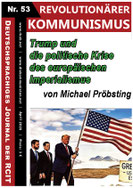
Inhalt
Zur Schwäche des imperialistischen Europas
Sich vereinen oder Vasallen werden
Die kommenden bürgerlichen Angriffe: Krieg statt Wohlfahrt
Linker Reformismus angesichts sich beschleunigender inner-imperialistischer Rivalität zwischen den USA und Europa
„Linke“ Berater des europäischen Imperialismus
Die Taktik des revolutionären Defätismus in Europa
Für die Vereinigten Sozialistischen Staaten von Europa!
Eurozentrismus und Pazifismus versus internationalistischer Anti-Imperialismus
Ein Programm des Kampfes
* * * * *
Einleitung
Es besteht kein Zweifel, dass der europäische Imperialismus seine größte existenzielle Krise seit 80 Jahren erlebt. Während zwei verheerende Kriege den Kontinent in der ersten Hälfte des 20. Jahrhunderts prägten, war die Zeit seit 1945 durch friedliche Beziehungen zwischen den imperialistischen Mächten Europas und einen Prozess politischer und wirtschaftlicher Integration gekennzeichnet. Dies war natürlich nur vor dem Hintergrund des Kalten Krieges gegen die stalinistischen Staaten und der Konsolidierung der absoluten Hegemonie des US‑Imperialismus im Lager der kapitalistischen Staaten nach dem Ende des Zweiten Weltkriegs möglich. Infolgedessen spielten die europäischen Mächte innerhalb des von den USA geführten imperialistischen Systems eine untergeordnete Rolle. 1
Historische Ereignisse haben jedoch die objektive Grundlage für dieses Verhältnis untergraben. Erstens beendete der Zusammenbruch der UdSSR im Jahr 1991 den Kalten Krieg, und zweitens eröffnete die Große Rezession 2008 eine historische Periode des Niedergangs des globalen Kapitalismus. 2 Vor diesem Hintergrund fielen sowohl die USA als auch die europäischen Mächte zurück, während neue imperialistische Mächte – vor allem China, aber auch Russland – als Rivalen aufstiegen. 3
Diese Entwicklungen bilden den Hintergrund für die tiefgreifenden Ereignisse der letzten Wochen, welche die transatlantische Allianz zwischen Nordamerika und Westeuropa entscheidend erschüttert haben. Wie wir in mehreren Publikationen dargelegt haben, hat der Prozess des Niedergangs den US‑Imperialismus dazu gezwungen, eine neue außenpolitische Doktrin aufzustellen, die neue und realistischere Ziele setzt.
Nach dieser „Donroe‑Doktrin“ wird Washington nicht mehr versuchen, als globaler Hegemon zu agieren, sondern vielmehr eine Art Entspannung mit dem russischen und chinesischen Imperialismus anstreben. Stattdessen will sich die USA darauf konzentrieren, die westliche Hemisphäre vollständig zu dominieren. 4 Daher hat sie eine reaktionäre Offensive eröffnet mit dem Ziel, Lateinamerika zu rekolonialisieren 5 – beginnend mit der Entführung des venezolanischen Präsidenten und mit dem Ziel eines Regimewechsels in anderen Ländern (beispielsweise in Kuba). 6
Die Donroe‑Doktrin zielt außerdem auf einen Bruch der transatlantischen Allianz mit Europa ab. Da die USA gezwungen sind, ihre globale militärische Präsenz zu reduzieren und eine Entspannung mit Russland anstreben, haben sie kein Interesse daran, eine teure Allianzstruktur wie die NATO aufrechtzuerhalten. Darüber hinaus will die USA ihr Territorium erweitern und Grönland annektieren – die größte Insel der Welt, die seit mehreren Jahrhunderten Dänemark (einem Mitglied der EU) gehört. Im Anschluss könnte Trump auch eine Besetzung Islands anstreben.
Ebenso will Washington den europäischen Imperialismus entscheidend schwächen. Wie wir in unserer oben genannten Analyse der neuen Nationalen Sicherheitsstrategie gezeigt haben, streben die USA einen Rückbau der europäischen Integration und die Spaltung des Kontinents entlang nationaler Linien an. Dies soll Amerika ermöglichen, einige dieser Staaten in loyale Vasallen zu verwandeln und die übrigen zu schwächen. 7
Nicht überraschend hat Trumps unverhohlene Verachtung für Europa und die transatlantischen Beziehungen sowie sein Entschluss, Grönland zu erobern, massive Empörung und Proteste unter europäischen (sowie kanadischen) Staats- und Regierungschefs ausgelöst. Die Reden und Erklärungen beim Weltwirtschaftsforum in Davos in der vergangenen Woche zeigten die „Zerrüttung der Weltordnung“ (kanadischer Premierminister Mark Carney) und Europas Angst, „ein elender Sklave“ der USA zu werden (belgischer Premierminister Bart De Wever). Der eskalierende Austausch von Drohungen hat einen bedeutenden Teil der europäischen herrschenden Klasse dazu veranlasst, darüber nachzudenken, wie man gegen die USA zurückschlagen kann (beispielsweise das sogenannte „Anti‑Coercion Instrument“, das amerikanischen Unternehmen den Zugang zum europäischen Binnenmarkt einschränken würde) und wie der Kontinent seine „strategische Autonomie“ herstellen kann, also als Großmacht unabhängig von den USA zu handeln.
Zur Schwäche des imperialistischen Europas
Die Versuche Europas, Trumps Bestrebungen, die EU zu zerstören, zu widerstehen, stoßen jedoch auf große Hindernisse. Wirtschaftlich hat der europäische Kapitalismus in den letzten drei Jahrzehnten dramatisch an Stärke verloren. Sein Anteil an der globalen Industrieproduktion unter den führenden 20 Ländern ist von 23,8 % (1995) auf 13,4 % (2023) gesunken. (Siehe Tabelle 1)
Tabelle 1. Die führenden 20 Länder in der globalen Produktion, 1995 und 2023 8
1995 2023
1 USA 23,6% 1 China 31,8%
2 Japan 12,6% 2 USA 15,0%
3 Deutschland 8,4% 3 Japan 6,6%
4 China 4,9% 4 Deutschland 4,6%
5 Italien 4,7% 5 Indien 3,2%
6 Frankreich 3,2% 6 Südkorea 3,0%
7 Großbritannien 3,1% 7 Großbritannien 1,9%
8 Brasilien 2,8% 8 Italien 1,8%
9 Mexico 2,5% 9 Mexico 1,8%
10 Kanada 2,2% 10 Frankreich 1,7%
11 Südkorea 2,1% 11 Indonesien 1,5%
12 Spanien 2,0% 12 Taiwan 1,4%
13 Russland 1,6% 13 Türkei 1,4%
14 Indien 1,5% 14 Russland 1,3%
15 Schweiz 1,4% 15 Irland 1,3%
16 Indonesien 1,4% 16 Brasilien 1,2%
17 Australien 1,2% 17 Schweiz 1,1%
18 Argentinien 1,0% 18 Kanada 1,0%
19 Niederlande 1,0% 19 Spanien 1,0%
20 Thailand 0,9% 20 Thailand 0,8%
Gemeinsamer Anteil
der genannten
Europäischen Staaten: 23,8% 13,4%
Ebenso ist der Anteil Europas unter den weltweit führenden Konzernen – laut der Fortune Global 500‑Liste – von 27,2% (2005) auf 17,8% (2023) gesunken. (Siehe Tabelle 2)
Tabelle 2. Die führenden 10 Länder mit Bewertung von Fortune Global 500 Unternehmen, 2005, 2012 und 2023 9
Rang Land Unternehmen (Anteil in %)
2005 2012 2023
1 USA 175 (35,0%) 132 (26,4%) 136 (27,2%)
2 China (exkl. Taiwan) 16 (3,2%) 73 (14,6%) 135 (27,0%)
3 Japan 81 (16,2%) 68 (13,6%) 41 (8,2%)
4 Deutschland 37 (7,4%) 32 (6,4%) 30 (6,0%)
5 Frankreich 39 (7,8%) 32 (6,4%) 23 (4,6%)
6 Südkorea 11 (2,2%) 13 (2,6%) 18 (3,6%)
7 Großbritannien 35 (7,0%) 26 (5,2%) 15 (3,0%)
8 Kanada 13 (2,6%) 11 (2,2%) 14 (2,8%)
9 Schweiz 11 (2,2%) 15 (3,0%) 11 (2,2%)
10 Niederlande 14 (2,8%) 12 (2,4%) 10 (2,0%)
Gemeinsamer Anteil
der genannten
europäischen Staaten: 136 (27,2%) 117 (23,4%) 89 (17,8%)
Der gleiche Prozess findet im Finanzsektor statt. Als Beispiel führen wir das Gewicht Europas unter den führenden 1000 Weltbanken an, berechnet nach Gewinnanteilen, welche sich von 43% (2006) auf 21% (2019) deutlich verringerte. (Siehe Tabelle 3)
Tabelle 3. Die führenden 1000 Weltbanken, Profitanteile nach Region (2006 und 2019) 10
2006 2019
Nordamerika 27% 27%
Asien 20% 42%
Europa 43% 21%
Eine ähnliche, wenn auch weniger drastische Entwicklung, ist im Welthandel zu beobachten. Der Anteil der Europäischen Union (ohne EU-internem‑Handel) sank von 13,5% im Jahr 2000 auf 11,4% im Jahr 2023, und jener der USA von 15,6% auf 10,8%. Im Gegensatz dazu stieg der Anteil Chinas im gleichen Zeitraum von 3,6% auf 12,3%. (Siehe Abbildung 1)
Abbildung 1. Der Anteil von China, der EU und den USA am Welthandel, 2000-2023 11

Wenn man den Europa-internen Handel einbezieht, sank der Anteil der Region am weltweiten Warenexport von 46,2% im Jahr 2003 auf 35,8% im Jahr 2022. 12
Auch im militärischen Bereich liegt der europäische Imperialismus hinter seinen Rivalen zurück, auch wenn sein kombiniertes Militärbudget im Verhältnis zu seinen imperialistischen Rivalen in den letzten 15 Jahren nur leicht gesunken ist – von 19,4% (2010) auf 17,4% (2024). (Siehe Tabelle 4)
Tabelle 4. Westeuropas Anteil an den globalen Militärausgaben, 2010 und 2024 (in Milliarden US-Dollar) 13
2010 2024
Gesamt 1,630 2,718
Westeuropa, Zentraleuropa 316 (19,4%) 472 (17,4%)
Wenn es jedoch um die wirkungsstärksten Waffen geht – nukleare Sprengköpfe – liegt Europa weit hinter seinen Rivalen. Frankreich ist der einzige EU‑Staat mit Atomwaffen, und die einzige weitere nuklear bewaffnete Macht in Europa ist Großbritannien. Ihre gemeinsame Zahl an Sprengköpfen ist geringer als jene Chinas und beträgt nur ein Zehntel des Bestands Russlands oder der USA. (Siehe Tabelle 5)
Tabelle 5. Globale nukleare Sprengköpfe, 2025 14
Land Stationiert & Gesamtinventar
Lagernd (inkl. Stillgelegter)
Russland 4,309 5,459
USA 3,700 5,177
China 600 600
UK 225 225
Frankreich 290 290
Ein weiteres Beispiel ist der Rückgang des Anteils europäischer Unternehmen unter den weltweit führenden Rüstungskonzernen. Während 2002 noch acht der führenden 25 Konzerne in Europa ansässig waren, waren es 2023 nur noch vier. Im Gegensatz dazu hatten China 2023 sechs und Russland ein Unternehmen unter den führenden 25 – Länder, die 2002 in dieser Liste keinen einzigen Eintrag hatten. 15
Betrachtet man die Militärausgaben der Staaten im Vergleich zu ihrem jährlichen Bruttoinlandsprodukt (BIP) zeigt sich ebenfalls, dass die drei wichtigsten europäischen Mächte hinter den USA oder Russland zurückbleiben. (siehe Tabelle 6)
Tabelle 6. Militärausgaben in 2023 (in US-Dollar und Anteil des BIP) 16
In Milliarden US-Dollar Anteil am BIP
USA 880,1 3,4%
China 309,5 1,7%
Russland 126,5 5,9%
Großbritannien 69,2 2,3%
Deutschland 61,2 1,5%
Frankreich 57,1 2,1%
Natürlich bedeutet das nicht, dass die Monopolkapitalisten Europas impotent geworden ist. Sie kontrollieren nach wie vor einen beträchtlichen Teil der kapitalistischen Wertproduktion – ihr kombinierter Anteil an der weltweiten Produktion kommt dem der USA nahezu gleich. Das führt uns jedoch zu einer grundlegenden strategischen Schwäche des europäischen Imperialismus: seiner Aufteilung entlang nationaler Grenzen. Die Europäische Union (der Großbritannien seit 2016 nicht mehr angehört) stellt keinen einheitlichen Staat mit einer einzigen Armee, Bürokratie und dergleichen dar. Die EU ist vielmehr ein enges Bündnis von Nationalstaaten, die in einigen Interessen übereinstimmen, in anderen Fragen jedoch auseinandergehen.
Um „strategische Autonomie“ zu erlangen, müsste die herrschende Klasse Europas ihre engen nationalen Interessen überwinden und voranschreiten, um ein gemeinsames europäisches Heer, einen gemeinsamen Binnenmarkt, eine gemeinsame Energiepolitik, einen Kapitalmarkt und so weiter zu schaffen. Dabei stehen sie jedoch vor enormen Hindernissen. Trotz jahrzehntelanger Reformen zur Schaffung eines liberalisierten europäischen Binnenmarkts bestehen in verschiedenen Bereichen zahlreiche EU-internen Barrieren fort. Einer kürzlich veröffentlichten Studie des IWF zufolge entsprechen diese Barrieren – „fragmentierte Regulierung, ineffiziente und fragmentierte Finanzintermediation, begrenzte Arbeitsmobilität und ein fragmentiertes Energiesystem“ – im Durchschnitt einem Zoll von 44% auf Waren und 110% auf Dienstleistungen. 17 Die Beseitigung dieser Barrieren würde jedoch nicht nur massive Angriffe auf die Arbeiterklasse durch Senkung der Löhne und Abbau von Arbeitsrechten nach sich ziehen, sondern auch den Prozess der Monopolisierung beschleunigen, das heißt große Konzerne würden kleinere Kapitalisten verschlingen, die derzeit durch unterschiedliche nationale Standards noch einen gewissen Schutz genießen.
Ebenso weist der Kapitalmarkt Europas weiterhin verschiedene Beschränkungen auf. Infolgedessen wenden sich europäische Konzerne häufig an US‑Finanzinstitute, um Kredite zu erhalten, und Verbraucher nutzen oft Kreditkarten amerikanischer Unternehmen.
Darüber hinaus müsste die EU, um das europäische Monopolkapital zu stärken, ihre neoliberale Politik aufgeben und zu staatlich‑kapitalistischen Interventionen und Regulierungen übergehen. Laut dem bekannten Draghi‑Bericht – einem 2024 veröffentlichten Dokument, das eine Perspektive für den Aufbau einer stärkeren und mehr integrierten Union vertritt – müsste die EU ein massives Programm öffentlicher Ausgaben mobilisieren. Der Bericht rechnet vor, dass „ein jährliches zusätzliches Mindestinvestitionsvolumen von 750 bis 800 Mrd. EUR (…) entsprechend 4,4% - 4,7% des EU‑BIP 2023“ erforderlich wäre. „Zum Vergleich: Die Investitionen im Rahmen des Marshallplans zwischen 1948–1951 entsprachen 1% - 2% des EU‑BIP. Um diese Erhöhung zu erreichen, müsste der Investitionsanteil der EU von heute rund 22% des BIP auf etwa 27% springen.“ 18
Die gleichen Probleme bestehen im militärischen Bereich. Es gibt nur sehr wenige strategische Projekte zur Schaffung gemeinsamer Heeresstrukturen. Erst vor drei Jahren drängte Deutschland – gegen den Widerstand von Frankreich, Italien und Spanien – auf die European Sky Shield Initiative, ein integriertes europäisches Luftverteidigungssystem, das auf US‑Unterstützung angewiesen ist. Ebenso bleiben Initiativen zur Schaffung gemeinsamer europäischer Streitkräfte größtenteils nur auf dem Papier.
Auf politischer Ebene steht die EU vor verschiedenen Hindernissen, weil jedem Nationalstaat ein Vetorecht in Außen‑ und Sicherheitspolitik eingeräumt wird. Daher ist sie bei wichtigen Entscheidungen oft gelähmt oder kommt erst nach erheblicher Verzögerung zu Beschlüssen (beispielsweise Ungarns Veto gegen Sanktionen gegen Russland).
Sich vereinen oder Vasallen werden
Trotz all dieser Schwächen darf man nicht vergessen, dass die Europäische Union von mehreren imperialistischen Mächten (Deutschland, Frankreich, Italien und Spanien) dominiert wird und auch kleinere imperialistische Staaten wie die Benelux‑Länder, Schweden oder Österreich einschließt. Großbritannien, das die EU vor einigen Jahren verlassen hat, ist ebenfalls eine imperialistische Macht (wenn auch nicht so groß, wie sich manche nostalgischen englischen Chauvinisten vorstellen!). Das bedeutet, dass die herrschenden Klassen dieser Länder starke materielle Interessen und die notwendigen wirtschaftlichen und politischen Instrumente besitzen, um einem solchen Druck der Trump‑Administration zu widerstehen.
Es ist jedoch nicht möglich, dass diese Staaten im globalen Konzert der Großmächte eine relevante Rolle spielen, wenn sie nur als Einzelstaaten agieren. Die USA, China und Russland sind weitaus mächtiger. Um ein ebenwürdiger Akteur zu werden, müssten die europäischen Mächte den politischen, wirtschaftlichen und militärischen Integrationsprozess qualitativ vertiefen, sodass die EU einen zentralisierten pan-europäischen Staatsapparat schafft. 19
Wie wir anderswo bereits ausgeführt haben, ist eine solche Transformation der EU möglich, erfordert jedoch drastische Veränderungen. Es bräuchte eine Art europäischen Bismarck, der diesen Integrationsprozess vorantreibt, indem er Unterstützung in bedeutenden Sektoren der herrschenden Klasse der europäischen Großmächte mobilisiert. Natürlich würde ein solches Projekt auf heftigen Widerstand von Teilen der Bourgeoisie verschiedener Länder stoßen, die ihre „egoistischen“ nationalstaatlichen Interessen verteidigen. Die wütenden rechtspopulistischen Kräfte würden ebenfalls versuchen, einen solchen Prozess zu stoppen. Weiters würde Washington (wie auch Moskau) alles tun, um die Vereinigung des europäischen Imperialismus zu behindern. 20
Die Forderung bürgerlicher Kräfte, den Integrationsprozess der EU voranzutreiben, gibt es bereits seit vielen Jahren. Bislang ist es ihnen jedoch nicht gelungen, den Widerstand nationaler Mächte zu überwinden. Letzte Woche startete eine Gruppe bürgerlicher Politiker, überwiegend mit liberalem und sozialdemokratischem Hintergrund, eine weitere Initiative. Zu dieser Gruppe gehören Josep Borrell (bis letztes Jahr „Außenminister“ der EU), Guy Verhofstadt (ehemaliger Premierminister Belgiens), Javi López (Vizepräsident des Europäischen Parlaments), sowie eine Reihe ehemaliger Präsidenten und Minister von EU‑Mitgliedstaaten, ehemalige und aktuelle Mitglieder des Europäischen Parlaments und mehrere Intellektuelle (darunter der „linke“ Philosoph Slavoj Žižek!).
Der gemeinsame Appell dieser Gruppe lautet: „Es ist klar, dass das auf externer Abhängigkeit von den USA basierende Sicherheitsmodell ausgedient hat und dass die bisher verfolgte Beschwichtigungspolitik in einem völligen Scheitern geendet hat.“ Er fordert eine starke Antwort auf Trumps Drohungen durch protektionistische Maßnahmen. „Die Europäische Union darf das Abkommen vom Juli 2025 über einseitige US‑Zölle von 15% auf EU‑Produkte nicht umsetzen. Im Gegenteil, die als Reaktion auf die Eskalation im April 2025 vorbereiteten Gegenmaßnahmen in Höhe von 93 Mrd. Euro müssen umgesetzt werden und das Anti‑Coercion Instrument sofort aktiviert werden, um diesen diskriminierenden Maßnahmen entgegenzuwirken und unsere Freiheit politischer Entscheidungsfindung vor äußerem Druck zu schützen.“ 21
Folglich plädieren die Verfasser für die Schaffung eines pan-europäischen Staates, der als Großmacht in der Weltpolitik agieren kann. „Nur eine föderale Union mit einem gestärkten Parlament, das eine starke Exekutive kontrolliert, kann unsere Souveränität und unsere Lebensweise garantieren. Trump sollte vor allem eine Chance für Europa sein, politische Einheit zu erreichen. In Sicherheitsfragen kann Europa nicht länger ein fragmentiertes Protektorat bleiben; es muss eine souveräne Macht werden.“
Gleichzeitig existiert weiterhin ein beträchtlicher Teil der herrschenden Klasse, der die transatlantische Allianz mit den USA erhalten möchte und zu allen möglichen Kompromissen bereit ist. Ihr prominentester Vertreter ist wohl Mark Rutte, NATO‑Generalsekretär und ein alternder Bursche, der Trump seinen „Daddy“ nennt. Letztlich wird die Entscheidung jedoch bei den Führern der europäischen Mächte liegen – vor allem bei Deutschland und Frankreich.
Die vergangenen Jahre haben gezeigt, dass nur tiefe Erschütterungen Europas Führung dazu zwingen könnten, ihre nationalen Spaltungen zu überwinden und bei der Schaffung des pan-europäischen Staatsapparats voranzukommen. Ob Trumps Angriffe – wie die Annexion Grönlands – eine solche Erschütterung auslösen können, bleibt abzuwarten. Am Ende steht der europäische Imperialismus vor der Wahl: sich zu vereinen oder in Nationalstaaten zu zerfallen, die zu Vasallen oder beinahe‑Vasallen anderer imperialistischer Mächte werden.
Natürlich sind auch Zwischenszenarien möglich. So könnte sich die Europäische Union spalten, und eine kleinere Union (oder zwei Unionsblöcke) könnte unter Führung Deutschlands oder Frankreichs entstehen.
Selbstverständlich wird eine solche Entwicklung nicht von heute auf morgen geschehen. Aber es ist klar, dass Europa nicht im gegenwärtigen Zustand verharren kann. In wenigen Jahren wird der Kontinent sehr anders aussehen als heute.
Die kommenden bürgerlichen Angriffe: Krieg statt Wohlfahrt
Die verschiedenen Sektoren der europäischen Bourgeoisie verfolgen unterschiedliche Ziele. Ein Sektor will eine pan-europäische imperialistische Großmacht schaffen, andere wollen die Souveränität ihres imperialistischen Nationalstaats zurückgewinnen. Natürlich wird es auch Kräfte geben, die eine kleinere Föderation oder einen Kompromiss zwischen diesen Szenarien anstreben. Kaum einer dieser Sektoren jedoch will die politische Physiognomie der EU so belassen, wie sie heute ist – alle streben eine grundlegende Veränderung an.
Je mehr die EU zu einer übernationalen Föderation wird, je stärker der Binnenmarkt alle Volkswirtschaften integriert, je zentralisierter politische Entscheidungsfindung und öffentliche Ausgaben werden, desto weiter schreitet die Monopolisierung voran. Das bedeutet, dass die großen Konzerne ihre Dominanz ausbauen und kleine bis mittlere Kapitalisten beseitigen. Ebenso würde ein solcher Prozess die politische Dominanz der imperialistischen Mächte über die kleineren imperialistischen Staaten und noch stärker über Europas halb-koloniale Länder (wie Irland, Griechenland und osteuropäische Staaten) intensivieren.
Gibt es hingegen einen Rückbau der EU und gewinnen die Nationalstaaten mehr Souveränität zurück, werden ihre Volkswirtschaften auf dem Weltmarkt zwangsläufig stärker unter Druck geraten und von anderen Großmächten bedrängt werden. Nationalstaaten mögen ihre Kapitalisten eine Zeit lang schützen können, doch letztlich werden internationale Monopole sie dominieren. Solange das kapitalistische System besteht, kann niemand dem Wertgesetz entkommen.
Unabhängig vom genauen Szenario werden die breiten Massen massive Angriffe auf ihren Lebensstandard, ihre Arbeitsrechte und ihre demokratischen Rechte erleiden. In jedem Szenario wird die herrschende Klasse gezwungen sein, ihre Rüstungsausgaben dramatisch zu erhöhen, um in einer von einem „Gesetz des Dschungels“ beherrschten Welt zu überleben. 22 Ein solches Rüstungsprogramm wird Hunderte von Milliarden kosten. Ebenso empfiehlt, wie oben erwähnt, der Draghi‑Bericht ein jährliches öffentliches Investitionsprogramm von bis zu 800 Mrd. Euro. Da wir in einer Periode des kapitalistischen Niedergangs leben, die durch Krisen und wirtschaftliche Stagnation gekennzeichnet ist, bleibt der herrschenden Klasse als einzige Möglichkeit, die nötigen Mittel zu mobilisieren, nur ein massiver Abbau der Sozialleistungen und Angriffe auf Arbeitsrechte.
Manche naive „linke“ Anhänger des Keynesianismus mögen einwenden, ein solches Investitionsprogramm könne durch steigende Verschuldung finanziert werden. Schulden führen jedoch zu Zinszahlungen und Rückzahlungen, und die Bourgeoisie wird natürlich dafür sorgen, dass die breiten Massen gezwungen werden, diese Kosten zu tragen!
Solche Angriffe auf die Arbeiterklasse und die Massen, sowie der Prozess der politischen und wirtschaftlichen Monopolisierung werden zwangsläufig Widerstand aus allen Richtungen provozieren. Da der Arbeiterklasse in Europa droht, viele ihrer in den letzten 80 Jahren errungenen historischen Rechte zu verlieren, ist mit massenhaftem Widerstand gegen diese Angriffe zu rechnen.
Gleichzeitig ist mit Empörung rechter nationalistischer Kräfte gegen jeden Versuch zu rechnen, die EU zu zentralisieren und eine pan-europäische Föderation zu errichten. Dies gilt umso mehr, je stärker kleine und mittlere Kapitalisten – unter denen rechtspopulistische und faschistische Strömungen historisch wiederholt starke Unterstützung gefunden haben – in die Krise geraten.
In jedem Fall wird sich der chauvinistische Hass verstärken. Zentralisiert sich die EU, wird sie eine Ideologie des pan-europäischen Chauvinismus gegenüber anderen Großmächten, sowie gegenüber Migranten und Flüchtlingen propagieren. Dieser Prozess läuft bereits seit einigen Jahren. Ebenso würde ein Rückbau der EU, bei dem Nationalstaaten ihre Souveränität zurückerlangen, mit einem Aufstieg des nationalen Chauvinismus einhergehen. In jedem Fall wird die herrschende Klasse Sündenböcke brauchen, um das unvermeidliche Anwachsen des Elends der Massen zu erklären und Militarismus wie auch Aufrüstung zu rechtfertigen.
Diese Politik der Angstmacherei und des chauvinistischen Hasses (gegen ausländische und/oder inländische Feinde) ist nicht nur ein notwendiges Instrument rechtspopulistischer Parteien, sondern auch der herrschenden Elite, die stark diskreditiert ist und kaum noch breite Zustimmung für ihre „Krieg-statt-Wohlfahrt“-Politik gewinnen kann.
Angesichts der dramatischen Veränderungen in der offiziellen Politik, einer herrschenden Klasse in der Krise, die eine neue Orientierung suchen muss, und der unvermeidlichen Angriffe auf die Massen wird Europa in den kommenden Jahre höchstwahrscheinlich von politischer Instabilität und revolutionären Explosionen geprägt sein.
Aus diesen Gründen halten wir es auch für unvermeidlich, dass die herrschende Klasse in Europa systematisch demokratische Rechte angreifen wird. Welche Szenarien auch eintreten mögen – die Schaffung eines pan-europäischen Staates, kleinere imperialistische Bündnisse oder die Wiederherstellung der Nationalstaaten – Volksaufstände, tiefe Spaltungen innerhalb der herrschenden Klasse, scharfe Polarisierung des politischen Lebens, unvorhersehbare Erschütterungen in der Weltpolitik, neue Pandemien oder Klimakatastrophen werden die herrschende Klasse zwingen, die bürgerliche Demokratie abzubauen und die Entstehung bonapartistischer Regime voranzutreiben. Ein solcher Prozess hat bereits vor einigen Jahren begonnen und wurde nicht nur von rechten Kräften, sondern auch von sogenannten liberalen Parteien befürwortet – man denke an die COVID Konterrevolution 2020-22 oder die Repressionen gegen pro‑palästinensische Proteste seit Beginn des Gaza-Krieges am 7. Oktober 2023. Ein weiteres aktuelles Beispiel für die zunehmenden Tendenzen zum Bonapartismus ist die öffentliche Kampagne für mehr staatliche Kontrolle sozialer Medien wegen angeblicher „ausländischer Manipulation“ durch gegnerische Mächte (beispielsweise Russland, China und Elon Musk) oder zum „Schutz der Jugend“ (Verbot der Nutzung sozialer Medien für junge Menschen).
Linker Reformismus angesichts sich beschleunigender inner-imperialistischer Rivalität zwischen den USA und Europa
Die politische Krise des europäischen Imperialismus stellt den linken Reformismus auf die Probe. Da wir in eine Periode der Aufrüstung und imperialistischen Mobilisierung gegen äußere Bedrohungen (Trump, China, Russland) eingetreten sind, werden diese Kräfte dem Druck des Chauvinismus und der militaristischen Politik der „Verteidigung des Vaterlands“ standhalten können?
Die wichtigsten Kräfte des linken Reformismus sind einerseits die Partei der Europäischen Linken (PEL), deren bedeutendste Parteien die LINKE (Deutschland), Syriza (Griechenland), die Französische Kommunistische Partei (PCF) und die spanischen IU und PCE. Die andere Hauptkraft ist die European Left Alliance for the People and the Planet (ELA), die sich 2024 von der PEL abgespalten hat. Die wichtigste Partei der ELA ist die La France Insoumise unter der Führung von Jean‑Luc Mélenchon. Sie umfasst auch nennenswerte Kräfte wie die dänische Enhedslisten / Red‑Green Alliance, die finnische Linksallianz oder Podemos (Spanien).
Grundsätzlich bestehen keine grundlegenden politischen Unterschiede zwischen den beiden zerstrittenen Geschwisterorganisationen. 23 Parteien beider Bündnisse beteiligen sich an bürgerlichen Regierungen, die Teil der NATO sind (beispielsweise die spanischen IU und PCE 24 oder die finnische Linksallianz (bis 2023) 25 sowie Podemos). Die deutsche LINKE war wiederholt Teil regionaler Koalitionsregierungen mit pro‑NATO‑Parteien. Andere Mitgliedsparteien taten dies in der Vergangenheit ebenfalls – so setzte Syriza in den Jahren 2015-19 26 die von der EU diktierten Sparprogramme durch, und die PCF war Teil der Jospin‑Regierung, als Frankreich an den Kriegen gegen Serbien (1999) und gegen Afghanistan (2001) teilnahm. Darüber hinaus hat die deutsche LINKE eine lange Geschichte der Unterstützung des zionistischen Siedlerstaates und der Verfolgung pro‑palästinensischer Aktivisten in ihren Reihen. 27
Es ist daher zu erwarten, dass sich diese links-reformistischen Kräfte der chauvinistischen Bewegung „Europa gegen Trump verteidigen“ anschließen werden. Die ersten Reaktionen der letzten Wochen sind bereits deutliche Indikatoren dafür. Die dänische Enhedslisten ruft Europa dazu auf, sich gegen Trump zu wehren. Zwei ihrer Abgeordneten und Sprecherinnen, Trine Pertou Mach und Pelle Dragsted, schreiben in einem Artikel:
„Es ist von größter Bedeutung, dass die europäischen und nordischen Länder standhaft bleiben und konsequent das Völkerrecht verteidigen und Verstöße verurteilen, unabhängig davon, welcher Staat verantwortlich ist. (…) Wir brauchen massiven Druck auf die europäischen politischen Führungspersonen, sich von Beschwichtigung und Nachgiebigkeit gegenüber den USA zu distanzieren und konsequent auf dem Völkerrecht, der UN‑Charta und dem Recht auf Selbstbestimmung zu bestehen — in Venezuela, Kolumbien, Grönland, der Ukraine, Palästina und überall.“ 28
Diese Aufforderung an die Führungen der imperialistischen EU (beziehungsweise ihrer Mitgliedstaaten), sich gegen die USA zu stellen, ist nichts anderes als ein kaum verschleierter Aufruf, sich auf die Seite des imperialistischen „Vaterlands“ gegen den fremden Feind zu stellen.
Per Clausen, EU‑Abgeordneter der Enhedslisten, war in seinen Forderungen noch deutlicher. Eine Pressemitteilung seiner Partei zitiert ihn mit den Worten:
„Zumindest erwarte ich, dass sowohl die EU‑Außenbeauftragte Kaja Kallas, als auch der Kommissar mit Verantwortung für Handel und wirtschaftliche Sicherheit, Maroš Šefčovič, zu handeln beginnen. Sie müssen den USA sehr deutlich machen, dass wenn man einem EU‑Land wegen territorialer Ambitionen wirtschaftlichen Druck androht, man die gesamte EU bedroht. (…)“ 29
Die Pressemitteilung fügt hinzu, dass ein „Mangel an EU‑Unterstützung ein großes Zeichen der Schwäche ist“ und zitiert Clausen weiter, der die EU auffordert, sich an die Organisation Amerikanischer Staaten zu wenden, um eine gemeinsame Antwort gegen die USA zu koordinieren.
„Da Trump auch Kanada und Panama bedroht, halte ich es für nur natürlich, dass die EU sofort die Organisation Amerikanischer Staaten kontaktiert. Gemeinsam können sie den USA eine klare Botschaft senden, dass Drohungen mit Annexion, sowie militärischem und wirtschaftlichem Druck dieser Art inakzeptabel sind. Es ist wichtig, Trumps Leuten zu zeigen, dass die Länder, die er angreift, nicht allein sind.“
Kurz gesagt: Trumps verbale Drohungen, Grönland zu annektieren, reichten aus, damit sich solche linken Reformisten hinter die imperialistische EU stellen und alle notwendigen Maßnahmen unterstützen, um den ausländischen Rivalen abzuschrecken. Ist es nicht offensichtlich, dass solche Personen im Falle eines militärischen Konflikts mit den USA oder einer anderen Großmacht begeistert „ihre“ Armee unterstützen werden?!
„Linke“ Berater des europäischen Imperialismus
Die Partei der Europäischen Linken verfolgt einen ähnlichen Ansatz und fordert Unterstützung der EU gegen ihre ausländischen Feinde. Schon vor einem Jahr äußerte sie „ihre tiefste Besorgnis über Trumps Pläne“ und verurteilte „die Nachlässigkeit der europäischen herrschenden Klasse“. Sie erklärte:
„Der Mangel an Reaktion der europäischen herrschenden Klasse und der Europäischen Kommission ist beschämend. Trump bereitet Europas Kapitulation gegenüber dem US‑Kapitalismus vor – mit aktiver Unterstützung der Rechtsextremen in Europa. Trumps territoriale Ansprüche und der Druck auf Staaten, ihre Militärausgaben auf 5% zu erhöhen, sind inakzeptabel. Das wird zu größerer Unterwürfigkeit gegenüber dem Washingtoner Imperialismus und der NATO führen. (…). Der Kampf für Frieden, Völkerrecht und soziale Gerechtigkeit war nie so aktuell. Es ist jetzt unerlässlich, einen Prozess einzuleiten, der zu echter strategischer Autonomie führt, der einzigen Möglichkeit, die kollektive Sicherheit des gesamten europäischen Kontinents und die souveränen Entscheidungen und die Solidarität seiner Völker in den Bereichen Industrie, Digitalisierung, Ernährung und Gesundheit zu gewährleisten.“ 30
Diese verbale Unterstützung der „strategischen Autonomie“ der EU drückt den Wunsch der PEL aus, „Europa wieder groß zu machen“. Das wird noch deutlicher in einem neuen Artikel von Walter Baier, dem Präsidenten der PEL, der zeigt, wie sehr diese Partei zu einem treuen Berater des europäischen Imperialismus geworden ist.
„Trumps Griff nach Grönland markiert das Ende der Illusion, Europas Sicherheit könne auf der NATO und auf US-Atomwaffen beruhen. (…). Für Ursula von der Leyen ist „europäische Autonomie“ zu einem Schlagwort geworden, mit dem Aufrüstung und die Militarisierung der EU gerechtfertigt werden. Echte europäische Autonomie ist jedoch weitaus anspruchsvoller. Sie erfordert unter anderem ein Ende der durch den Krieg in der Ukraine geschaffenen Abhängigkeit von US-Flüssigerdgas sowie den Abbau der monopolistischen Dominanz US-amerikanischer Konzerne im digitalen Sektor und bei den Finanzdienstleistern. Eine eigenständige europäische Industrie- und Technologiepolitik stößt aber auf eine offensichtliche Schwierigkeit. Sie lässt sich nicht im Korsett neoliberaler Austerität verwirklichen. Auch hier liegt das Hindernis für Autonomie in Europa selbst. (…). Sicherheit hat zweifellos auch eine militärische Dimension, doch sie ist vor allem ein politisches Ziel, dem das Militär untergeordnet sein muss. (…).
Anstatt im drohenden Handelskonflikt mit den Vereinigten Staaten nach Verbündeten zu suchen, beschließt die Europäische Kommission – genau in dem Moment, in dem China und Kanada eine strategische Partnerschaft ankündigen –, chinesische Anbieter vom europäischen Telekommunikations- und Infrastruktursektor auszuschließen und damit selbst einen Handelskrieg zu beginnen. Zwar kann Trump in seinem Kalten Krieg gegen die EU auf seine ideologischen Verbündeten in der radikalen Rechten zählen, die in einem Drittel der EU-Mitgliedstaaten Teil von Regierungskoalitionen sind. Doch wenn sie es wollte, hätte die EU-Führung weiterhin zahlreiche Handlungs- und Widerstandsmöglichkeiten. Stattdessen entscheidet sie sich aber für Beschwichtigung und für die Zusammenarbeit mit der radikalen Rechten. Europa wäre jedoch keineswegs machtlos – vorausgesetzt, es gäbe den Willen zu handeln und die entsprechenden Kräfteverhältnisse innerhalb seiner Institutionen.“ 31
Natürlich sind solche konstruktiven Ratschläge, wie sich die EU wirksamer gegen die USA manövrieren könnte, mit einigen bürgerlich‑pazifistischen Formulierungen verbunden. „Es sollte klar sein, dass ein sicheres und autonomes Europa nur unter Bedingungen des Friedens erreicht werden kann – eines Friedens, der durch Abkommen über den Gewaltverzicht in den Beziehungen zwischen Staaten, durch vertrauensbildende Maßnahmen und durch Schritte zur Abrüstung gestärkt wird. Dass dies keine Utopie ist, wurde mit der Unterzeichnung der Schlussakte von Helsinki bewiesen. Darauf aufzubauen wäre eine logische Schlussfolgerung, die Europa aus Trumps Politik ziehen sollte.“.
Solche pazifistischen Phrasen haben keine reale Bedeutung. Erstens äußern Staatsführer gewöhnlich ihren Wunsch nach „Frieden“ — einschließlich Hitler damals und Trump heute. Allzu oft dient „Frieden“ als Deckmantel zur Rechtfertigung von Aufrüstung und zur Vorbereitung des Krieges. Darüber hinaus sind bürgerliche Politiker darin geübt, alternative Kategorien zu erfinden, um formell abstreiten zu können, Krieg zu führen. So schicken sie Truppen auf „friedenssichernde“ oder „friedensstiftende“ Missionen, um gegen „Terrorismus“ zu kämpfen, „UN‑Resolutionen“ durchzusetzen und ähnliches. Putin war besonders kreativ und nannte seine Invasion in die Ukraine, an der Hunderttausende Soldaten beteiligt sind, nicht einen Krieg … sondern eine „spezielle Militäroperation“!
Zusammenfassend zeigt die Vergangenheit von Kräften wie der PEL und der ELA, sowie ihre öffentlichen Reaktionen auf die jüngsten Ereignisse, dass ihre Führungen sich hinter den imperialistischen Apparat der EU (oder den imperialistischen Nationalstaat) stellen und alle notwendigen Maßnahmen unterstützen werden, um den ausländischen Rivalen abzuschrecken. Wenn es hart auf hart kommt, werden sie für Militärausgaben stimmen und den Einsatz von Truppen unterstützen, um Grönland gegen die USA zu verteidigen oder andere Maßnahmen, die nötig sind, um ausländische Rivalen abzuschrecken.
Die Taktik des revolutionären Defätismus in Europa
Marxisten betrachten den europäischen Imperialismus, im Gegensatz zu linken Reformisten, nicht als ein „geringeres Übel“ im Vergleich zu den USA, Russland oder China. Tatsächlich war Europa – insbesondere Großbritannien, Frankreich und Spanien – der Erfinder des modernen Kolonialismus. In den 1950er und 1960er Jahren arbeiteten sie noch intensiv daran, nationale Befreiungskriege unterdrückter Völker in Algerien, Vietnam, Kenia und weiteren Staaten niederzuschlagen, mit Millionen von Toten als Folge. Kürzlich beteiligten sich europäische Mächte an imperialistischen Kriegen gegen Völker des Globalen Südens (beispielsweise Irak 1991, Afghanistan 2001-22) und entsandten Tausende von Soldaten, um afrikanische Länder unter ihrem Einfluss zu halten (Frankreich im Sahel). Wenn sich die Unterdrückten in ihren eigenen Kolonien erheben – wie die Kanaken in Neukaledonien 2024 – schicken sie Truppen, um den Aufstand niederzuschlagen.
Der Hauptunterschied zwischen den USA und Westeuropa besteht darin, dass Westeuropa militärisch schwächer ist als die USA. Im Wesentlichen sind sie jedoch beide imperialistische Mächte. Wie oben gezeigt, sind europäische Konzerne gut verstreten in der Liga der Monopole, die den Weltmarkt dominieren. Westeuropa ist eine reiche Enklave, die von billigen Importen aus dem Globalen Süden lebt. Ebenso profitieren diese imperialistischen Staaten massiv von Massenmigration aus armen Ländern, die ihnen billige Arbeitskräfte liefern. 32
Darüber hinaus bedeutet die Unterstützung von Europas „strategischer Autonomie“ und „Sicherheit“ nichts anderes, als Europa militärisch zu stärken, damit es seinen Rivalen – von Russland über China bis zu den USA – eigenständig entgegentreten kann. Mit anderen Worten: Die linken Reformisten unterstützen europäischen Militarismus und Imperialismus.
„Aber die Politiker der PEL und ELA rufen doch nach Frieden“, werden einige ihrer Anhänger einwenden. Sicher, doch solche Phrasen haben keine reale Bedeutung. Diese Parteien waren immer für Frieden … in Worten. In ihrem Handeln unterstützten sie jedoch Militarismus und Imperialismus, wann immer sie es schafften, einer bürgerlichen Regierung beizutreten – und dem Beitritt zu solchen Regierungen ist ihre Daseinsberechtigung! Wie oben erwähnt, unterstützten sie in Frankreich die imperialistischen Kriege gegen Serbien und Afghanistan, als sie in der Regierung waren. Seit Jahren sind links‑reformistischen Parteien Teil der spanischen Regierung – einem NATO‑Mitglied. Marxisten beurteilen politische Parteien nicht nach ihren Worten und Wahlversprechen, sondern nach ihren Taten. In ihren Taten sind die linke‑reformistischen Parteien sozial‑imperialistisch, also „sozialistische“ Unterstützer des Imperialismus!
Dasselbe gilt für jene stalinistische Parteien, die offen oder verdeckt den russischen oder chinesischen Imperialismus unterstützen. Wie wir wiederholt gezeigt haben, sind Parteien wie die KPRF (Russland), RKRP (Russland) und kleinere ultra‑stalinistische Parteien in Westeuropa eifrige Verteidiger der östlichen Großmächte. 33 Ebenso sympathisiert das deutsche Bündnis Sarah Wagenknecht (eine Abspaltung von der LINKE) mit dem russischen Imperialismus und befürwortet ein Bündnis Deutschlands mit der östlichen Großmacht. Jean‑Luc Mélenchon ist von der EU wenig begeistert und bevorzugt eher die traditionelle französische Politik der „Bündnisfreiheit“. Seiner Ansicht nach könnte ein solches imperialistisches Frankreich eine Art Allianz mit Russland und China anstreben.
Ein weiteres Beispiel sozial-chauvinistischer Verteidigung „ihres Vaterlands“ gegen „fremde Staaten“ ist die stalinistische KKE – eine führende Kraft unter den „orthodoxen“ stalinistischen Parteien. Sie fordert die Verteidigung Griechenlands gegen die Türkei, obwohl beide Länder kapitalistische Halb-Kolonien sind und in einem Konflikt untereinander nicht unterstützt werden dürfen. 34 Während einer Eskalation zwischen Griechenland und der Türkei 2018 ging der Generalsekretär der KKE, Dimitris Koutsoumbas, bei einer öffentlichen Kundgebung in Thessaloniki sogar so weit zu sagen: „Wir Kommunisten werden, wie immer in unserer hundertjährigen heldenhaften Geschichte, im Kampf für die Verteidigung unserer territorialen Integrität und unsere Hoheitsrechte in erster Reihe stehen. Damit jeder fremde Eindringling, wenn er es wagt, Griechenland anzugreifen, vernichtet wird.“ 35 Dies war kein Einzelfall, sondern vielmehr ein gewaltsamer Ausdruck des Ziels, das die KKE sogar in ihrem offiziellen Programm vertritt – den Kampf „für die Verteidigung der Grenzen, der souveränen Rechte Griechenlands“. 36
Ebenso sieht die RCIT keinen qualitativen Unterschied zwischen links‑reformistischen Kräften, welche die imperialistische EU „kritisch“ (oder nicht so kritisch) unterstützen, und jenen, die einen souveränen imperialistischen Nationalstaat bevorzugen. Die imperialistische Festung Europa oder die kleineren imperialistischen Festungen der Nationalstaaten – beide Optionen sind für Marxisten gleichermaßen reaktionär. Deshalb haben wir uns stets geweigert, zwischen einem Beitritt zur EU oder dem Verbleib außerhalb zu wählen, und stattdessen die Politik des internationalistischen Klassenkampfs und die Perspektive des Vereinigten Sozialistischen Staates von Europa vertreten. 37
Marxisten haben stets das Programm des revolutionären Defätismus in Konflikten zwischen imperialistischen Mächten vertreten. Diese Politik des revolutionären Defätismus wurde von Lenin und den Bolschewiki ausgearbeitet und nimmt die Position ein, in Konflikten zwischen Imperialisten keine der Großmächte zu unterstützen – weder die „eigene“ noch eine andere. Sie lehnt deren chauvinistische Politik, alle Formen wirtschaftlicher und finanzieller Sanktionen, sowie Protektionismus und imperialistische Aufrüstung ab. Sie befürwortet die Nutzung jedes Konflikts, um den Klassenkampf gegen imperialistische Regierungen voranzutreiben und ihn in einen Bürgerkrieg zu verwandeln – nach den Prinzipien Lenins und Liebknechts, ausgedrückt in den berühmten Parolen „Der Hauptfeind steht im eigenen Land“, „eine Niederlage ist das geringere Übel“ und „Verwandelt den imperialistischen Krieg in einen Bürgerkrieg gegen die herrschende Klasse“. Dieses Programm müssen Sozialistinnen und Sozialisten in Konflikten zwischen NATO und Russland, zwischen den USA und China oder zwischen Europa und den USA verfolgen. 38
Aus diesen Gründen erklärten wir in unserer Stellungnahme zum aktuellen Grönland‑Konflikt: „In jedem Konflikt zwischen den USA und europäischen Großmächten (oder Dänemark) wird der RCIT keine der beiden Seiten unterstützen und eine Position des revolutionären Defätismus einnehmen (…). Wir lehnen sowohl Trumps Annexionspläne als auch die koloniale Besetzung Grönlands durch Dänemark bzw. die EU ab. Wir fordern die Schließung aller imperialistischen Militärbasen aus Grönland und unterstützen das legitime nationale Selbstbestimmungsrecht der einheimischen Bevölkerung.“ 39
Die Aufgabe der Marxisten ist es, die Vorhut der Arbeiterklasse vorzubereiten, damit sie „ihren“ imperialistischen Staat (wie auch alle anderen) als den Hauptfeind ausmacht. Dazu gehört auch der entschiedene Widerstand gegen jede chauvinistische Propaganda, die Kultur und Religion unterdrückter Völker (beispielsweise muslimische Migranten in Europa) angreift, Migranten zur „Integration“ und Assimilation zwingt und die Muttersprache nationaler Minderheiten und Migranten nicht als gleichwertig anerkennen will. 40
Für die Vereinigten Sozialistischen Staaten von Europa!
Die RCIT hat stets die Perspektive der Vereinigten Sozialistischen Staaten von Europa vertreten – ein Programm, das erstmals von Leo Trotzki formuliert wurde, dem Organisator der Oktoberrevolution 1917 und Mitbegründer der Kommunistischen Internationale und später der Vierten Internationale. Die Losung der Vereinigten Sozialistischen Staaten von Europa wurde 1923 offiziell von der Kommunistischen Internationale übernommen. In einem damals veröffentlichten Artikel schrieb Trotzki: „Je schneller die Volksmassen das Vertrauen zu den eigenen Kräften zurückgewinnen, desto enger werden sie sich unter der Parole „Union der Arbeiter- und Bauernrepubliken Europas“ zusammenschließen, desto schneller wird das Entwicklungstempo der Revolution sein – diesseits und auch jenseits des Ozeans.“ 41
Fünf Jahre später jedoch strich die stalinistische Bürokratie diese Losung, da sie dem leninistischen Programm der Internationalisierung der Revolution feindlich gegenüberstand und stattdessen das national-bornierte Programm des „Sozialismus in einem Land“ vertrat.
Wir sind nicht für die Vereinigung Europas unter allen Bedingungen. Eine imperialistische Vereinigung des Kontinents, höchstwahrscheinlich unter Führung Deutschlands und Frankreichs, wäre zutiefst reaktionär. Sie würde in eine uneingeschränkte Dominanz Europas durch eine kleine Zahl von Monopolen, eine Absenkung des Lebensstandards, nationale Diskriminierung und Unterdrückung kleinerer Völker, sowie in eine Großmachtpolitik von Militarismus und Kriegstreiberei in der Weltpolitik münden. Nur ein sozialistisches Europa würde den Interessen der Massen nützen – sowohl in Europa als auch weltweit. So schrieb Trotzki 1940:
„Das Versprechen der Alliierten, ein demokratisches europäisches Bündnis zu schaffen, ist diesmal die primitivste aller pazifistischen Lügen. Der Staat ist kein Abstraktum, sondern das Instrument des Monopolkapitalismus. Solange die Konzerne und Banken nicht zum Wohle des Volkes enteignet sind, ist der Kampf zwischen Staaten genauso unvermeidlich wie der Kampf zwischen den Konzernen selbst. Der freiwillige Verzicht der mächtigsten Staaten auf durch ihre Stärke erworbene Vorteile ist eine genauso lächerliche Utopie wie die freiwillige Aufteilung der kapitalistischen Pfründen unter den Konzernen. Solange das kapitalistische Eigentum erhalten bleibt, wird ein demokratisches Bündnis nichts als eine schlimmere Wiederholung des Völkerbundes sein, mit all seinen Fehlern, nur ohne seine Illusionen. Vergeblich versuchen die imperialistischen Schicksalslenker, ein Heilsprogramm wiederzubeleben, das durch die Erfahrung der vergangenen Jahrzehnte vollständig in Zweifel gezogen wurde. Vergeblich wärmen deren kleinbürgerliche Lakaien pazifistische Allheilmittel auf, die schon vor langer Zeit zu ihrer eigenen Karikatur geworden sind. Die fortgeschrittenen Arbeiter werden sich nicht betrügen lassen. Der Friede wird nicht von den jetzt kriegführenden Kräften geschlossen. Die Arbeiter und Soldaten werden ihr eigenes Friedensprogramm diktieren!” 42
Gleichzeitig wollen wir aber auch nicht die Balkanisierung des Kontinents sehen, zerteilt in zahlreiche Nationalstaaten, die einander feindlich gegenüberstehen oder gar Kriege gegeneinander führen könnten. Wir wollen die Vereinigung des Kontinents, jedoch nicht in den Händen der herrschenden Klasse, sondern in den Händen der Arbeiter und Unterdrückten. Den Argumenten der Stalinisten gegen die Losung der Vereinigten Sozialistischen Staaten von Europa entgegentretend, sagte Trotzki:
„Aber den kommunistischen Parteien sind die Hände gebunden. Die Lebenserfahrungen mit dem tiefen historischen Inhalt sind im Interesse des Kampfes gegen die Opposition aus dem Programm der Komintern gestrichen worden. Umso entschiedener muss die Opposition diese Parole vertreten. In ihrer Person sagt die Avantgarde des europäischen Proletariats den heutigen Herren: Um Europa zu vereinigen, dazu ist vorerst vor allem nötig, Euch die Macht zu entreißen. Das werden wir machen. Wir werden Europa vereinigen. Wir werden es gegen die uns feindliche kapitalistische Welt vereinigen. Wir werden es zu einer mächtigen bewaffneten Basis des kämpfenden Sozialismus machen. Wir werden es zum Eckstein der sozialistischen Weltföderation machen.“ 43
Eurozentrismus und Pazifismus versus internationalistischer Anti-Imperialismus
Ein Teil der trotzkistischen Linken – etwa jene in der ökonomistischen Tradition von Ted Grant (IMT/RCI, CWI, ISA, ...) – unterstützt das Programm der Vereinigten Sozialistischen Staaten von Europa. Während sie zwar gegen imperialistische Kriege und die Großmachtpolitik Europas sind, unterstützen sie jedoch nicht die Kämpfe der unterdrückten Völker gegen die imperialistischen Mächte. Daher lehnen sie Aggressionen gegen Argentinien (Malvinas‑Krieg 1982), Irak (1991 und 2003), Afghanistan, Gaza, die Ukraine und dergleichen ab, stellen sich aber nicht auf die Seite des militärischen Widerstands der unterdrückten Völker. Sie lehnen nationale Unterdrückung ab, befürworten jedoch nicht den Befreiungskampf des irischen Volkes in Nordirland oder des ukrainischen Volkes gegen Putins Invasion. Sie sind gegen Rassismus, vertreten jedoch kein Programm vollständiger Gleichberechtigung für Migranten. 44
Mit anderen Worten: Sie haben nur ein eurozentriertes und pazifistisches Programm gegen den Militarismus, jedoch ohne Unterstützung für die nationalen Befreiungskämpfe der Massen. Das ist eine kleinbürgerliche Opposition gegen den Imperialismus und hat nichts mit Marxismus zu tun. Es ähnelt den Strömungen des bürgerlichen Sozialismus im 19. Jahrhundert, gegen die Marx und Engels im Kommunistischen Manifest polemisierten: Diese lehnten zwar den Kapitalismus ab, orientierten sich aber nicht am Klassenkampf des Proletariats. Kapitalismus zu bekämpfen ohne Klassenkampf, ohne Orientierung am Proletariat, ist eine kleinbürgerliche Illusion, die für die Arbeiterklasse nutzlos ist.
Gleiches gilt für den Imperialismus. Den Imperialismus und Militarismus zu bekämpfen, ohne die Kämpfe der unterdrückten Völker zu unterstützen, ist ebenfalls eine kleinbürgerliche Illusion. Es ist ein Kampf ohne Subjekt! Wahrscheinlich werden die Verteidiger einer solchen zentristischen Politik einwenden, sie unterstützten den Kampf der europäischen Arbeiter gegen Militarismus und Imperialismus. Schön, doch das direkte, unmittelbare Opfer imperialistischer Aggression sind die unterdrückten Völker in den halb-kolonialen Ländern. In erster Linie müssen Marxistinnen und Marxisten deren Kampf unterstützen. Der Widerstand der europäischen Arbeiter ist wichtig und sehr willkommen – aber es wird keinen anti-imperialistischen Kampf in Europa geben ohne starken und entschlossenen Widerstand der unmittelbaren Opfer im Globalen Süden. Je mehr die unterdrückten Völker gegen imperialistische Aggression kämpfen, desto stärker wird der Widerstand der europäischen Arbeiter ausfallen. Das haben wir während des Vietnamkriegs in den 1960er und frühen 1970er Jahren gesehen. Ebenso wäre die große pro‑palästinensische Solidaritätsbewegung nicht möglich gewesen ohne den unglaublich heldenhaften Befreiungskrieg, den der palästinensische Widerstand gegen die zionistischen Besatzer geführt hat.
Festgefahrene Ökonomist und Sektierer behaupten, eine solche anti-imperialistische Strategie, die den Kampf der europäischen Massen gegen ihre Herrscher mit den Befreiungskämpfen der unterdrückten Völker im Globalen Süden verbindet, sei nicht möglich. In Wirklichkeit aber gab es in der Vergangenheit verschiedene Beispiele für konkrete anti-imperialistische Politik. Die Kommunistische Partei Frankreichs (PCF) organisierte in den frühen 1920er Jahren eine massive Kampagne zur Unterstützung des Kampfes der Rifkabylen. Dieses Volk kämpfte unter der Führung des kleinbürgerlichen Islamisten Abd al-Karim gegen die spanischen und französischen Imperialisten und versuchte, diese Besatzer aus seinem Land zu vertreiben. Die PCF führte eine kämpferische anti-koloniale Massenkampagne in Solidarität mit den Rifkabylen, die sogar einen Generalstreik am 12. Oktober 1925 einschloss. In ihrer Propaganda und Agitation bekundete die PCF öffentlich ihre Unterstützung für den Kampf der Berber, bis „marokkanischer Boden vollständig von spanischen und französischen Imperialisten befreit ist“. 45
Heute existiert keine solche starke kommunistische Partei, die ihren Namen verdient. Die jüngere Erfahrung hat jedoch erneut gezeigt, dass es spontane Tendenzen unter den fortgeschrittenen Sektoren der Arbeiter und der Jugend gibt, die in diese Richtung drängen. Ein besonders eindrucksvolles Beispiel ist die Pro‑Palästina‑Solidaritätsbewegung seit dem 7. Oktober 2023 mit zahlreichen Massenmobilisierungen in vielen Städten Europas, Nordamerikas und Australiens, Boykottaktionen von Transportarbeitern gegen Rüstungslieferungen an Israel, der glorreichen Global Sumud‑Flottille, die versuchte, die israelische Hungerblockade zu durchbrechen, sowie drei Generalstreiks in Italien in Solidarität mit Palästina, organisiert von kämpferischen Gewerkschaften und sogar der reformistischen CGIL. Ein weiteres interessantes Beispiel, wenn auch in kleinerem Maßstab, ist die Massenbewegung in den USA gegen den ICE‑Terror, die sich auch gegen Trumps Angriffe auf Venezuela richtet.
Ein Programm des Kampfes
Vor fast einem Jahrhundert machte Trotzki eine bemerkenswerte Beobachtung über das Verhältnis zwischen europäischem und amerikanischem Imperialismus und dessen Folgen für den „alten Kontinent“:
„Man muss begreifen, daß, wenn auch die erste Periode der amerikanischen Intervention für Europa stabilisierende und pazifizierende Folgen hatte, die auch heute noch in erheblichen Umfang nachwirken, befristet wiederkehren und sich sogar verstärken können (insbesondere bei erneuten Niederlagen des Proletariats), die allgemeine Linie der amerikanischen Politik dennoch, besonders im Fall von wirtschaftlichen Problemen und Krisen, Europa und der ganzen Welt die größten Erschütterungen bringen wird. Von hier aus ergibt sich die nicht unwichtige Schlußfolgerung, daß es im kommenden Jahrzehnt – wie im verflossenen – nicht an revolutionären Situationen mangeln wird. Um so wichtiger ist es, die grundlegenden Triebkräfte der Entwicklung richtig zu verstehen, damit uns ihre Resultate nicht überraschen. Wenn sich im vergangenen Jahrzehnt revolutionäre Situationen vor allem aus den unmittelbaren Folgen des imperialistischen Krieges ergaben, so werden im neuen Nachkriegsjahrzehnt die Beziehungen zwischen Europa und Amerika zur wichtigsten Quelle revolutionärer Erschütterungen werden. Eine große Krise in den Vereinigten Staaten wird die Sturmglocken künftiger Kriege und Revolutionen sein. Wir wiederholen es: An revolutionären Situationen wird es nicht mangeln. Alles hängt von der internationalen Partei des Proletariats ab, von der Reife und Kampffähigkeit der Komintern, von der Richtigkeit ihrer Strategie und ihrer taktischen Methoden.“ 46
Jeder Beobachter der Weltpolitik erkennt, dass Amerikas Niedergang und innere Widersprüche heute nach wie vor massive globale Folgen haben, insbesondere für Europa. Trumps neue Außenpolitik, die droht, die transatlantische Allianz zu zerschlagen, hat die herrschende Klasse des „alten Kontinents“ erschüttert und verwirrt und somit die aktuelle Krise der europäischen Politik beschleunigt.
Vor dem Hintergrund des kapitalistischen Niedergangs und der sich beschleunigenden Rivalität zwischen Imperialisten tritt die europäische Politik in eine Periode politischer Erschütterungen, erhöhter Instabilität und revolutionärer Explosionen ein. Wir werden bonapartistische Angriffe auf demokratische Rechte, chauvinistische Ausschreitungen, Kriege, drastische Sparprogramme sehen und vieles mehr – aber auch entschlossenen Widerstand der Massen.
Um jedoch erfolgreich zurückzuschlagen, benötigen die Arbeiterklasse und die breiten Massen ein Programm und eine Partei, welche die fortgeschrittenen Sektoren auf dieser Grundlage organisiert. Ein solches Programm würde die Schaffung direkter, demokratischer Aktionskomitees in Betrieben, Wohngebieten und Bildungseinrichtungen fordern, damit der Widerstand nicht in den Händen der bürokratischen Führung von Gewerkschaften und linken Parteien bleibt. Um unsere Ziele voranzubringen, dürfen wir uns nicht auf Parlamente oder diplomatische Verhandlungskünste bürokratischer Führer verlassen, sondern müssen auf Massenstreiks und Demonstrationen setzen.
* Nein zu Sparangriffe, Lohnkürzungen und Arbeitsplatzabbau!
* Nein zur Aufrüstung! Gegen alle Maßnahmen zur Vergrößerung des Streitkräfte, sowie gegen jede militärische Intervention im Ausland! Ablehnung aller Militärbudgets!
* Agitation in Betrieben, Bildungseinrichtungen und in der Armee, um der imperialistischen Militarisierungsdynamik entgegenzutreten!
* In jedem Konflikt zwischen europäischen Mächten und imperialistischen Rivalen (wie beispielsweise Russland, China und den USA) stellen sich sozialistische Kräfte gegen beide Seiten und treten für die Politik des revolutionären Defätismus ein!
* Keine Unterstützung für Sanktionen gegen imperialistische Rivalen!
* In Konflikten zwischen europäischen imperialistischen Mächten (oder ihren Verbündeten) und unterdrückten Völkern stehen wir auf Seiten der Unterdrückten, ohne den Führungen dieser Bewegungen politische Unterstützung zu gewähren (beispielsweise der palästinensische Widerstand gegen Israel und afrikanische Völker, welche die Vertreibung französischer und amerikanischer Truppen fordern).
* Für internationalen Arbeiter‑ und Volksboykott gegen Israel! Unterstützung des palästinensischen Widerstands! EU‑Marine raus aus dem Roten Meer! Verteidigt den Iran gegen Israel, USA und Großbritannien!
* Wir unterstützen den ukrainischen Verteidigungskrieg gegen den russischen Imperialismus, solange er nicht zu einem Stellvertreterkrieg der EU oder NATO wird!
* Wir verteidigen Venezuela, Kuba und andere Länder Lateinamerikas gegen die Aggression des US‑Imperialismus, verweigern jedoch jede politische Unterstützung für deren Castro Chavista Führungen!
* Verteidigt demokratische Rechte gegen den sich ausweitenden chauvinistischen Staatsbonapartismus! Nieder mit dem Polizeistaat!
* Nein zur imperialistischen Festung Europa! Für offene Grenzen! Gleiche Rechte für Migranten (gleiche Löhne, volle Staatsbürgerrechte, Recht auf Muttersprache in Bildung und Verwaltung)!
* Wir unterstützen weder die imperialistische Vereinigung Europas noch nationale imperialistische Staaten! Für internationale Einheit der Arbeiter und gemeinsamen Kampf über Grenzen hinweg!
* Für Arbeiterregierungen auf der Basis von Volksräten und Volksmilizen, die Schlüsselbereiche der Industrie, Dienstleistungen und Finanzen verstaatlichen und den Aufbau der Vereinigten Sozialistischen Staaten von Europa vorantreiben!
Der Kampf für ein solches Programm erfordert einen ebenso entschlossenen Kampf gegen reformistische Verräter und die berufsmäßige Wirrköpfe des Zentrismus. Wie gezeigt, passen sich Kräfte wie PEL und ELA in der einen oder anderen Form bereitwillig dem sozial-chauvinistischen Kurs an. Die kommende Periode wird die bereits verwirrte zentristische Linke noch stärker desorientieren.
Der einzige Weg vorwärts ist der Aufbau einer authentischen revolutionären Partei – in Europa und weltweit. Eine solche Partei muss gegen reformistische und populistische Kräfte kämpfen, welche die Arbeiterklasse an die imperialistische Bourgeoisie ketten, und darauf hinarbeiten, Arbeiter und Jugendliche von diesen Parteien abzuspalten. Es ist dringend notwendig, Sozialisten in Europa auf der Grundlage eines konsequenten anti-imperialistischen Programms zu vereinen, um den Aufbau revolutionärer Parteien in jedem Land als Teil einer revolutionären Weltpartei voranzutreiben! Eine solche Partei muss in erster Linie nicht auf den oberen und aristokratischen Schichten der Arbeiterklasse beruhen, sondern auf den proletarischen Massen, unter denen migrantische Arbeiter und die Jugend eine wichtige Rolle spielen. Nur mit einer solchen Partei wird es der Arbeiterklasse möglich sein, die kapitalistischen Herrscher durch eine sozialistische Revolution zu stürzen.
Fußnoten
1 Siehe dazu auch ein Interview mit Michael Pröbsting: Imperialism, Great Power rivalry and revolutionary strategy in the twenty-first century, LINKS - International Journal of Socialist Renewal, 1. September 2023, https://links.org.au/imperialism-great-power-rivalry-and-revolutionary-strategy-twenty-first-century.
2 Siehe dazu zwei Bücher von Michael Pröbsting: Anti-Imperialism in the Age of Great Power Rivalry. The Factors behind the Accelerating Rivalry between the U.S., China, Russia, EU and Japan. A Critique of the Left’s Analysis and an Outline of the Marxist Perspective, RCIT Books, Wien 2019, https://www.thecommunists.net/theory/anti-imperialism-in-the-age-of-great-power-rivalry/; The Great Robbery of the South. Continuity and Changes in the Super-Exploitation of the Semi-Colonial World by Monopoly Capital Consequences for the Marxist Theory of Imperialism, RCIT Books, 2013, https://www.thecommunists.net/theory/great-robbery-of-the-south/
3 Wir haben eine Vielzahl an Publikationen zum Kapitalismus in China und sein Aufstieg zu einer imperialistischen Macht veröffentlicht. Die neuesten davon sind: Michael Pröbsting: Chinese Imperialism and the World Economy, an essay published in the second edition of “The Palgrave Encyclopedia of Imperialism and Anti-Imperialism” (editiert von Immanuel Ness und Zak Cope), Palgrave Macmillan, Cham, 2020, https://link.springer.com/referenceworkentry/10.1007%2F978-3-319-91206-6_179-1; vom selben Autoren: On the transformation of social property relations under China’s party-state regime, LINKS, 28. September 2024, https://links.org.au/transformation-social-property-relations-under-chinas-party-state-regime; On the specific class character of China’s ruling bureaucracy and its transformation in the past decades, LINKS, 15. September 2024, https://links.org.au/specific-class-character-chinas-ruling-bureaucracy-and-its-transformation-past-decades; China: An Imperialist Power … Or Not Yet? A Theoretical Question with Very Practical Consequences! Continuing the Debate with Esteban Mercatante and the PTS/FT on China’s class character and consequences for the revolutionary strategy, 22. Januar 2022, https://www.thecommunists.net/theory/china-imperialist-power-or-not-yet/; China‘s transformation into an imperialist power. A study of the economic, political and military aspects of China as a Great Power (2012), https://www.thecommunists.net/publications/revcom-1-10/#anker_4; How is it possible that some Marxists still Doubt that China has Become Capitalist? An analysis of the capitalist character of China’s State-Owned Enterprises and its political consequences, 18. September 2020, https://www.thecommunists.net/theory/pts-ft-and-chinese-imperialism-2/; Unable to See the Wood for the Trees. Eclectic empiricism and the failure of the PTS/FT to recognize the imperialist character of China, 13. August 2020, https://www.thecommunists.net/theory/pts-ft-and-chinese-imperialism/; China’s Emergence as an Imperialist Power (Artikel im US Magazin 'New Politics'), in: “New Politics”, Sommer 2014 (Vol:XV-1, Whole #: 57).
Für unsere Analyse des Kapitalismus in Russland und seinem Aufstieg zu einer imperialistischen Macht siehe einige einige Broschüren von Michael Pröbsting: Die besonderen Merkmale des russischen Imperialismus - Eine Studie über Russlands Monopole, Kapitalexport und Überausbeutung im Lichte der marxistischen Theorie, 10. August 2021, https://www.thecommunists.net/theory/the-peculiar-features-of-russian-imperialism/#anker_5/; vom selben Autoren: Lenin’s Theory of Imperialism and the Rise of Russia as a Great Power. On the Understanding and Misunderstanding of Today’s Inter-Imperialist Rivalry in the Light of Lenin’s Theory of Imperialism. Another Reply to Our Critics Who Deny Russia’s Imperialist Character, August 2014, http://www.thecommunists.net/theory/imperialism-theory-and-russia/; Russia as a Great Imperialist Power. The formation of Russian Monopoly Capital and its Empire – A Reply to our Critics, 18. März 2014, http://www.thecommunists.net/theory/imperialist-russia/; Russian Imperialism and Its Monopolies, in: New Politics Vol. XVIII No. 4, Whole Number 72, Winter 2022, https://newpol.org/issue_post/russian-imperialism-and-its-monopolies/; Once Again on Russian Imperialism (Reply to Critics). A rebuttal of a theory which claims that Russia is not an imperialist state but would be rather “comparable to Brazil and Iran”, 30. März 2022, https://www.thecommunists.net/theory/once-again-on-russian-imperialism-reply-to-critics/.
4 Siehe dazu auch Michael Pröbsting: An Official Confirmation that the U.S. Is No Longer the Global Hegemon. Trump’s new National Security Strategy outlines a strategy for U.S. imperialism for a multi-polar world, 11. Dezember 2025, https://www.thecommunists.net/worldwide/global/an-official-confirmation-that-the-u-s-is-no-longer-the-global-hegemon/; vom selben Autoren: A Major Shift in Washington’s Foreign Policy Doctrine. The draft of the Pentagon’s newest National Defense Strategy reflects the dramatic decline of U.S. imperialism, 10. September 2025, https://www.thecommunists.net/worldwide/global/a-major-shift-in-washington-s-foreign-policy-doctrine/; A Kind of Official Confirmation. U.S. Secretary of State Marco Rubio admits the end of U.S. hegemony and the beginning of the multipolar world order, 3. Februar 2025, https://www.thecommunists.net/worldwide/global/u-s-secretary-of-state-rubio-admits-end-of-u-s-hegemony/.
5 Siehe dazu Michael Pröbsting: Die Donroe-Doktrin: Trumps Strategie zum Aufbau eines Räuberimperiums - Lateinamerika und die Welt nach Trumps Angriff auf Venezuela (Teil 1: https://www.thecommunists.net/worldwide/latin-america/trump-s-assault-on-venezuela-and-his-plan-to-recolonise-latin-america/#anker_2 und Teil 2: https://www.thecommunists.net/worldwide/latin-america/trump-s-assault-on-venezuela-and-his-plan-to-recolonise-latin-america/#anker_9).
6 Siehe dazu auch RCIT: Der Yankee-Angriff auf Venezuela hat begonnen! - Besiegt den US-Imperialismus und seine lokalen Verbündeten! Verteidigt Venezuela! Keine politische Unterstützung für das Maduro-Regime!, 3. Januar 2026, https://www.thecommunists.net/worldwide/latin-america/the-yankee-attack-against-venezuela-has-begun/#anker_9.
7 Siehe dazu unsere Broschüre von Michael Pröbsting: Trump-Putin Annäherung beendet die "Trans-Atlantische Partnerschaft" - Zum Niedergang der USA als (ehemaliger) Hegemon, der Krise des europäischen Imperialismus und den Konsequenzen für die sozialistische Taktik, 21. Februar 2025, https://www.thecommunists.net/worldwide/global/trump-putin-rapprochement-signals-end-of-trans-atlantic-partnership/#anker_2.
8 UNIDO: International Yearbook of Industrial Statistics Edition 2024, S. 99
9 Die Daten wurden den Fortune Global 500 Listen entnommen, 2005 (zitiert von Lourdes Casanova, Anne Miroux: Emerging Market Multinationals Report 2019, Cornell University, S. 2), Fortune Global 500, 2012 (http://money.cnn.com/magazines/fortune/global500/2012/full_list/) und Fortune Global 500, 2023 (https://fortune.com/ranking/global500/2023/). Die Angaben zu Anteilen entstammen unseren Berechnungen.
10 Brian Caplen: Top 1000 World Banks ranking 50th anniversary, 2. März 2020, https://www.thebanker.com/content/4927cd10-abbf-5e44-a2c3-bd65cac2b5e6.
11 Visual Capitalist: China's Share of World Trade Reaches 12.3% in 2023 vs. EU at 11.4% and U.S. at 10.8%, 15. Januar 2025, https://www.voronoiapp.com/trade/-Chinas-Share-of-World-Trade-Reaches-123-in-2023-vs-EU-at-114-and-US-at-108-3684.
12 World Trade Organization: World Trade Statistical Review 2023, S. 58
13 Die Daten für 2010 wurden aus SIPRI Yearbook 2011, Summary (S. 8) entnommen und die Daten für 2024 aus SIPRI Yearbook 2025, Summary (S. 4).
14 SIPRI Yearbook 2025, Summary, S. 9
15 The SIPRI Top 100 arms-producing and military services companies in the world, 2023 (Excel Datei)
16 Al Jazeera: Which countries are the top military spenders and where does Europe rank? 17. Februar 2025, https://www.aljazeera.com/news/2025/2/17/which-countries-are-the-top-military-spenders-and-where-does-europe-rank.
17 IMF: Euro Area Policies: 2025 Annual Consultation-Press Release; Staff Report; and Statement by the Executive Director for Member Countries, 11. Juli 2025, S. 18
18 The Draghi report: A competitiveness strategy for Europe (Part A), Publications Office of the European Union, Luxembourg 2025 S. 63
19 Eine wesentlich ältere Diskussion dieses Thema findet sich in folgender Publikation aus dem Jahre 2004: Michael Pröbsting: Amerikanisierung oder Niedergang - Perspektiven des imperialistischen Projekts der Europäischen Union, in “Fifth International” Vol.1, No.2, https://www.thecommunists.net/theory/eu-imperialism-americanise-or-bust#anker_1/; siehe auch vom selben Autoren: Die Frage der Vereinigung Europas im Lichte der marxistischen Theorie. Zur Frage eines supranationalen Staatsapparates des EU-Imperialismus und der marxistischen Staatstheorie, 2008, https://www.thecommunists.net/theory/archive-documents-from-the-lrci-and-lfi/#anker_22
20 Michael Pröbsting: Der europäische Imperialismus steckt in der Falle - Der „alte Kontinent“ fürchtet, nicht am Tisch der Großmächte zu sitzen, sondern auf der Speisekarte zu stehen, 18. September 2025, https://www.thecommunists.net/worldwide/europe/european-imperialism-is-in-a-trap/#anker_2.
21 Proposal for real strategic sovereignity in view of the transatlantic breakup, https://federalists.eu/campaign/re-launching-of-the-action-committee-for-the-united-states-of-europe/proposal-for-real-strategic-sovereignity-in-view-of-the-transatlantic-breakup/.
22 RCIT: Europäischer Imperialismus: Eine Verschiebung hin zu Aufrüstung und Militarisierung, 4. Mai 2024, https://www.thecommunists.net/worldwide/europe/european-imperialism-a-shift-towards-armament-and-militarisation/#anker_5.
23 Michael Pröbsting: A Revealing Insight from Within. On the split in the social-democratised ex-Stalinist Party of the European Left and the bourgeoisification of the “left”, 6. Februar 2025, www.thecommunists.net/worldwide/europe/split-in-the-ex-stalinist-party-of-the-european-left/.
24 Siehe dazu auch Michael Pröbsting: NATO-Russia Conflict: The “Party of the European Left” as Government Adviser for EU Imperialism, 30. Januar 2022, https://www.thecommunists.net/worldwide/global/nato-russia-conflict-the-party-of-the-european-left-as-government-adviser-for-eu-imperialism/.
25 Siehe auch Michael Pröbsting: Only 6 out of 16. On the shameful capitulation of the Finnish “Left Alliance” in face of the parliamentary vote about NATO membership, 19. Mai 2022, https://www.thecommunists.net/worldwide/europe/finish-left-alliance-parliamentary-vote-about-nato-membership/.
26 Siehe dazu auch RCIT: Greece: SYRIZA Splits after Tsipras-Government Capitulates to the EU, 25. August 2015, https://www.thecommunists.net/worldwide/europe/syriza-splits/.
27 Siehe dazu auch Kapitel 13 im oben genannten Buch “The Great Robbery of the South”.
28 Trine Pertou Mach, Pelle Dragsted: Licking Donald Trump’s Boots Won’t Save Greenland, 9. Januar 2026, https://www.rosalux.de/en/news/id/54241/licking-donald-trumps-boots-wont-save-greenland.
29 Trump’s threats against Denmark calls for EU action. Danish Left MEP Per Clausen calls for the EU to act over Trump's threats against Denmark, and says he must not succeed in dividing EU-countries even before he becomes President again, 9. Januar 2025, https://enhedslisten.eu/pressemeddelelser/trumps-threats-against-denmark-calls-for-eu-action/.
30 Trump: EL Urges Strong Progressive Response in Europe, 30. Januar 2025, https://www.european-left.org/trump-the-el-calls-for-a-strong-reaction-from-progressive-forces-in-europe/; siehe auch: Party of the European Left General Assembly Policy Paper: Peace, Democracy and Autonomy for Europe, verabschiedet am 26. April 2025 in Brüssel
31 Walter Baier: Imperiale Ambitionen, europäische Autonomie und die Krise der Sicherheit, 21. Januar 2026, https://www.kpoe.at/imperiale-ambitionen-europaeische-autonomie-und-die-krise-der-sicherheit/ bzw. https://www.european-left.org/greenland-and-europes-strategic-power/ (auf Englisch).
32 Siehe dazu auch Michael Pröbsting: Social-Economic and Political Features of Migration in Imperialist Countries, 31. Oktober 2024, https://www.thecommunists.net/theory/social-economic-and-political-features-of-migration-in-imperialist-countries/; vom selben Autoren: Migration and Super-exploitation: Marxist Theory and the Role of Migration in the present Period of Capitalist Decay, Critique (Glasgow), 2015, Vol.43 (3-4), S. 329-346, http://www.tandfonline.com/doi/abs/10.1080/03017605.2015.1099846.
33 Siehe dazu Michael Pröbsting: Great Power Rivalry: Deepening of Differences between Stalinist Parties. Notes on the XXII International Meeting of Communist and Workers’ Parties in Havana (and the so-called “Paris Declaration”), 10. November 2022, https://www.thecommunists.net/worldwide/global/stalinism-22-imcwp-great-power-rivalry/; siehe auch zwei Broschüren von Michael Pröbsting: Putins Pudel (Entschuldigung an alle Hunde) - Die pro-russischen stalinistischen Parteien und ihre Argumente im aktuellen NATO-Russland-Konflikt, 9. Februar 2022, https://www.thecommunists.net/theory/nato-russia-conflict-stalinism-as-putin-s-poodles/#anker_6; Servants of Two Masters. Stalinism and the New Cold War between Imperialist Great Powers in East and West, 10. Juli 2021, https://www.thecommunists.net/theory/servants-of-two-masters-stalinism-and-new-cold-war/.
34 Siehe dazu auch Michael Pröbsting: Stalinist Chauvinism: The Example of the Greek KKE. Is “Defending the Sovereign Rights of Greece” against Turkey and Macedonia Legitimate? Marxist Internationalism versus Bourgeois Social-Chauvinism, 12. November 2018, https://www.thecommunists.net/theory/the-greek-kke-and-stalinist-chauvinism/; Für unser Verständnis von Kriegen zwischen Halb-Kolonien siehe auch die Broschüre von Michael Pröbsting: Taktiken in Kriegen zwischen kapitalistischen Halb-Kolonien, 24. Oktober 2025, https://www.thecommunists.net/theory/tactics-in-wars-between-capitalist-semi-colonies/#anker_3.
35 Zitiert in Nikos Mottas: Was werden die griechischen Kommunisten im Falle eines Krieges tun? in: Einheit und Widerspruch (Theoretisches und Diskussionsorgan der Partei der Arbeit Österreichs), Heft 6, Juni 2018, S. 117
36 The danger of the imperialist war and the stance of the Communists, Theses of the Communist Party of Greece (KKE) at the 12th International Conference “V.I. Lenin and the Contemporary World”, 20. April 2018, https://inter.kke.gr/en/articles/THESES-OF-THE-COMMUNIST-PARTY-OF-GREECE-KKE-AT-THE-12TH-INTERNATIONAL-CONFERENCE-V.I-LENIN-AND-THE-CONTEMPORARY-WORLD/
37 Siehe dazu Michael Pröbsting: Das reformistische Luftschloß einer "sozialistischen" Europäischen Union - Ist eine sozialistische Transformation der imperialistischen EU möglich? Eine marxistische Analyse und die jüngste opportunistische Anpassung der L5I an den Labour-Reformismus, 1. Oktober 2018, https://www.thecommunists.net/theory/is-a-socialist-transformation-of-the-imperialist-eu-possible/#anker_1; vom selben Autoren: Die GAM/L5I und die Europäische Union: Eine Rechtswende weg vom Marxismus - Die jüngste Positionsänderung von GAM/L5I hin zur Befürwortung der EU-Mitgliedschaft verkörpert eine Abwendung von der eigenen Tradition, von der marxistischen Methode und von den Tatsachen, August 2016, http://www.thecommunists.net/theory/eu-and-brexit/#anker_1; Verkörpert die EU einen „bürgerlich-demokratischen Fortschritt“? - Noch einmal zur EU und den Taktiken der Arbeiterklasse Ein Nachtrag auf unsere Kritik zur Rechtswende von GAM/L5I und ihrer Befürwortung der EU-Mitgliedschaft, 16. September 2016, https://www.thecommunists.net/theory/eu-brexit-article/#anker_1; The British Left and the EU-Referendum: The Many Faces of pro-UK or pro-EU Social-Imperialism. An analysis of the left’s failure to fight for an independent, internationalist and socialist stance both against British as well as European imperialism, August 2015 http://www.thecommunists.net/theory/british-left-and-eu-referendum/.
38 Siehe dazu auch Siehe dazu auch RCIT: Theses on Revolutionary Defeatism in Imperialist States, 8. September 2018, https://www.thecommunists.net/theory/theses-on-revolutionary-defeatism-in-imperialist-states/; Michael Pröbsting: Die politische Psychologie des Sozialchauvinismus und wie man ihn bekämpfen kann, 6. Juni 2025, https://www.thecommunists.net/theory/the-political-psychology-of-social-chauvinism/#anker_4.
39 RCIT: Grönland: Weder europäische noch amerikanische Besatzung, sondern Unabhängigkeit!, 12. Januar 2026, https://www.thecommunists.net/worldwide/europe/greenland-neither-european-nor-american-occupation-but-independence/#anker_6.
40 Siehe dazu auch das Kapitel “Migrants in imperialist countries: nationally oppressed minorities” in unserer Broschüre von Michael Pröbsting: Privilegierte Nationen und das Recht auf nationale Selbstbestimmung - Zum marxistischen Herangehensweise an nationale Forderungen historisch dominanter Gruppen, 12. September 2025, https://www.thecommunists.net/theory/privileged-nations-and-the-right-of-national-self-determination/#anker_3.
41 Leo Trotzki: Über die Aktualität der Parole „Vereinigte Staaten von Europa“ (1923), in: Leo Trotzki: Europa und Amerika: Zwei Reden, Neuer Deutscher Verlag, Berlin, 1926, S.99 (Nachgedruckt in Leo Trotzki: Wohin treibt England/Europa und Amerika, Verlag Neuer Kurs, Berlin 1972)
42 Leo Trotzki: Manifest der IV. Internationale zum imperialistischen Krieg und zur proletarischen Weltrevolution (1940); Angenommen bei der Notkonferenz der IV. Internationale, abgehalten vom 19. bis 26. Mai 1940 in New York; in: Leo Trotzki: Schriften zum imperialistischen Krieg, Frankfurt a. M. 1978, S. 150f.
43 Leo Trotzki: Die Abrüstung und die Vereinigten Staaten von Europa (1929), https://www.sozialistischeklassiker2punkt0.de/sites.google.com/site/sozialistischeklassiker2punkt0/trotzki/1929/leo-trotzki-die-abruestung-und-die-vereinigten-staaten-von-europa.html
44 Siehe dazu auch unsere Broschüre von Michael Pröbsting: Das Elend des neo-imperialistischen Ökonomismus - Imperialismus und die nationale Frage - eine Kritik an Ted Grant und seiner Denkschule (CWI, ISA, IMT), 9. Januar 2023, https://www.thecommunists.net/theory/grantism-imperialism-and-national-question/#anker_12; vom selben Autoren: Eine revisionistische Verzerrung der marxistischen Imperialismustheorie - Eine Kritik an Alan Woods IMT/RCI, zu ihrem Verständnis des Imperialismus und dessen politische Konsequenzen , 12. Mai 2025, https://www.thecommunists.net/theory/a-revisionist-distortion-of-the-marxist-imperialism-theory-critique-of-alan-woods-imt-rci/#anker_3.
45 Zitiert in: David H. Slavin: The French Left and the Rif War, 1924-25: Racism and the Limits of Internationalism, in: Journal of Contemporary History, Vol. 26, No. 1, Januar 1991, S. 10; siehe auch eine Vielzahl an Dokumenten der PCF, welche sich wiederfinden in Jakob Moneta: Die Kolonialpolitik der französischen KP, Hannover 1968, S. 42-61
46 Leo Trotzki: Kritik des Programmentwurfs für die Kommunistische Internationale (1928); in: Trotzki-Schriften 3.2, Rasch und Röhring Verlag, Hamburg 1997, S. 1195f.